









TL;DR
- Sparkling water is carbon dioxide dissolved into water under pressure, and the bite people notice comes from a reaction on the tongue, not just the bubbles.
- Cold water holds far more dissolved CO2 than warm water, which is also why bubbles need a rough surface to form on at all.
- Most sparkling water in the world is carbonated one serving at a time. A plumbed system carbonates continuously instead, and the real advantage is letting a room choose its own fizz level.
- What changes on tap is what you manage day-to-day: a CO2 supply on its own cycle instead of bottles, cans, and storage.
Have you ever wondered how sparkling water is made and why it tastes different from still water? The fizz and the sharp bite both trace back to the same source, carbon dioxide dissolved into water under pressure. That holds true whether it comes from a bottle, a home carbonation device, or a plumbed system serving a room all day.
In this article, we cover how that dissolved gas actually produces the taste, and why cold water holds more of it than warm water. From there, the focus shifts to what changes when a system has to carbonate continuously rather than one bottle at a time.
That’s what actually determines what a facility manages day to day. Bottle deliveries and storage give way to a CO2 supply on its own exchange cycle. A room also gets to choose its own fizz level instead of one setting for everyone.
What Carbonation Actually Is
Sparkling water is water with carbon dioxide gas dissolved in it under pressure. Above the liquid and inside it, gas settles into chemical equilibrium, with part dissolved in the water and part sitting in the space above.
Drop the pressure by opening a bottle or pouring from a tap, and that balance shifts. The dissolved CO2 in sparkling water comes out of the solution as bubbles until a new balance is reached. That is also why an open glass eventually goes still.
Why sparkling water tastes different from still water in the first place comes down to more than the bubbles. Sour taste buds carry an enzyme called carbonic anhydrase 4, a more specific answer than the usual line about mild acidity.
When dissolved CO2 reaches those buds, the enzyme breaks it down on the spot, producing a proton along with bicarbonate. That proton is what triggers the sour, sharp note people notice as carbonation’s bite. Separately, the gas activates a distinct pain receptor, producing the faint sting some people describe as a bite.
This is also where the question of “How does carbonation work?” really starts. It is not one reaction. It is two working at once, a taste signal and a separate sensation, both triggered by the same dissolved gas.
The Two Ways CO2 Gets Into a Drink
Nearly every sparkling water, seltzer, and soda on a shelf gets its fizz through forced carbonation, where CO2 is injected into water under pressure until it dissolves. It is fast, controllable, and accounts for essentially all commercial carbonated water.
Fermentation is the other route, and it works completely differently. Yeast consumes sugar inside a sealed container and produces CO2 as a byproduct. That is how champagne and bottle-conditioned beer get their bubbles.
It is slower and far less precise than forced carbonation. The amount of gas produced depends on the yeast and the available sugar, not on a controlled injection.
A third case sits outside both. Naturally carbonated mineral water picks up its CO2 underground, through contact with rock and mineral deposits, long before it ever reaches a bottle.
Research on mineral water sources traces that CO2 to volcanic and tectonic activity deep underground. That is part of why the CO2 in sparkling water from a natural source can taste different from that of a plumbed system using the same base water.
Why Cold Water Holds More Fizz
Bubbles do not appear on their own inside a glass of sparkling water. They need a rough spot, a scratch in the glass, or a stray fiber to form on at all. That is why they tend to stream from the same few points rather than rising evenly across the surface.
Temperature decides how much gas is available to form those bubbles in the first place. Cold water holds substantially more dissolved carbon dioxide than warm water. That is the same temperature-solubility relationship that explains why a soda left out goes flat faster than one kept cold.
Pressure works the same way in reverse. More pressure pushes more gas into solution, and less pressure lets it escape. That is the entire reason a system chills water before it carbonates it. Warm water simply cannot hold as much CO2 as a cold glass can.
Batch and Continuous: How On-Tap Systems Do It Differently
Every home carbonation device, canned drink, and soda siphon does the same basic thing. They carbonate one serving at a time.
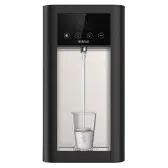
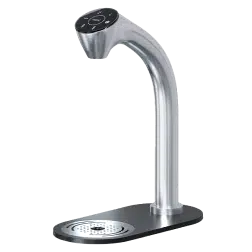
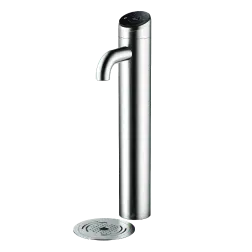
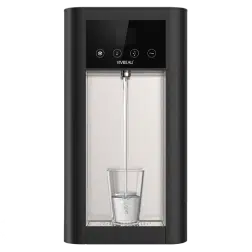
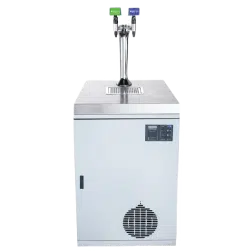
A commercial sparkling water dispenser works on a different principle. Serving soda water on tap requires continuously carbonating chilled water, so the system can dispense one glass or a hundred without stopping to reload.

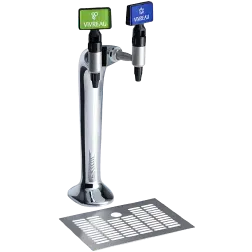
A plumbed system’s real advantage is choice, not just consistency. Vivreau dispensers offer both a semi-sparkling and a full sparkling option, so each person can pour the level they actually want.
That choice runs on consistency behind the scenes. The same chilled, continuously carbonated supply feeds both levels reliably, glass after glass. Continuous carbonation is what makes it possible to offer two options in the first place.
| Method | How the CO2 Is Introduced | Consistency Across Servings | What Has to Be Managed |
|---|---|---|---|
| Home carbonation device | A cartridge injects CO2 into a sealed bottle by hand | Varies with how long the user pumps or shakes it | Cartridge swaps and resealing the bottle each time |
| Canned or bottled sparkling water | Carbonated under controlled pressure at the bottling plant | Fixed at packaging, uniform within a batch | Storage, chilling, and disposing of packaging |
| Soda siphon | A pierced CO2 charger infuses a fixed volume of water | Set per charger, fades once opened | Charger inventory and seal condition |
| Plumbed on-tap system | Chilled water is carbonated continuously as it is drawn | Holds steady, the same supply feeds every glass | A CO2 cylinder on its own exchange cycle |
What Changes When Sparkling Is on Tap
Bottles and cans move the work upstream. Someone has to order them, store them, keep them cold, and deal with the recycling volume once they are gone. A commercial sparkling water dispenser moves that work to a single point instead, a CO2 supply on its own exchange cycle rather than a delivery schedule.
On Vivreau’s sparkling water dispensers, the CO2 regulator typically runs between 65 and 70 PSI. Tanks usually run 5 to 20 lbs, depending on the unit, and replacement generally occurs every 1 to 2 months under normal use.
That is a smaller, more predictable job than tracking bottle deliveries. It is the whole reason a still and sparkling water bottling system built around a tap changes the operational picture, not just the taste.

For spaces where sparkling needs to reach a table rather than a tap, on-site bottling covers that gap. A floor-standing unit, such as the V3-201 high-volume system, fills bottles on demand for service. That is a different job than a pantry tap, and a different volume entirely.
Getting Sparkling Water Right in Your Space
The chemistry is the same everywhere; carbon dioxide dissolves into water under pressure. What actually sets one system apart from another is what it takes to keep it running. The other real difference is whether the people using it get to choose their own fizz level.
The right answer depends on the space. A small office pantry equipped with a sparkling water machine for office use has different demands than a hotel lobby or a restaurant floor.
Self-serve and table service call for different equipment. How much handling a space can absorb, whether that means deliveries, cylinder swaps, or neither, should drive the decision. That matters more than which option looks premium on paper.
Request a quote to find the right Vivreau setup for your space.
FAQs
-
What Is the Difference Between Sparkling Water, Seltzer, Club Soda, and Sparkling Mineral Water?
Seltzer is plain water carbonated with nothing added. Club soda starts the same way but usually has added minerals, most often sodium bicarbonate, which gives it a slightly different taste.
Sparkling mineral water is naturally carbonated underground and already carries dissolved minerals from that source. Sparkling water is the broad term covering all of them, defined only by the presence of dissolved CO2.
-
Why Does Carbonated Water Taste Slightly Sharp Even With Nothing Added to It?
The sharp note comes from an enzyme called carbonic anhydrase 4, sitting on the tongue’s sour taste buds. It reacts with dissolved CO2 directly at the taste bud. That reaction, not the bubbles themselves, is what the tongue reads as sour.
A separate pain receptor picks up on the same gas, which is where the faint bite comes from. Both signals come from the CO2 alone; nothing else needs to be in the glass.
-
Why Does Sparkling Water Go Flat Faster in a Warm Glass?
Warm water holds far less dissolved carbon dioxide than cold water, so the gas escapes faster as the temperature rises. Pouring cold sparkling water into a warm glass, or letting it sit out, speeds up that loss well before the bubbles visibly disappear. Keeping it cold is the simplest way to hold the fizz longer.
-
How Does an On-Tap System Keep Carbonation Consistent From the First Glass to the Hundredth?
A plumbed system carbonates chilled water continuously rather than serving it one at a time. That means the supply feeding the tap does not run out or drift the way a bottle or cartridge would.
That steady supply is what makes the two-option choice possible. Most Vivreau installations offer both a semi-sparkling and a full sparkling option, so each person can choose the level they prefer.
-
Where Does the Carbon Dioxide Used in Commercial Carbonation Come From?
Commercial systems draw CO2 from pressurized cylinders supplied by a beverage gas provider, separate from the water line itself. The cylinder is a consumable, similar to a filter, and gets swapped on a replacement cycle rather than lasting the life of the unit. It has no connection to the water’s filtration or quality, only to the fizz.
Latest Posts


