










Key Takeaways
- Is Boston tap water safe to drink? Yes. Recent water safety failures, like the one in Flint, Michigan, are part of why more people ask this question, and Boston’s system does not share the failure point that caused it.
- MWRA tests for more than 120 contaminants a year. The 2025 results, published in June 2026, showed PFAS6 at zero.
- The one caveat is not safety. It’s a seasonal shift in taste, and filtration can smooth it out.
Someone fills a water bottle at the office tap, or a hotel guest orders sparkling water at the front desk, and for a second, wonders if that’s actually fine to drink. It’s not a strange thing to wonder. In recent years, the US has had a handful of real, well-documented water safety failures, the most widely known being what happened in Flint, Michigan.
In 2014, the city switched its water source to save money without adjusting how the water was treated, and the new, more corrosive supply pulled lead out of aging pipes for months before officials told residents, according to EPA’s Flint records. That kind of failure is rare, but it happened, and it’s reasonable to think that it would change how people think about the question.
What actually failed in Flint was not a lack of testing. Every community water system in the US is required by the federal Safe Drinking Water Act to test its water and report the results to customers every year, in what’s called a Consumer Confidence Report, according to MassDEP. Flint had that same requirement.
What broke down was the specific safeguard, corrosion control treatment, that keeps a water source from pulling lead out of old pipes in the first place, along with how long it took officials to admit there was a problem.
So the useful question for any city is not whether the water gets tested. It’s whether the safeguards behind that testing actually hold up, and whether problems get disclosed quickly when they don’t.
For Boston, they do. The Massachusetts Water Resources Authority (MWRA) tested Boston’s water for more than 120 contaminants in 2025, and every regulated result came back within state and federal limits. Boston’s water is safe, and it still tastes different depending on the season.
The Short Answer, and Who Is Accountable for It
That answer is only as good as the system standing behind it. Knowing who is actually responsible for Boston’s water, layer by layer, turns a vague reassurance into a specific, checkable claim.
Three organizations share the job. The MWRA manages the reservoirs, the treatment process, and the pipes that carry water from central Massachusetts into the city.
The Boston Water and Sewer Commission (BWSC) manages local distribution inside the city and publishes its own annual water quality report for Boston specifically, the same Consumer Confidence Report every community system is required to file. The building itself is the third link. Its owner is responsible for the plumbing inside the property line, from the water main connection to the tap.
This structure matters because a problem at one layer does not mean a problem at another. Boston’s water leaves MWRA’s system meeting every standard set by the state and federal governments. What happens between the street and your tap depends on the building, not the utility.
Where Boston's Water Actually Comes From
Boston draws its water from the Quabbin and Wachusett reservoirs, according to MWRA’s own reservoir and watershed data. Quabbin holds about 412 billion gallons and sits roughly 65 miles west of the city. Wachusett holds about 65 billion gallons and sits about 35 miles west. Together, they form one of the largest protected water supplies in the country.
Boston is also one of the few major American cities that treats its water without a filtration plant. That is not a shortcut. Boston qualifies for what the EPA calls filtration avoidance under the Surface Water Treatment Rule, a designation that requires strict source water quality, two separate disinfectants, and an active watershed protection program in place of a filtration step.
Very few water systems in the country meet that bar. MWRA does, because its reservoirs sit inside protected land that keeps contamination out before treatment ever begins.
What the Testing Actually Shows
MWRA checks more than 120 different contaminants in the water supply every year, according to the utility’s own PFAS testing results page. The 2025 water quality report, published in June 2026, shows that all regulated results are within state and federal limits.
The result people ask about most is PFAS, a group of manufactured chemicals associated with non-stick coatings and firefighting foam. The Massachusetts Department of Environmental Protection (MassDEP) set a combined limit for six regulated PFAS compounds, known as PFAS6, at 20 parts per trillion, a standard explained on MassDEP’s PFAS6 standard page.
Across MWRA’s testing rounds, the sum of those six compounds has measured zero. Some individual compounds show trace amounts too small to quantify reliably, but the regulated total is zero, against a limit of 20.
That number comes from MWRA’s own testing, not from Vivreau, and it describes what is already true of the water before any filtration enters the picture. It is the kind of number this answer should rest on, not a general reassurance.
The Two Caveats
Safety is settled, but two smaller issues are still worth naming, because glossing over them would undercut everything above.
Water leaves MWRA’s reservoirs free of lead. Lead only enters the picture if it travels through a lead service line or old lead solder somewhere between the water main and the tap, which is the exact point where Flint’s system failed.
Since 1996, MWRA’s corrosion control program has reduced lead readings in the city’s highest-risk homes by roughly 90%. The system has stayed below the federal Lead Action Level since 2004.
Since 2016, MWRA has also funded a lead service line program that provides member communities with zero-interest loans to fully remove lead pipes, and Boston has already drawn more than $3 million from it.
None of that tells you what is in your specific building. Boston has a large stock of older buildings now used as offices, clinics, and hotels, many of which were built before lead service lines were phased out.
Find out what your building’s line is made of. If it is lead, the replacement program above is the direct path to fixing it.
Boston’s water comes from an unfiltered surface supply, which means taste and smell can shift with the seasons. Warm weather promotes the growth of algae and cyanobacteria in the Quabbin and Wachusett reservoirs. When a nuisance species like Dolichospermum blooms, it can affect how the water tastes and smells.
MWRA and the Massachusetts Department of Conservation and Recreation track those algae counts in both reservoirs year-round. Those results, together with taste-and-odor complaints from local water departments, are what MWRA uses to decide when to treat a reservoir with copper sulfate, an algaecide.
None of this affects safety. It affects perception, and MWRA manages it as its own tracked variable rather than an afterthought. Safety is handled at the reservoir. Taste is the part that an individual building can still do something about.
What This Means If You Are Responsible for Water in a Boston Building
Once the safety question is settled, a different set of questions takes over. An employee who says the coffee tastes different in October is not being dramatic.
 A hotel guest who orders sparkling water and gets something with a faint mineral edge is going to remember it. Neither person is thinking about reservoirs or watershed protection. They are thinking about what is in front of them right now.
This is where office drinking water quietly becomes a bigger decision than it looks. A basic office water station pulls straight from the tap, which means it inherits whatever the source water is doing that week.
A corporate water dispenser with its own filtration removes that variability at the point people actually drink from, so an office water dispenser in the break room tastes the same in March as it does in August.
The same logic scales up for hospitality and education. A hotel water station for guests carries higher stakes than an office setup, because a guest forms an opinion about the entire property from one glass. Campuses weighing bottled water alternatives for universities face a similar calculation across far more taps and far more first impressions, multiplied by students who will mention it to their parents.
Point-of-use filtration also solves a second, more ordinary problem. The chlorine MWRA adds as one of its two required disinfectants is necessary for safety, and it also affects taste in a way that filtration is specifically built to correct.
A closer look at the art of taste explains the mechanics, and our guide to workplace filtration benefits covers what that looks like in a working office rather than a lab.
None of this requires believing Boston’s water is unsafe. It requires recognizing that “safe” and “consistently good” are two different standards, and only one of them is something a building can control on its own.
From Safe to Consistently Good
Boston’s system does not share Flint’s failure point. It has run corrosion control since 1996, and it tests and discloses results every year rather than only after something goes wrong. That is what backs up the safety answer, not a promise.
The more useful question for anyone managing a building is a different one. It comes down to whether people want to drink the water every month of the year, not just the months when the reservoirs are calm.
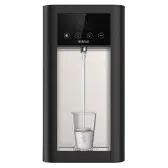
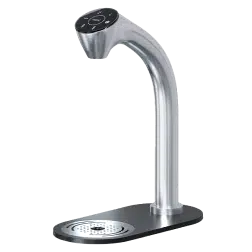
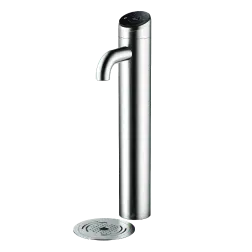
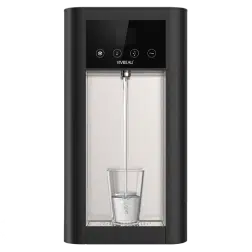
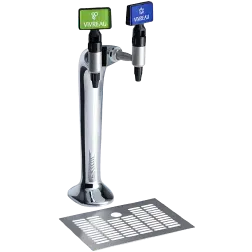
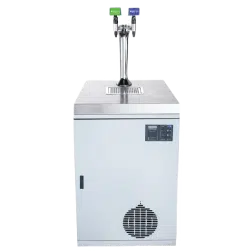
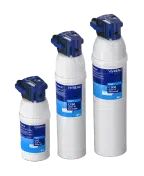
Point-of-use filtration, delivered through Vivreau’s water dispensers, keeps the experience steady regardless of what the source water is doing that week. For organizations building broader workplace hydration solutions rather than relying on the tap alone, that consistency is the actual return on investment.
Talk to our team to get a custom quote for your space.
FAQs
-
Where Does Boston's Drinking Water Come From?
Boston’s water comes from the Quabbin and Wachusett reservoirs in central Massachusetts, managed by MWRA. Quabbin holds roughly 412 billion gallons and sits about 65 miles west of the city.
Wachusett holds about 65 billion gallons and sits about 35 miles west. Both are surface water reservoirs protected by watershed land that MWRA and the state actively manage to prevent contamination.
-
Why Does Boston Not Filter Its Drinking Water Like Most Large Cities?
Boston qualifies for filtration avoidance under the EPA’s Surface Water Treatment Rule, a designation reserved for systems with exceptional source water quality. Instead of a filtration plant, MWRA relies on protected watersheds, two separate disinfectants, and continuous monitoring to meet the same safety requirements that filtration would otherwise provide. Very few large water systems in the country meet the criteria for qualification.
-
Does Boston Tap Water Contain PFAS?
MWRA’s own testing shows the combined result for the six regulated PFAS compounds, known as PFAS6, has measured zero across testing rounds. That is well below the Massachusetts standard of 20 parts per trillion.
Some individual compounds appear at trace levels too low to quantify reliably, but the regulated total remains zero. This is a reported utility result, not a claim about any specific filtration product.
-
How Can I Find Out Whether My Boston Building Has a Lead Service Line?
Start by checking your building’s service line material with the Boston Water and Sewer Commission, which maintains local distribution records. Older buildings are more likely to have a lead service line. MWRA also funds a zero-interest loan program that helps communities, including Boston, fully replace lead service lines rather than leaving partial pipes in place.
-
Why Does Boston Tap Water Sometimes Taste Earthy in the Spring and Fall?
Warm weather promotes the growth of algae and cyanobacteria in the Quabbin and Wachusett reservoirs, and nuisance blooms can affect taste and smell. MWRA and the state continuously monitor algae levels and treat with copper sulfate, an algaecide, when levels rise. This is a taste and perception issue, not a safety concern.
-
Was Boston Ever at Risk of a Flint-Style Water Crisis?
No documented event of that scale has occurred in Boston’s MWRA-supplied system. Flint’s crisis came down to a missing safeguard, corrosion control treatment, not a missing test. MWRA has run corrosion control since 1996, and results are tested and published every year rather than surfacing only after a crisis forces the question.
Latest Posts


