












Key Takeaways
- Law firms increasingly treat water service as part of the client experience rather than a background amenity, and the right dispenser choice depends on which floor it sits on.
- Client-facing floors call for quiet, plumbed systems that fill reusable glass bottles instead of delivering disposable cases.
- Attorney floors and staff kitchens call for higher-throughput systems built for daily use rather than presentation.
- A plumbed program reduces non-billable staff time, frees up leased floor space, and removes recurring vendor access to secure floors.
A law firm doesn’t choose a water dispenser for the water. It chooses one for what the equipment tells a client walking through the door, and for what it stops asking of staff who are already stretched thin.
This guide to law firm office water dispensers covers where quiet matters most and what belongs on a conference table. It also covers what a water program actually costs a firm in staff time and how to specify differently from one floor to the next.
We have seen this trade-off up close. In our law office case study, we helped a global law firm cut its water program’s operating costs by an average of $42,000 per year. The firm replaced 40 biweekly cases of imported sparkling water and a rented reverse osmosis (RO) unit with a plumbed system that fills its own reusable glass bottles.
Behind that figure are two things a firm actually experiences day-to-day: what a client notices when walking into a conference room, and how much staff time goes to keeping cases stocked behind the scenes.
In a Law Firm, the Water Is Part of the Client Experience
A client’s impression of a law firm often forms before an attorney enters the room. A law office reception design guide describes the waiting area as a room that does its own work, independent of which attorney a client is there to see. An orderly, unhurried space reads as competence long before anyone sits down to talk.
That assessment carries past the front desk. The physical workplace is increasingly treated as part of a firm’s client experience strategy, rather than a facilities decision made in isolation. Among premium client-facing office amenities, what is served at the reception desk and in the conference room shapes how a client reads the firm’s operations.
That extends right down to what sits on the table when they arrive for a closing meeting. The details that register are plain ones, calm surfaces, unhurried service, and water already on the table before anyone has to ask for it.
Quiet Matters More Here Than in Most Offices
Legal-industry sources treat confidentiality as a standing operating condition inside a law office, not an occasional courtesy. That is why firms invest in law office sound masking, wall treatment, and door seals wherever a client conversation might otherwise carry into a hallway or an adjacent room. That same standard extends to what sits inside the room.
A water dispenser creates no legal exposure of its own, but an environment built around careful, confidential conversation has no tolerance for equipment that hums, drips, or gurgles mid-meeting. A plumbed, sleek water dispenser tucked against a service wall does its job without becoming part of what anyone in the room notices.
A delivered program means a jug swap on somebody else’s schedule, not the firm’s, and that schedule does not know or care that a deposition is running long down the hall. A plumbed dispenser draws from the building’s water line and refills continuously, with no jug change, no delivery cart, and no scheduled interruption to plan around.
For a floor where meetings are timed, recorded, or billed, the absence of an interruption is the real specification target, not a noise rating that most equipment in this category doesn’t even publish. Placement still matters on its own, apart from the plumbed-versus-delivered choice.
A unit set against a shared wall with a conference room, or just outside a recorded-call room’s door, puts ordinary mechanical operation exactly where quiet matters most. The practical fix is a pantry wall or a service core, not a spec chase for a rating that doesn’t exist for this kind of purchase.

Reception, the Conference Table, and What the Water Arrives In
A stocked case of imported sparkling water says one thing about a firm. Filtered still and sparkling water served in the firm’s own reusable glass bottles, already on the table before the meeting starts, says something different. That same firm has offices across the Americas, Asia, and Europe.
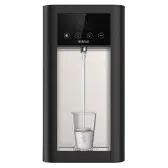
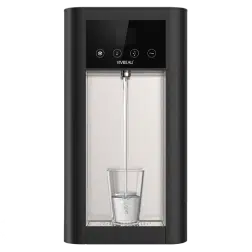
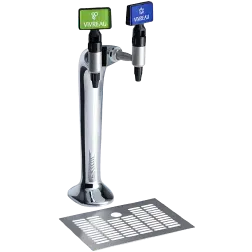
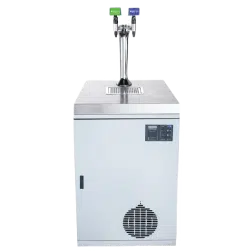
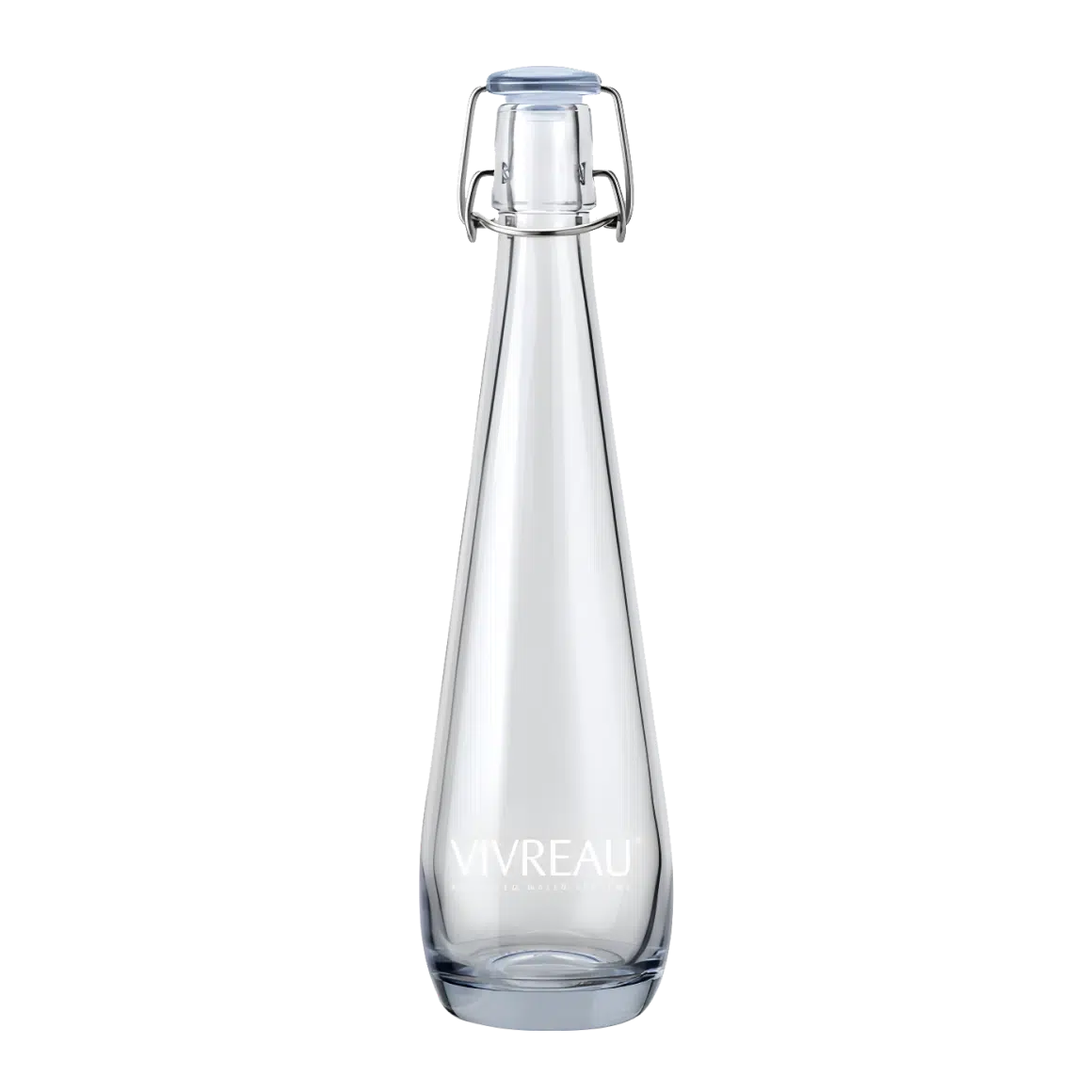
For years, it had received 40 cases of imported sparkling water every two weeks for its conference program. It had also been renting an RO filtration unit that wasted three liters of water for every liter it actually filtered. The firm installed a Vivreau V3-205 countertop system in its conference center to fill its own 750ml designer glass bottles ahead of client meetings.
A separate system, providing chilled, sparkling, and hot water, was installed in its staff lounge. The reported result was an average of roughly $42,000 in annual savings, along with an unplanned but telling detail. Staff and visitors said they preferred the taste to imported San Pellegrino.
The branding detail matters almost as much as the savings. A firm’s name printed on the glass already on the conference table, rather than on a case delivered by a beverage vendor, is a small, repeated brand moment for every client who takes a seat.
It is a premium water tap for office use precisely because it does the opposite of drawing attention to itself: it fills a reusable glass rather than adding another disposable container to a room built to look considered. The glass is already on the table, filled from a tap most visitors never notice, which is the point of a presentation detail done well.
What a Water Program Costs in Non-Billable Time
A firm doesn’t bill by the liter, so price per liter is the wrong unit for evaluating a water program. The real cost shows up as non-billable time. Someone receives the delivery, breaks down the cases, restocks a conference room refrigerator before a client arrives, and swaps an empty jug mid-afternoon.
None of that work generates a fee, and all of it pulls a staff member away from something that does. The case study firm above had been receiving 40 cases of imported water every two weeks before switching to a plumbed program, a cadence that required someone on staff to receive, store, and work through them each cycle.
Storage is the second cost. Leased floor space in a law firm building is expensive per square foot, and a stack of cases sitting in a supply closet or a back pantry is floor space doing nothing for the firm’s practice. A plumbed system that fills reusable bottles on demand does not require a case inventory to be stored anywhere on the floor plan.
Sustainability belongs here, too, as a supporting point rather than the lead. A firm’s own reporting to clients on environmental commitments is easier to write when the firm has actually reduced single-use packaging rather than merely stated an intention to do so.
The same is true of a response to a request for proposal (RFP) that asks about sustainability practices. Brand-enhancing sustainable office perks, like a filtered water program, also factor into the office amenities firms weigh when deciding where to invest in the workplace to support employee retention. It is worth noting for a client deck or an RFP response, not the reason to make the switch.
What to Look For, Floor by Floor
A law firm rarely needs the same law firm office water dispensers setup on every floor, because the floors are not doing the same job. Reception and client conference rooms are specified for presentation, the things a visitor sees and touches. Attorney floors, pantries, and staff kitchens are specified for throughput, getting water to people quickly between meetings without anyone having to think about it.
Treating those as one decision usually means overspending on presentation where no client sees it, or underspending on it where it matters most. The case study firm above split its own deployment along exactly that line. It used a countertop bottling system in the conference center and a separate chilled- and hot-water system in the staff lounge.
That is what a floor-by-floor read of the building actually calls for:
| Space | What It Needs | What to Specify |
| Reception | A calm, client-visible presentation moment | A plumbed dispenser or bottling station finished to match the room, not a delivery case in view |
| Client conference rooms | Quiet operation with no mid-meeting interruption | A countertop bottling system filling reusable glass bottles is already on the table |
| Deposition or recorded-call rooms | Minimal mechanical presence near a room built for careful audio | Placement away from shared walls, plumbed over, delivered to avoid a scheduled jug swap |
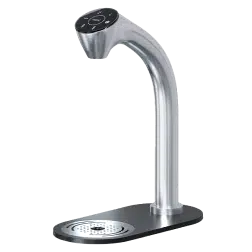
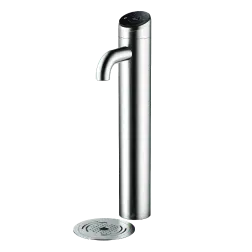
| Attorney floors and pantries | Fast, unattended access between meetings | A higher-throughput plumbed tap for still and sparkling water, positioned for quick use |
| Staff kitchen | Daily-use volume without a delivery routine | A full-service chilled, sparkling, and hot water system built for everyday staff use |
A plumbed corporate office water solution carries one procurement advantage that is easy to miss. It does not typically require a delivery vendor to walk a secure or confidential floor on a recurring schedule the way a bottled program does.
A bottled program means a vendor badges in, moves through the space, and handles the cases directly, on whatever floors the program covers. That difference is worth raising with building security or IT before assuming the current bottled arrangement is the simpler option.
Bringing It Into Your Firm
The decision is less about equipment than about two questions. What does the firm want a client to notice when they sit down in a conference room? What does the firm want its own staff to stop spending time on?
Amenity-rich workplace design trends have made water programs a visible line item in how firms think about their space. The right law firm office water dispensers specification still comes down to specifics, a firm’s floor plan, how many client meetings run through a given week, and which floors clients actually see versus which ones only staff use.
A firm evaluating its current bottled water program, or planning a build-out that includes new conference space, can request a Vivreau quote to work through those specifics floor by floor.
FAQs
-
How Much Noise Does a Plumbed Water Dispenser Make, and Can One Be Sited Near a Conference Room?
No industry-wide decibel rating exists for commercial water dispensers, so the honest answer is that placement matters more than a spec sheet number. A plumbed dispenser runs continuously off the building’s water line and never needs a jug changed mid-meeting.
That removes the interruption a delivered system can create, on a schedule nobody in the room controls. Siting still matters on its own, apart from that choice. Placing a unit away from a shared wall with a conference room, or away from the door to a recorded-call room, keeps its normal mechanical operation out of a space built around careful conversation. For most firms, that placement decision does more for the room than a noise rating would, even if one existed to check against.
-
Can a Firm Serve Branded Glass Bottles in Client Meetings Without Adding Work for Staff?
Yes, when the bottles are filled on demand rather than delivered pre-packaged. A countertop bottling system, such as the one used in Vivreau’s law office case study, fills a firm’s reusable glass bottles from a plumbed water line. That means no case to receive, no pallet to store, and no empty bottle to haul away after a meeting.
Staff refill and place bottles rather than manage a delivery cycle on top of everything else on their desk. The firm’s name appears on the glass that is already on the conference table when a client walks in. That is a steadier brand moment than a case of imported water ever provided, and it does not add a recurring task to anyone’s week.
-
In a Multi-Floor Firm, Do Client-Facing Floors and Attorney Floors Need Different Systems?
Often, yes. Reception and client conference rooms are specified for presentation, since that is what a visiting client actually sees and touches. Attorney floors, pantries, and staff kitchens are specified for throughput rather than for getting water to people quickly between meetings.
In Vivreau’s law office case study, the firm used a countertop bottling system in its conference center for client meetings. A separate chilled, sparkling, and hot water system served the staff lounge for daily use, rather than a single identical system across the whole building. A floor-by-floor read of who uses a space, and for what, is a more useful starting point than assuming the entire building needs the same equipment.
-
Does a Plumbed Water Program Mean Recurring Vendor Access to Secure or Confidential Floors?
It means the opposite. A bottled delivery program typically requires a vendor to badge in and move through the building on a recurring schedule, dropping off cases and collecting empties. That happens on whatever floors the program covers, including secure or client-facing ones.
A plumbed system draws from the building’s existing water line and removes that recurring access point once installation is complete. For firms weighing which floors a delivery vendor should routinely access, that difference is worth raising with building security or IT before assuming a bottled program is the simpler arrangement to manage day-to-day.
-
How Does a Delivered Bottled Water Program Compare on Non-Billable Staff Time and Floor Space?
A delivered program creates recurring non-billable work. Someone receives cases, breaks them down, restocks conference rooms, and swaps jugs.
None of that generates a fee, and all of it pulls a staff member away from work that does generate a fee. It also occupies leased floor space, since cases have to be stored somewhere between deliveries.
Floor space in a law firm building is expensive, regardless of what sits on it. A plumbed system fills reusable bottles on demand rather than holding case inventory, which removes both the recurring task and the storage requirement. Neither cost has a standard industry figure attached, but the structural difference between the two models holds regardless of a given firm’s own numbers.
Latest Posts


