














PFAS or Forever Chemicals
PFAS, commonly called “forever chemicals”, have become a more visible topic in discussions around water quality in recent years. As testing methods improve and awareness grows, these compounds are appearing more frequently in research, media coverage, and public conversation. With this, some organizations are choosing to explore whether PFAS water filtration is relevant to their specific environment.
In North America, guidance published by federal health authorities (Canada | USA) outline what PFAS are, how they can enter drinking water, and how they’re found in our daily environment. For organizations responsible for providing drinking water in offices, hospitality spaces, healthcare environments, and other public settings, PFAS is best understood as one part of an evolving water quality landscape, not a universal issue that applies everywhere.
Understanding PFAS in context allows organizations to make informed, practical decisions rather than reacting to headlines.
What Are PFAS?
PFAS, or per- and polyfluoroalkyl substances, are a large group of man-made chemicals that have been used for decades in various industrial and commercial applications. Because they are highly resistant to breakdown, PFAS persist in the environment and can remain present over long periods of time.
PFAS can enter water sources through industrial activity, the use of firefighting foams, and environmental contamination. As detection methods have become more sensitive, PFAS is now measurable at very low concentrations in some water supplies.
The presence of PFAS does not automatically indicate that water is unsafe. However, it has increased interest in understanding water quality beyond traditional measures such as taste, clarity, or chlorine levels.
Why PFAS Is Part of Today’s Water Conversation
PFAS has gained attention largely because our ability to detect it has improved and scientific understanding continues to develop. This has led to updated guidance, increased monitoring, and broader discussion about how emerging contaminants are managed.
For organizations, this reflects a broader shift in expectations around environmental responsibility and transparency. Water is one of the most frequently used shared resources in any building, and its quality increasingly forms part of how organizations demonstrate care for employees, guests, patients, and visitors.
This does not mean every organization needs to change its water infrastructure. It does mean that water quality is becoming a more informed and intentional part of facility management.
PFAS in the Broader Water Quality Picture
PFAS should be viewed alongside other water quality considerations, not in isolation. Water challenges vary widely depending on location, source water, and building infrastructure.
In most commercial environments, filtration is designed to address well-established needs such as:
- Improving taste and odour
- Reducing chlorine or chloramines
- Removing particulates
- Managing carbonate hardness and scale that can impact equipment performance
PFAS is a more specific consideration. In some regions or applications, it may be relevant. In others, it may not be a meaningful factor based on local water data and existing treatment processes.
Effective water management starts with understanding what matters most for a given location
How PFAS Is Addressed in Water Treatment
Some water treatment methods can reduce PFAS when needed. How well they work depends on the specific PFAS compounds present, how the system is designed, and how it’s operated.
Not all filtration systems are built to address PFAS. In most cases, PFAS-focused treatment is added only when it’s relevant to the location or application. This reflects a simple principle in water treatment: the best solutions are those matched to clearly defined needs, rather than applied universally.
For organizations, this highlights the importance of working with water experts who can evaluate site-specific conditions and recommend appropriate filtration options.
A Practical, Proactive Approach
A thoughtful approach to PFAS and water quality includes:
- Staying informed through local water quality reports
- Understanding which water quality factors are relevant to a specific facility
- Choosing filtration solutions that align with operational goals, sustainability priorities, and user expectations
This approach allows organizations to address water quality responsibly without unnecessary complexity.
Vivreau’s Perspective
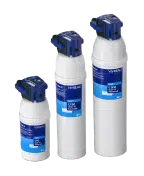
At Vivreau, we also offer professional filtration options that are specifically designed to address PFAS when it is a defined requirement. The PURITY C 1000 AC filter uses a high-performance activated carbon block and is NSF/ANSI 53 certified for total PFAS reduction, meaning it has been independently tested to reduce PFAS as part of its performance standards.
It’s important to note that not all carbon block filters are designed or tested to reduce PFAS. Performance can vary significantly depending on the filter’s construction and certification.
The PURITY C 1000 AC was developed to address this concern while continuing to support other core water quality goals, such as improving taste, while proactively protecting high value equipment through preventative water filtration.

Water Quality as an Ongoing Commitment
Forever chemicals are just one example of how conversations around water quality continue to evolve as science, monitoring, and expectations advance. Organizations that stay informed and take a measured approach are well positioned to respond thoughtfully.
Providing clean, reliable drinking water is not about reacting to every new issue as it arises. It is about understanding the facts, assessing real conditions, and making informed decisions that support people, operations, and long-term trust.
Latest Posts


