









Anthony and Richie both serve as Regional Sales Representatives at Holiday House, supporting customers across distinct regions of the U.S. Anthony covers New York, New Jersey, Connecticut, and the broader tri‑state area, where he works closely with office coffee service (OCS) operators on filtration needs ranging from reverse osmosis systems to lead reduction—particularly in New Jersey—and ensuring filtration solutions align with local water conditions. Richie supports the Southeast, including Florida, the Carolinas, and Tennessee, partnering with customers to protect equipment performance and beverage quality through the right filtration strategies for their region.
They are joined by Ryan Wolfrum of Vivreau, the brand’s in‑house water filtration expert, who brings a manufacturer perspective informed by deep experience in filtration systems designed for professional foodservice, hospitality, and workplace environments.
Q: Why is it important to change your water filter before a busy season?
Richie:
The beginning of the year—or any period before an anticipated rush—is an ideal time to refresh your filtration system. Most filters should be changed every four to six months depending on usage, and resetting on a clear schedule makes it easier to stay consistent. Proactively changing filters helps extend the life of your equipment and ensures clean water is running through machines during peak demand, reducing service calls and unexpected issues throughout the year.
Ryan (Vivreau):
From a preventative maintenance standpoint, changing a filter before a busy season helps avoid clogs and equipment downtime when demand is highest. Replacing filters on your schedule—rather than waiting for a failure—means maintenance happens at a convenient time, not during a rush or on a weekend emergency call.
Key Takeaway: Proactive filter changes help operators stay ahead of peak demand instead of reacting to problems when they’re already busy.
Q: What are the signs that a water filter needs to be changed?
Anthony:
Reduced water pressure is usually the first and most noticeable sign. However, even if pressure hasn’t dropped, that doesn’t mean the filter is still working properly. Filtration degrades over time, and once it’s exhausted, contaminants can pass through—even if water is still flowing—so sticking to the recommended change interval is critical.
Key Takeaway: A filter can stop filtering effectively long before water pressure visibly drops.
Q: How does water quality affect the performance of espresso machines and other equipment?
Richie:
Water quality impacts nearly every part of the machine. Without proper filtration, scale builds up inside espresso machines, which affects both flavor and performance. It also slows recovery time, since scaled boilers take longer to heat and build pressure.
Ryan:
In older cities especially, infrastructure plays a major role. Sediment, dirt, and debris from aging pipes can enter equipment if it’s not properly filtered, leading to clogged valves, blocked lines, and premature component failure.
Anthony:
This is common in dense urban areas like Manhattan, where rooftop water towers are still widely used. When those tanks are cleaned, sediment can be pushed through the system, and without proper filtration, it can cause serious damage—sometimes even rupturing filters.
Takeaway: Filtration acts as a first line of defense against infrastructure‑related damage.
Q: How does water filtration impact the flavor of espresso?
Anthony:
If the water is too hard, you’ll often see poor crema and experience off‑flavors that can taste salty or iodine‑like. That’s why water softening or phosphate‑based filtration is commonly used for espresso machines. In regions like New York, where water isn’t extremely hard, the goal is balance—not over‑softening.
Richie:
Espresso and drip coffee behave differently. Drip coffee benefits from some mineral content, but espresso machines operate at very high pressure—around nine bars—so softer water generally produces better extraction and a better‑tasting cup.
Ryan:
Taste and odor also matter. Chlorine is one of the first things people notice in water. Proper filtration removes chlorine and other compounds so they don’t carry through into coffee, espresso, or drinking water.
Takeaway: Balanced water chemistry is essential for both taste and machine health.

Q: How often should water filters be changed to avoid downtime during peak periods?
Anthony:
Six months is the general standard, though it varies based on filter type and usage. Some operators change filters every three months proactively, while others wait until a filter clogs—which usually leads to bigger issues. A filter left in place for a year is no longer filtering effectively, even if water is still flowing.
Richie:
Operators who delay filter changes often end up paying more through service calls and replacement parts. You’ll spend the money either way—it’s just a question of whether it’s planned or reactive.
Takeaway: Planned maintenance is almost always cheaper than emergency repairs.
Q: What makes Vivreau’s HCHF (high‑capacity high‑flow) filters ideal for busy cafés and restaurants?
Ryan:
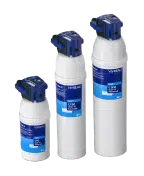
It comes down to both flow rate and capacity. These filters deliver over three gallons per minute, allowing a single filter to support multiple pieces of equipment or high‑demand machines like batch brewers and ice makers. With up to 40,000 gallons of capacity, even very busy locations can confidently operate for six months without worrying about taste or performance degradation.
They’re also designed to address emerging concerns like cysts, and pharmaceuticals. In locations with heavier sediment loads, pairing the system with a simple pre‑filter helps extend filter life even further. Multiple filters can also be manifolded together, allowing one filter to be changed while water continues flowing through the others—eliminating downtime entirely.
Takeaway: High‑capacity, high‑flow filtration supports growth, flexibility, and uninterrupted service.

Q: What are the long‑term benefits of regularly changing water filters?
Anthony:
Regular filter changes lead to fewer service calls, less downtime, and better operational efficiency overall. Clean water protects boilers, valves, and internal components, extending equipment lifespan.
Takeaway: Consistent filtration maintenance directly reduces long‑term operating costs.
Richie:
No one is happy when a coffee machine is down. Clean water keeps machines running reliably and reduces the wear that leads to breakdowns.
Takeaway: Clean water is one of the simplest ways to protect uptime.
Q: What’s the best advice for busy operators who struggle to track filter changes?
Richie:
Keep it simple. Change filters at the beginning of the year and again six months later. Creating a predictable routine makes it easier to stay on track.
Anthony:
Some operators write the installation date directly on the filter, while others use inline water meters that track gallons used and send alerts when it’s time for a change. For multi‑location operators, these tools can be especially helpful.
Takeaway: Visibility and reminders remove the guesswork from filter maintenance.
The secret to better-tasting beverages and fewer equipment breakdowns
Water filtration is one of the most effective and often overlooked ways to protect equipment, preserve beverage quality, and prevent downtime during busy seasons. With the right filtration strategy and a consistent maintenance schedule, operators can stay focused on serving customers instead of managing emergencies.


