











Concentrate beverages are only as good as the water behind them
As beverage programs continue to evolve, one format is driving significant growth across hospitality and foodservice: concentrate-based beverages.
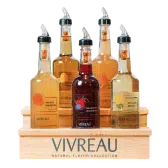
From refreshers and cold brew to dirty sodas and mocktails, operators are embracing concentrates for their ability to deliver speed, consistency, and scalability. Many of these programs rely on high-quality concentrate formats to ensure repeatable results across equipment and locations.
But while these beverages are carefully formulated, there’s one variable that ultimately determines how they perform in the glass:
Water.
To explore how water filtration impacts concentrate beverages—and what operators should be thinking about today—we sat down with Milton from United Beverage Solutions and Ryan Wolfrum from Vivreau Professional Filter.
Q: To start simply, why is water so important in concentrate-based beverages?
Milton (United Beverage Solutions):
With concentrate, you don’t have the same flexibility you have with coffee. In coffee, you can adjust grind size, extraction time, temperature—you’ve got a lot of levers. But with concentrate, you’re really limited. It comes down to how much water you use and what that water is.
That’s why water becomes such a critical variable. It’s doing most of the work in the final drink.
Ryan (Vivreau):
Exactly. With concentrate, you can’t fix the drink after the fact. The water you start with determines whether that beverage will taste the way it was designed to.
Q: What makes concentrate beverages different from other beverage formats?
Milton:
Most concentrate beverages, especially refreshers, are designed products. They include acids, flavor extracts, and stabilizers, all built to deliver a specific taste profile.
With concentrates, the goal is to create a highly controlled, repeatable base. But once that formulation is set, you don’t really have room to change it.
So instead of focusing on extraction like you would with coffee, the focus shifts to how water interacts with what’s already been built into the concentrate.
Q: What happens when the water isn’t right?
Ryan:
One of the biggest issues we see is lost flavor. If the water has too much buffering capacity or too many dissolved solids, it can mute the taste of the beverage. Operators often respond by adding more concentrate, but that doesn’t always solve the problem, and it just increases cost.
Milton:
You lose brightness. Especially in drinks with citrus or fruit, those acids are what make the drink pop. If the water isn’t dialed in, the drink can taste flat or unbalanced, and that’s often coming from the water, not the product itself.

Q: Where are you seeing the biggest growth in concentrate-based beverages right now?
Milton:
Cold beverages across the board. Refreshers, dirty sodas, anything customizable, it’s growing fast.
We’re also seeing a shift toward non-alcoholic options. Mocktails are expanding on menus, and concentrates, like Norse, fit well because they’re consistent, versatile, and easy to execute.
Ryan:
And once consumers are introduced to these drinks in familiar places, there’s an opportunity for operators to elevate that experience. That’s where quality and consistency really matter.
Q: What are some common challenges operators face when working with concentrates?
Milton:
There are two main ones. First is perception, there’s still some stigma around concentrate, based on what it used to be. But the quality today is very different.
Second is mindset. Operators often approach concentrates the same way they approach coffee, and it’s not the same. You have fewer variables, so you need to be more precise with the ones you do have, especially water.
Q: How does being able to adjust filtration improve concentrate drinks?
Ryan:
Flexibility is everything. No two water sources are the same, so what works in one location may not work in another.
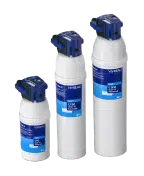
With filters like the Vivreau PURITY HCHF or PURITY C Quell ST Advanced with adjustable bypass settings that allow you to fine-tune water chemistry. You’re not just removing unwanted elements—you’re shaping the water to suit the beverage.
Milton:
That’s the key—being able to dial it in. If you can’t adjust the water, you’re stuck working around it. But when you can control things like mineral content and flow, you’re setting the concentrate up to perform the way it was designed to.
Q: How does filtration help operators achieve consistent flavor across different locations?
Ryan:
Water varies everywhere, even within the same region. Filtration helps normalize that.
With adaptable filtration systems, you can adjust the water profile at each location so the final beverage tastes the same, regardless of what’s coming out of the tap.
Milton:
We see that often, same concentrate, different locations, different results. And the missing link is almost always the water.
When you’re working with a consistent concentrate formats, the expectation is repeatability. Filtration, especially systems that allow you to adjust flow and mineral balance—is what makes that possible.
Q: For operators looking to improve their beverage quality, what does a strong filtration setup look like in practice?
Ryan:
It starts with testing your water, understanding hardness, PPM, and disinfectants. From there, it’s about selecting filtration that gives you control, not just removal.
Water filter products like PURITY HCHF are designed for high flow and flexibility, while PURITY C Quell ST Advanced allows for more targeted treatment depending on the application. The goal is to align water quality with how the beverage is being prepared and served.
Milton:
And it always comes back to what you want in the cup. If you understand the role your concentrate is playing, whether it’s the lead flavor or a supporting element, you can work backward from there.
When you combine a well-designed concentrate, the right equipment, and properly dialed-in water, you create something that’s consistent, efficient, and scalable.

Water for Concentrate Cheat Sheet
How to Get the Best Results from Concentrate-Based Beverages.
This guide is informed by insights from United Beverage Solutions. We thank Milton and team for sharing their expertise in concentrate beverage programs and water optimization.
Final Thoughts
Concentrate-based beverages are designed for precision—but water filtration determines whether that precision shows up in the glass.
Getting water right ensures:
- Flavor clarity and brightness
- Consistency across locations
- Efficiency and cost control
Interested in learning more? Speak with an expert:
Milton Tjin
United Beverage Solutions
milton@unitedbeveragesolutions.com
Ryan Wolfrum
Vivreau Professional Filter
rwolfrum@vivreau.com

PURITY HCHF
The PURITY HCHF Cold Filter is specifically designed for high capacity and high flow, making it well-suited for cafés and foodservice environments offering cold water-based beverages.

PURITY C Quell ST Advanced
Specially developed for catering and vending sectors, the PURITY C Quell ST Advanced filter cartridges reduce carbonate hardness in drinking water.
Latest Posts


