











Takeaway
Water is more than 95% of every coffee and tea you serve, so the right filter is the single highest-leverage upgrade you can make to your hot drink menu’s taste, consistency, and equipment life.
• You’ll learn why water chemistry, not the beans alone, decides whether a cup tastes flat or balanced, and what the recognized brewing-water targets actually are.
• You’ll walk away able to match the right filter to your volume and local water, from single espresso machines to high-capacity setups feeding several beverage applications at once.
• You’ll know the questions to ask before you buy, so filtration is designed in early instead of bolted on as a costly retrofit later.
The Hidden Ingredient Shaping Every Cup
Water may be the most overlooked ingredient in hot drinks, but it’s also the most important. Coffee and tea are more than 95% water, and inconsistent quality can affect taste, equipment performance, and even sustainability. To better understand these challenges, and to introduce Vivreau’s new High Capacity High Flow (HCHF) filters, we spoke with two experts:
- Peter Kelsch , F&O Imports
- Carlos Rodriguez, Vivreau Professional Filters
In this Q&A, they share real-world insights into water challenges, equipment protection, and what operators should know about filtration.
Q1: F&O has been working with Vivreau for years. How did the partnership begin, and why has it been so successful?
Peter: My connection with Vivreau started when Anastasia reached out while developing a launch strategy for Vivreau Professional Filters. I’d been working in espresso equipment sales for years, selling different types of filtration, and had broad experience across equipment brands and applications. She asked me to share what I’d seen in the market — usage patterns, competitive landscape, and successes with softening technologies.
From there, the relationship grew naturally. F&O already had national reach, representing multiple brands across the foodservice industry, not just coffee but also combi ovens and other equipment. Becoming one of Vivreau’s first distributors made sense: we could provide valuable market insights while also delivering the filters to operators across North America. It’s been a great partnership because it combines Vivreau’s innovation with our distribution strength.
Q2: What does F&O Imports specialize in?
Peter: F&O is a multi-divisional business built around espresso and specialty coffee. The name actually stands for Foundations and Opportunities: importing is our foundation, and spotting new opportunities in the market is how we’ve grown.
We started by importing Italian espresso machines and coffee. Today, we operate nationally as an importer, wholesaler, and manufacturer’s representative. About half of our business is supplying espresso equipment — often full delivered-and-installed packages — to foodservice companies. The other side includes products like syrups, flavorings, and specialty coffee supplies. Essentially, we focus on giving operators everything they need to build a complete coffee program.
Q3: What are the most common water-related challenges your clients face?

Peter: Without a doubt, the biggest issue is limescale. Across North America, water often comes straight from aquifers, treated just enough to meet municipal standards. The result is high calcium levels that cause scale buildup in espresso machines, coffee brewers, hot water boilers — even cold water systems in some regions.
The impact is huge: scale clogs valves, restricts water flow, and changes both pressure and temperature tolerances. If you’re counting on equipment to deliver water at the right rate, pressure, and temperature, scale throws all of that off. That means operators not only face costly repairs but also inconsistent taste in the final product.
Carlos: Exactly. And one thing operators sometimes forget is how much water chemistry can vary, even within the same city. Seasonal changes in municipal water treatment can alter both taste and odor. Filtration evens that out, so customers don’t notice those fluctuations in their cup.
Q4: How does filtration address those problems?
Peter: Filtration solves two categories of problems: particulates and chemicals. On the particulate side, filters ensure water is consistently clean, with little or no sediment entering equipment. On the chemical side, filters remove chlorine and chloramine — the most common municipal treatments — which are corrosive over time and also affect taste.
For operators, this means two things: the coffee and tea taste better, and the equipment lasts longer. You’re preventing buildup, reducing corrosion, and protecting seals, boilers, and other critical parts.
Carlos: That’s the heart of it — filtration ensures consistency. No matter the season, no matter the local water chemistry, your drinks taste the same and your machines don’t suffer unnecessary wear.

Choosing the Right Coffee Water Filter for Your Hot Drink Menu
Operators often ask us a version of this question: “Are there water dispensers that offer hot water for tea in addition to cold and sparkling options?” The honest answer is that the dispenser matters less than what feeds it. A hot drink is only as good as the water behind it, and that water needs to be filtered for both taste and equipment protection before it ever reaches your tea, coffee, or espresso.
Start with the chemistry, because the dispenser only delivers what the filter prepares. The Specialty Coffee Association recommends brewing water sit around 150 parts per million total dissolved solids, within a workable range of roughly 75 to 250 ppm, with calcium hardness of 50 to 175 ppm. Stay in that window and you get clean, balanced extraction without the scale that clogs valves and shortens boiler life. Drift outside it, especially in hard-water regions where calcium runs high, and you pay twice: in flat-tasting cups and in avoidable service calls.
Match the filter to your volume:
• Single espresso or hot water machines do well with targeted scale and carbon filtration sized to one unit.
• Banquet brewers, hot water towers, and busy cafés benefit from a high-capacity, high-flow system that feeds several applications from one upstream point.
• Mixed hot and cold programs, including ice and drinking taps, are simplest to manage when one filter covers them all.
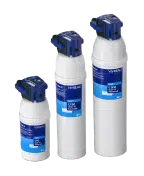
Our PURITY HCHF filters are rated for up to 40,000 gallons, so most operators replace them just once a year. Plan filtration during the design phase, not as an afterthought, and your drinks taste the same in July as they do in January.
Q5: Why is the launch of Vivreau’s new High Capacity High Flow (HCHF) filters significant?
Carlos: Our existing filters were excellent for espresso and targeted applications, but high-volume environments — banquet brewers, hot water towers, large cafés — needed a different solution. With HCHF, we can now serve operators who go through a lot more water but still want to maintain quality and efficiency. It rounds out our portfolio, covering everything from espresso to ice machines to drinking water taps.


Q6: How do HCHF filters compare with other solutions in the marketplace?
Carlos: It’s not brand-new technology, but it’s technology applied in the right way. Many competitive filters are smaller, designed for quick replacement cycles. HCHF gives operators a longer-lasting solution that’s easier to manage and less disruptive.
Peter: Right. Most filters in the market are built for relatively low usage — maybe 1,000 gallons — which means they’re used up quickly in a busy operation. That model often prioritizes selling more filters rather than solving operator problems.
Vivreau has taken a different approach: the HCHF filters are rated for up to 40,000 gallons, which means most operators only need to replace them once a year. That’s cost-effective, it reduces waste, and it gives operators peace of mind that they won’t run out of filter capacity mid-season.
Q7: What do operators notice when they start using Vivreau filters?
Carlos: The first thing is fewer service calls. Equipment just works more reliably when water is properly filtered.
Peter: And consistency. Without filtration, operators often notice seasonal changes in taste and odor — customers even complain about tap water tasting “off” in the summer. With filtration, those issues disappear. Operators stop hearing complaints, and customers simply enjoy their drinks. That’s the real success: no news is good news.
Q8: What industry trends are driving more awareness around water quality?
Peter: Over the last decade, and especially the last five years, coffee and tea have been redefined as premium food experiences. Roasters and tea producers talk about flavor notes and brewing precision. That experience depends on stable water chemistry.
The same is true for cold beverages and ready-to-drink products. Manufacturers always filter water for consistency, and now cafés and restaurants are realizing they need to do the same at the point of service. Customers are paying for premium beverages, and they expect premium consistency.
Carlos: That trend is only growing. As consumers become more educated about what’s in their cup, operators can’t afford to overlook water quality.
Q9: Beyond taste and performance, how do filters contribute to sustainability?
Peter: Sustainability often comes down to energy and efficiency. Scale buildup forces equipment to work harder, wasting energy and shortening its lifespan. By preventing that, filters indirectly reduce energy use and extend equipment life.
What I like about Vivreau’s approach is the focus on long-life filters. Instead of swapping filters every few months, operators can often go a full year on a single HCHF filter. That reduces waste, saves time, and cuts down on costs — all while protecting the environment.
Q10: What advice would you give operators evaluating water filters?
Peter: Plan filtration early, ideally during the design phase of your café or restaurant. Too often it’s an afterthought, and by then you’re stuck with costly retrofits. The best thing operators can do is engage with experts who can recommend the right system for their specific usage.
Companies like Vivreau provide digital tools and consultative expertise that make it easier to choose the right solution from the start. Do that, and you’ll save money, protect your equipment, and ensure your hot drinks taste great every time.
Final Thoughts
Water may not be the most glamorous part of your hot drink menu, but it’s the foundation of quality, consistency, and sustainability. With the launch of the High Capacity High Flow (HCHF) filters, Vivreau and their distribution partners are helping operators tackle water challenges head-on, with solutions that protect equipment, enhance flavor, and make filtration easier to manage.
FAQs
-
Does water really affect how coffee and tea taste?
Yes, and more than most operators expect. Coffee and tea are more than 95% water, so water chemistry shapes flavor as much as the beans or leaves do. Chlorine and chloramine, the most common municipal treatments, are corrosive over time and dull or distort taste. Hard water high in calcium leaves scale that throws off temperature and pressure, which changes extraction. Seasonal shifts in municipal treatment can even make the same recipe taste different month to month. Filtration removes the particulates and chemicals that interfere with flavor and evens out those swings, so a drink tastes the same in summer as it does in winter. The result is a cleaner, more consistent cup that lets the coffee or tea you chose actually come through.
-
What water quality should I aim for in a coffee program?
A good starting point is the Specialty Coffee Association’s guidance for brewing water. It recommends total dissolved solids of roughly 75 to 250 ppm, ideally near 150 ppm, with calcium hardness of about 50 to 175 ppm and a near-neutral pH. Staying inside that window gives you balanced extraction while limiting the scale that damages equipment. The challenge is that municipal water rarely arrives in that range and shifts with the season, so the practical move is not to chase a single number but to install filtration that consistently delivers water in the right zone. A filter sized to your usage and local water chemistry does that automatically, which is why we recommend matching the system to your volume rather than guessing.
-
How long do commercial coffee water filters last?
It depends entirely on the filter’s rated capacity and how much water you push through it. Many filters on the market are built for relatively low usage, often around 1,000 gallons, which means a busy operation burns through them quickly and ends up managing frequent replacements. Higher-capacity systems last far longer. Our PURITY HCHF filters, for example, are rated for up to 40,000 gallons, so most operators only need to replace them about once a year. Longer-life filters reduce waste, cut maintenance time, and lower the risk of running out of capacity mid-season. To estimate your own interval, look at the filter’s gallon rating against your daily volume, or use a capacity calculator so the schedule is planned rather than reactive.
-
Should I use one central filter or a filter at each machine?
For most multi-machine operations, a single upstream filter is the smarter design. Historically operators either skipped filtration at the design stage or installed small filters at every machine, which creates a management headache: multiple units to monitor and multiple replacement schedules to track. A high-capacity, high-flow system lets you install one solution that feeds several beverage applications at once, including coffee, tea, drinking water, and ice. That centralization makes maintenance easier and keeps quality consistent across the whole operation. There are still cases where a dedicated filter at a specific machine makes sense, such as a single high-demand espresso setup with unique requirements, but as a rule, centralizing upstream is more cost-effective and far easier to manage day to day.
-
When should I plan for water filtration?
As early as possible, ideally during the design phase of your café, restaurant, or kitchen. Filtration is too often treated as an afterthought, and by the time the equipment is installed you are stuck with costly retrofits and awkward plumbing. Planning early lets you size the system to your real volume, position a central filter where it can feed multiple applications, and budget for it properly instead of absorbing a surprise later. The best step is to engage with experts who can assess your local water chemistry and usage, then recommend the right system. Many suppliers, Vivreau included, offer digital selection tools and consultative support that make this straightforward, so you protect your equipment and your drinks from day one.


