









TL;DR
Choosing the right water dispenser for office spaces starts with how your workplace actually runs, not just what fits in the breakroom.
- Plan for peak demand, choose a format that fits the space, and make sure filtration meets employee needs.
- Factor in maintenance, service support, and long-term performance from the start.
- Look beyond price to the impact on employee experience, efficiency, and sustainability.
A modern office has to do more than function. It has to make the workday easier, support the brand experience of the space, and reduce the invisible tasks that pile up behind the scenes.
That is why choosing a water dispenser for office environments is no longer a simple breakroom decision. It is a facilities, operations, and employee experience decision. One that affects storage, staffing, aesthetics, and how people feel in the space every day.
Why Modern Offices Need a Water Dispenser
Clean drinking water is the baseline, not the differentiator. The real opportunity is turning that baseline into something that feels easy, visible, and genuinely useful in the flow of the workday.
For many offices, the biggest shift is operational. Bottled water programs look simple until you account for deliveries, storage, refrigeration, empty bottle disposal, and the steady labor of checking whether your supply is running low.
A point-of-use system, connected directly to the water line, removes the bottle-handling loop altogether. That matters to facilities teams, but it also affects the employee experience. Hydration stops feeling like something that occasionally needs restocking and starts feeling like something that is simply part of the space.
Workplace amenities carry more influence over how people perceive and use a space than you might think. CBRE’s 2024-2025 workplace experience research notes that well-designed experiences help organizations attract and retain talent, boost performance, and maximize return on workplace investments. Water is not the whole experience, of course, but it is one of the few amenities employees encounter repeatedly, in pantries, conference areas, lounges, and client-facing spaces.
Sustainability is another reason many modern offices are rethinking how they provide drinking water. The EPA’s National Strategy to Prevent Plastic Pollution places clear emphasis on decreasing waste generation and shifting toward more circular materials management. In that context, replacing a bottled program with on-demand dispensing and reusable bottles is not just a sustainability talking point. It is a visible operational change that people can see and use every day.
Planning and Sizing for Facilities Teams
A dispenser that looks right on a product page can still create lines, maintenance friction, or installation delays if it does not match the way your office actually moves.

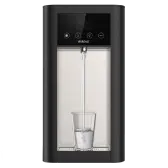
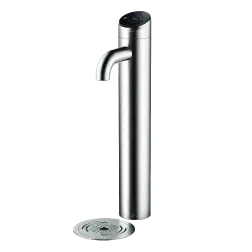
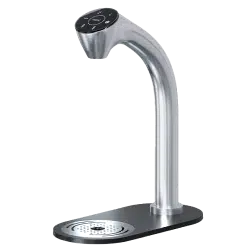
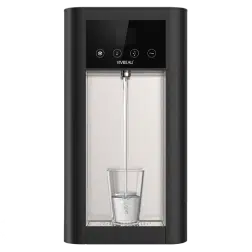
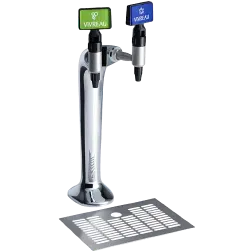
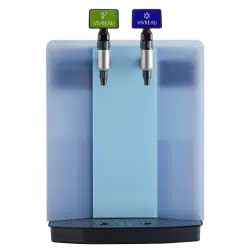
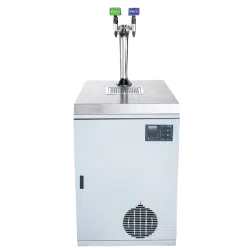
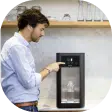
The first consideration is format. A countertop water dispenser for an office makes sense when you need a smaller footprint, a faster rollout, or a practical answer for a pantry, satellite break area, or phased renovation. An integrated tap can feel more architectural and more seamless, but it usually calls for undercounter space, utility access, and a clearer installation plan.
The right answer is not whichever option sounds more premium. It is the one your site can support without forcing awkward compromises.
Placement matters just as much as the unit itself. In a compact office, one central station near the pantry may be enough. In a larger floor plate, however, a single dispenser can quickly become a bottleneck if everyone visits it during the same part of the day.
High-traffic zones, such as pantries, café areas, and meeting clusters, need fast throughput. Lower-traffic areas, such as executive suites or smaller collaboration zones, may benefit from a secondary placement that prevents crowding at peak times.
This is also where buyers often misread capacity. Liters per hour is not the same thing as total daily demand. It is a recovery and cooling measure, which means it tells you how the system performs when several people use it in a short burst. That distinction is easy to miss, and it is one reason under-sizing happens. A team of 40 with staggered schedules behaves very differently from a team of 40 that funnels through one pantry after a company meeting.
The strongest planning conversations happen when you move past category labels and focus on layout, throughput, plumbing readiness, and how much manual work you want your team to carry going forward.
Selecting the Right Type of Dispenser for Your Unique Office and Team
After the layout and demand are mapped, the next question is experience. This is where the best water dispenser for one office can be the wrong fit for another, even if both have the same headcount.
Water type is usually the first clue. A still-only setup may cover the basics, but a sparkling water dispenser or a system that also serves hot water changes how often employees actually use it. Sparkling can make a pantry feel more considered. Hot water can remove the need for kettles and shorten small daily delays. In boardrooms, lounges, and client-facing areas, that variety reads as convenience, not excess.
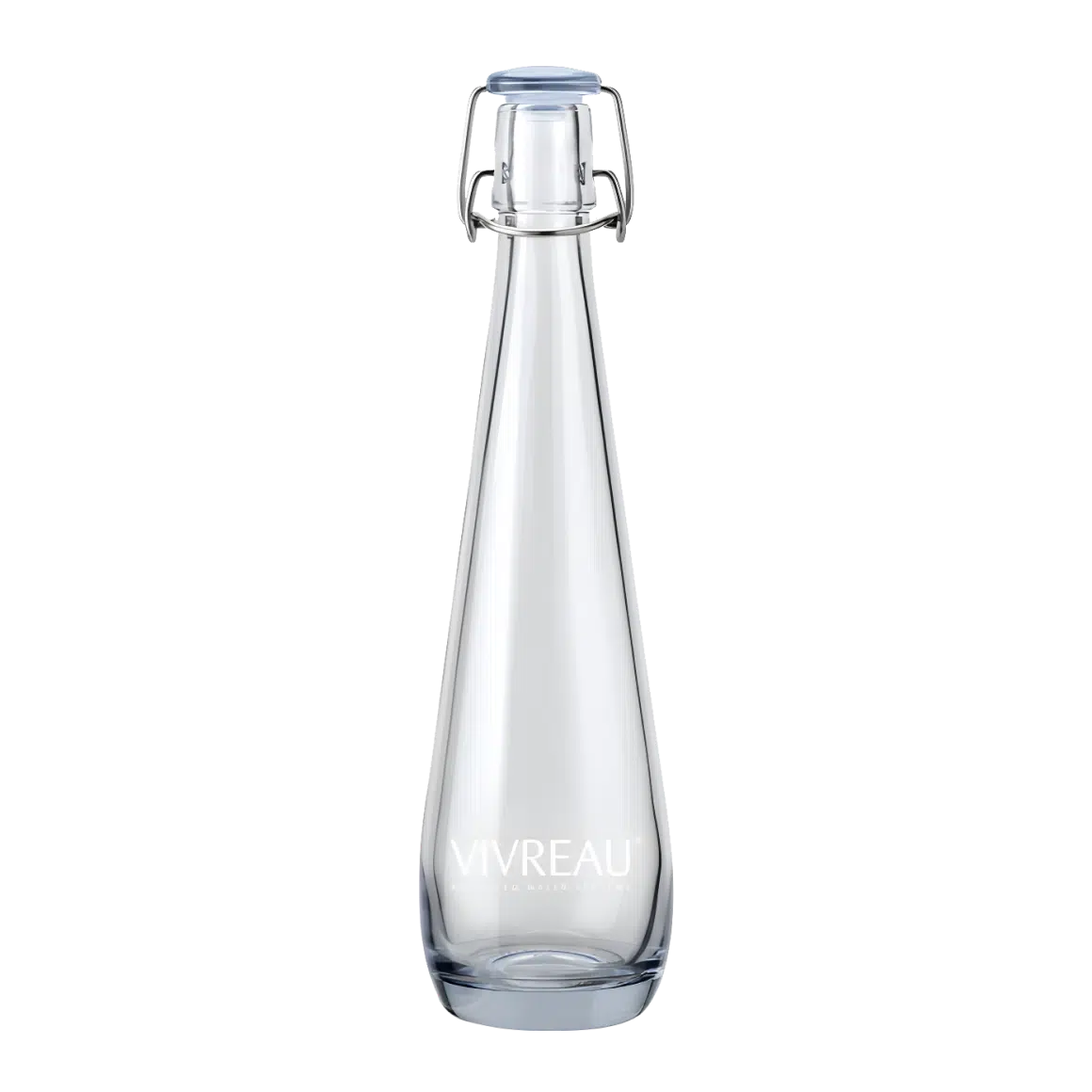
Reusable bottle programs add another layer. In conference rooms and hospitality-style office spaces, branded glass bottles can make the experience feel polished without adding single-use packaging back into the system. They also reinforce the shift away from case packs and delivery cycles. Instead of making sustainability a separate campaign, the office simply behaves differently.
Design should also be part of the selection process. A commercial water dispenser is often in view, near cabinetry, coffee stations, reception zones, or built-in millwork that was carefully designed for the space.
If the unit looks out of place, the entire space absorbs that mismatch. If it blends cleanly into the environment, the amenity feels intentional. That is especially true when comparing freestanding and integrated options in more design-conscious offices.
Lastly, it is worth thinking about inclusivity and usability. Fill height, bottle clearance, intuitive controls, and whether the unit works equally well for employees, guests, and facilities staff all shape satisfaction over time.
The best selection decisions are not driven by a single headline feature. They come from asking how the office water dispenser will be used at 8 a.m., at lunch, during back-to-back meetings, and when visitors are moving through the space.
Operational Efficiency and Maintenance
Operational efficiency often determines whether a hydration program continues to feel like an upgrade after installation. Even a sleek dispenser loses value quickly if it causes avoidable downtime or adds new tasks for already stretched staff.
Connected serviceability changes that equation. A smart water dispenser can support proactive monitoring, remote diagnosis, and, in some cases, remote fixes before users even notice a problem. That shifts service from reactive troubleshooting to a more preventive model, which is exactly the operational mindset most facilities teams want. Less guesswork, faster diagnosis, and better-prepared technician visits all translate into a smoother day-to-day experience.
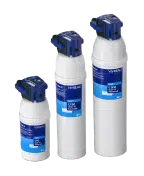
Hygiene also deserves close attention. Filtration improves water quality, but it does not address the cleanliness of the dispensing point in shared environments. NSF/ANSI 42, 53, and 401 certifications verify specific filtration and material safety standards. At the dispenser level, Vivreau’s ThermalGate™ technology automatically and regularly heats the tap to disinfect it, helping maintain a clean dispensing point in busy office settings.
Total cost of ownership is another important factor. The visible price of a unit is only one line item. You also need to compare labor, storage, deliveries, cleanup, replacement cycles, and disruption costs with the alternative you use today. Switching to a point-of-use system can reduce the cost of an organization’s water program by 86%, which is why ROI conversations should start with the full program, not just the equipment price.
When Hydration Fits the Way Your Office Works
A better hydration setup should not feel like one more facilities project to manage. It should remove friction, support the atmosphere you want the office to create, and give employees something they use without thinking twice about it.
That is the difference between adding a dispenser and building a hydration program that actually belongs in the space.
When you are ready to align layout, demand, and service expectations, request a quote to plan the right Vivreau setup for your office.
FAQs
Here are answers to a few additional questions that often come up when planning a water dispenser for an office.
-
How Do I Determine the Right Size Water Dispenser for My Office?:
Start with peak demand, not average headcount. Look at how many people use shared spaces at once, whether you host frequent visitors, and whether demand clusters around lunch, all-hands meetings, or conference schedules. Then compare that pattern with output and recovery, not just the total number of employees.
That gives you a much more accurate picture of what size water dispenser for office use will actually perform well.
-
What Types of Water Dispensers Are Best for Offices?:
The best fit depends on your space and goals. Countertop units work well for smaller pantries, phased rollouts, and offices that need flexibility. Integrated taps suit design-forward environments that can support a more built-in install.
If your search started with generic dispensers, it is worth reframing the question: do you need a simple bottle replacement, or do you need a point-of-use system that improves throughput, appearance, and maintenance over time?
-
How Can a Water Dispenser Support Sustainability Goals?:
A dispenser supports sustainability best when it changes behavior, not just messaging. Refillable access reduces dependence on packaged inventory, reusable bottles reduce single-use waste, and point-of-use delivery removes a large share of the logistics attached to bottled programs. That direction aligns with the EPA’s focus on reducing waste generation and moving toward circular materials management.
Latest Posts


