











TL;DR
Vivreau’s 2025 Corporate Confidence Survey found large North American businesses broadly optimistic and close to unanimous on continued sustainability investment, with 91.3% prioritizing sustainability and 93.2% still investing in their facilities.
-
-
- What 206 decision-makers at companies with 500 or more employees said about profitability, spending, and supply chains
- Where sustainability ranked against technology and facility investment
- How the sustainability and facilities findings translate into practical decisions about building infrastructure
-
This article was originally written in 05/2025 and has since been updated in 09/2026 to reflect new findings and data points.
Vivreau Survey Highlights Optimism and Sustainability Commitments Among North America’s Largest Businesses
At Vivreau, North America’s leading sustainable water solution, we’re proud to share the findings of our 2025 Corporate Confidence Survey. Conducted across the United States and Canada, this survey gathered insights from executives and decision-makers at large corporations (500+ employees) in the tech, finance, hospitality, and legal sectors. The results reflect a shared sense of optimism, resilience, and an enduring commitment to sustainability—even in the face of global uncertainty.
Despite economic uncertainty, nearly nine-in-ten business leaders (87.9%) anticipate profitability growth over the next year, with U.S. respondents (89.1%) expressing slightly greater confidence than their Canadian counterparts (84%). The majority are continuing their capital (66%) and operating expenses (67%) as planned. However, most companies (almost nine-in-ten) are planning changes to their sourcing or supply chain strategy, mainly increasing local sourcing. Nearly all (97%) respondents agreed that they are confident in their organization’s ability to effectively manage and thrive in uncertain times.
“The results of Vivreau’s Corporate Confidence Survey reflect the confidence and adaptability of North America’s largest companies as they plan for the future,” said Pam Campbell, Senior Vice President of Finance and Operations at Vivreau North America. “From investing in technology to prioritizing sustainability and reimagining supply chains, the findings illustrate how large enterprises remain agile and determined, even amid a volatile economic landscape.”
Key findings from the 2025 Vivreau Corporate Confidence Survey include:
-
Overall Confidence
96.6% of leaders feel confident in their ability to manage and thrive during uncertain times. The results are consistent by country and sector.
-
Profitability Outlook
87.9% of business leaders anticipate profitability growth over the next year. U.S. confidence (89.1%) slightly exceeds that of Canada (84%).
Less than 10% in each country expect their profits to decrease.
-
Buying Decisions
67.5% of organizations plan to continue capital expenditures as usual, while 66.5% of businesses are proceeding with operating expenses as planned.
However, there’s a notable divergence among countries. Only 38% of Canadian businesses report that operating expenses are continuing as planned, compared to 75.6% of U.S. companies.
Meanwhile, about one-in-three (31%) are planning on pausing certain capital expenses and one-in-five (19%) are expecting to pause certain operating expenses.
-
Spending Priorities
Technology and digital transformation have emerged as the top investment focus for companies in both the U.S. and Canada over the next 12 months, with 86.9% of organizations prioritizing spending in this area. This is a priority for 89.1% of U.S. companies compared to 80% of Canadian businesses.
Other investment areas include employee training and development (56.8%) and risk management/compliance (55.3%).
-
Sourcing and Supply Chain Strategies
Most companies (86.9%) are planning changes to the sourcing or supply chain strategy.
54.9% are increasing local sourcing, led by Canada (66%) versus the U.S. (51.3%).
Supplier diversification is a focus for 32% of businesses, especially in the U.S. (37.2%).
-
Sustainability Investments
91.3% of businesses are prioritizing sustainability initiatives in the next 12 months, with U.S. respondents (92.9%) slightly ahead of Canada (86%).
Only 8.7% of companies are deferring or deprioritizing sustainability goals.
-
Facility Investments
93.2% of organizations continue to invest in facilities, with 60.7% focusing on upgrades and 32.5% addressing essential maintenance needs.
From investing in future-proof technologies to adopting sustainable practices, the findings reflect a shift toward thoughtful, purposeful growth. The results offer critical insights into corporate spending priorities and supply chain strategies, empowering organizations to make better-informed business decisions, and refine their approaches to effectively meet their customers’ needs.
These findings are from a survey conducted by Vivreau North America from April 29th to May 2nd, 2025, among a random sample of 206 U.S. and Canadian business decision makers (Director, C-Suite). Respondents were in one of the following broad sectors: finance, legal, tech, and/or hospitality (hotels and restaurants), and represented organizations with 500 or more employees. The survey was conducted in English. For comparison purposes only, a random sample of this size would carry a margin of error of +/-6.8 percentage points, at the 95% confidence level.
Which Businesses Provide Eco-Friendly Water Filtration Systems for Large Offices?
Two findings in the survey sit next to each other for a reason. 91.3% of respondents said they are prioritizing sustainability investments, and 93.2% said they are continuing to invest in their facilities.
In a large office, those two lines usually meet at the building’s utilities and amenities, where a change is measurable and visible to staff on the day it is installed.
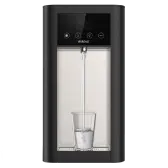
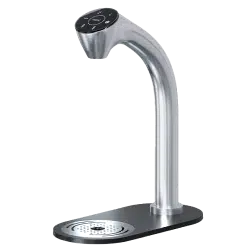
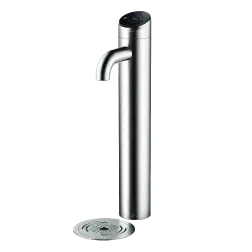
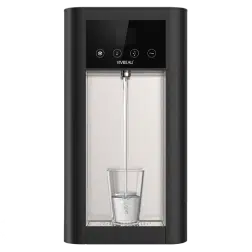
Water is one of the clearest examples. Filtering the existing supply at the point of use replaces a recurring bottled water program, along with its deliveries, pallet storage, refrigeration, and disposal.
When comparing providers, look for filtration matched to your local water, service coverage across every floor or site in scope, and reporting you can put straight into a sustainability update. Vivreau publishes averages including an 86 percent CO2 reduction compared with pre-bottled water.
FAQs
-
Who was surveyed in Vivreau's 2025 Corporate Confidence Survey?
The survey covered 206 business decision-makers in the United States and Canada, drawn from large corporations with 500 or more employees across sectors including technology, finance, hospitality, and legal. Fieldwork ran from April 29 to May 2, 2025, and the results carry a margin of error of plus or minus 6.8 percent at a 95 percent confidence level. Because the sample is deliberately weighted toward large enterprises, the findings describe how big organizations were planning rather than the broader small and mid-sized market. Read the percentages as directional sentiment from enterprise decision-makers at a specific moment, not as a forecast of what followed.
-
What did the survey find about sustainability investment?
Sustainability was close to universal among respondents, with 91.3 percent saying they were prioritizing sustainability investments. It sat alongside strong facility commitment, where 93.2 percent reported continued investment in their facilities, and a heavy technology emphasis, where 86.9 percent pointed to technology as a spending priority. The same share, 86.9 percent, said they were planning changes to sourcing and supply chain strategies. Overall confidence came in at 96.6 percent. Taken together, the picture is of large organizations treating sustainability as an operating expectation rather than a separate initiative, and funding it through the same facility and supply chain decisions they were already making.
-
How does a water program fit a corporate sustainability commitment?
It is one of the few changes that is measurable, visible, and relatively contained. Replacing a bottled water program with filtration at the point of use removes recurring deliveries, pallet storage, refrigeration, staff handling, and disposal, and the reduction can be quantified against your own prior spend and volume. Vivreau publishes averages including an 86 percent reduction in CO2 compared with pre-bottled water, roughly 1,115 pounds less waste per year for a single dispenser, and 5 lbs of ocean plastic recovered per dispenser sold through its 4ocean partnership. Baseline your current program first, so the comparison afterward rests on your own numbers rather than an industry average.
-
What should a large office check before rolling out filtered water across floors?
Start with water line access and drainage at each intended location, since that determines whether a countertop or an integrated setup makes sense and whether a floor needs plumbing work. Confirm placement against actual traffic patterns, because a unit sized for a quiet pantry will struggle at a peak-hour hot spot. Get local water hardness so filtration is matched to the supply rather than a national average. Then settle the operating questions: service coverage for every site in scope, CO2 handling if sparkling is included, and how downtime gets flagged. Landlord or general contractor approval often sets the real timeline, so raise it early in any multi-floor rollout.


