












This article was originally written in 11 2021 and has since been updated in 06 2026 to reflect new findings and data points.
TL;DR
- Great-tasting water depends on both sensory perception and water composition, which is why filtration and consistency matter more than ever in 2026.
- Taste, odor, and mouthfeel all shape how water is experienced.
- Filtration helps create a more consistent sensory result across drinking and beverage applications.
- Better water quality supports better outcomes in hospitality, foodservice, and beverage preparation.
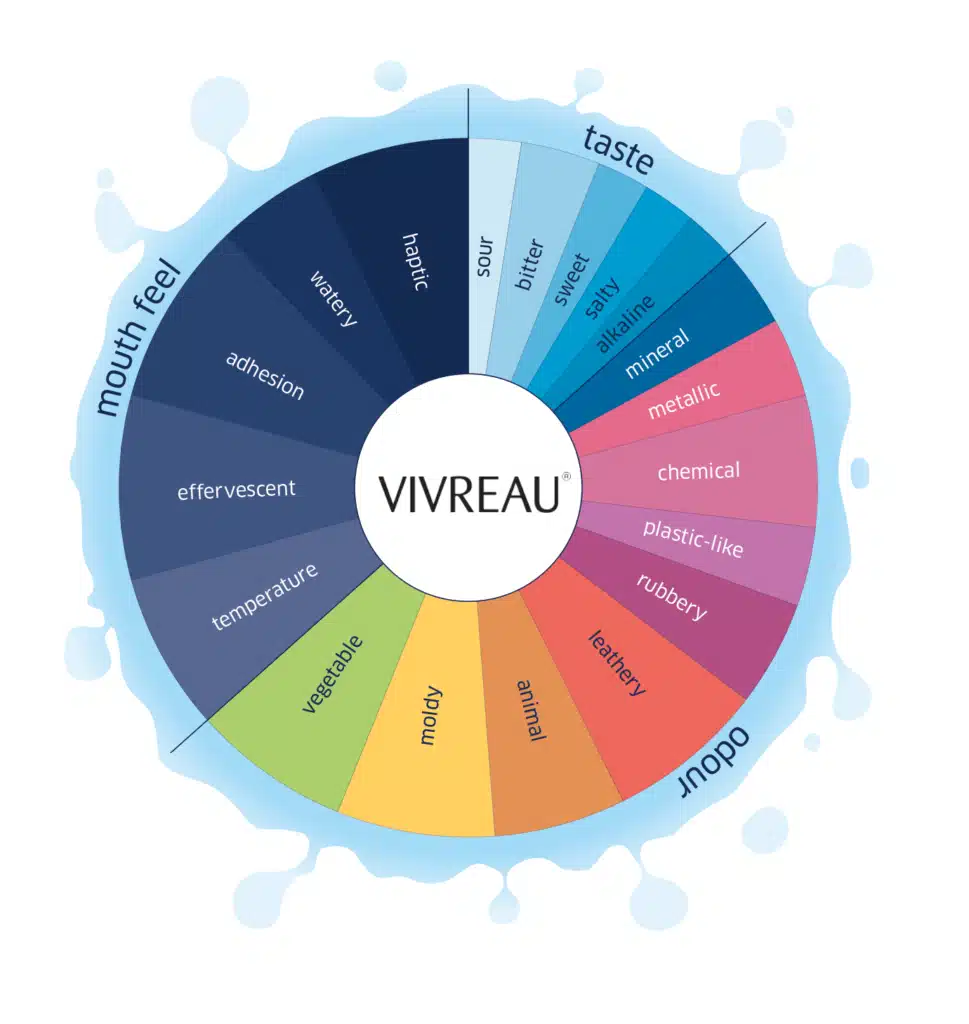
Water is an excellent solvent that consists of more than just the pure chemical compound of hydrogen (H) and oxygen (O), i.e. H2O. Substances from the environment, water treatment and minerals are dissolved in drinking water. Its exact composition affects the sensory dimensions of water: taste, odour and mouthfeel. That is why Vivreau developed this water wheel.
- Displays the variety of mouthfeel
- Applies to any kind of water
- Real reference substances that can occur in water
How to use the water wheel
A sensory wheel is used to describe foods and beverages and to train sensory panels. Therefore, the Vivreau Water Wheel is divided into the three main sensory dimensions: taste, odour and mouthfeel.
The inner circle of a sensory wheel helps to differentiate the attributes of each sensory dimension. The second circle is used to detail the quality of each attributes. The outer circle is used for panel trainings. It contains so called reference substances. These substances are known to cause the corresponding sensory effect. For example: Cis-3-hexen-1-ol smells like fresh cut grass that is why it is the reference substance for a grass-like smell.
How does water taste like?
As water evaporates, it leaves minerals or contaminants behind. However, once it condenses in the atmosphere, it begins to acquire new solutes and new attributes. Rainwater dissolves carbon dioxide, as it falls to the ground and becomes slightly acidic.
It then percolates through soil, gathering organic matter and biological residues and leaching minerals. Consequently, water can contain diverse blends of substances, that imbue it with an unexpectedly broad and nuanced range of tastes and properties.
Water that is in the mains has been treated and tested. As drinking water is one of the most highly controlled food in the western world, there are strict limits on what it can contain – but some minerals, substances used for disinfection and particles from piping, may remain.
Water is an excellent solvent for a wide variety of substances. As a result, it can contain diverse minerals, organic compounds or substances from water treatment that influences the sensory of water.
What affects water taste in 2026?
Water taste still comes down to sensory detail, but in 2026 operators are thinking about consistency more than ever. Whether water is being served on its own or used in coffee, tea, or foodservice applications, small shifts in composition can change how people perceive the final result.
That is one reason this topic remains so relevant. EPA guidance continues to distinguish between health-based drinking water standards and secondary standards tied to aesthetic qualities like taste, odor, and color. In other words, water can be safe to drink and still deliver a less-than-ideal sensory experience.
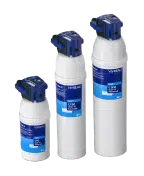
For operators, that makes filtration a quality issue as much as a maintenance issue. When unwanted tastes, odors, or residual treatment effects interfere with the drinking experience, they also affect customer perception. The strongest water programs today are not just removing problems. They are helping create repeatable taste, cleaner presentation, and a better standard for every glass, every cup, and every recipe built on water.


