














Notre Dame’s Campus Hydration Setup, With More on the Way


At the University of Notre Dame, a longstanding tradition of communal dining continues alongside evolving student preferences, culinary creativity and a thoughtful approach to hydration.
Founded in 1842, the University of Notre Dame is renowned for its academic excellence, Catholic heritage and strong sense of community. That spirit extends beyond classrooms and campus traditions to something as familiar as sharing a meal.
For generations, Notre Dame’s two principal dining halls have brought thousands of students together, reflecting the Holy Cross tradition of breaking bread together. While that tradition remains, the university continues to find thoughtful ways to enhance the campus dining experience through culinary quality, choice and innovation.
Among those improvements is a growing approach to campus hydration, one that began with an appreciation for water quality and has expanded in response to student demand.
-
Notre Dame Dining: At a Glance
- Community: Two principal dining halls bring thousands of students together around shared meals.
- Culinary innovation: The dining team explores opportunities to enhance quality, choice and personalization.
- Water quality: Sourced from untreated ground wells, campus cold water is naturally hard and additive-free. Point-of-use filtration plays a vital role in protecting equipment and delivering a clean, consistent taste.
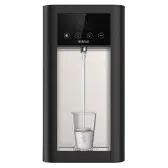
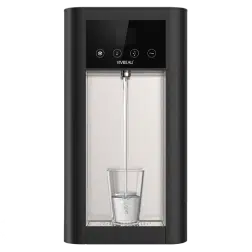
- Student adoption: Strong demand prompted an upgrade to a higher-capacity Vivreau dispenser within approximately 18 months.
- Expansion: Installations at North Dining Hall and Shields Athletic Dining Hall, with another planned for South Dining Hall.
- Sustainability: The water program complements broader university investments in cleaner energy and resource conservation.
Did you Know?
Notre Dame operates its own independent water distribution system, drawing cold water directly from campus ground wells without adding chlorine or fluoride. Because the domestic cold water remains in its pure, unsoftened natural state, point-of-use filtration allows Notre Dame Dining to deliver clean, crisp water for the refreshment of our students.
A Culinary Experience That Continues to Evolve
Serving thousands of students each day, Notre Dame Dining balances the demands of a large foodservice operation with the university’s longstanding commitment to community.
Cheryl Bauer, Director of Supply Chain and Sustainability for Notre Dame Dining, has spent nearly 25 years at the university. She describes a dining culture shaped by the belief that sharing meals brings people together.

When Water Becomes an Ingredient
For Notre Dame Dining, water quality presents a particular challenge.
Because Notre Dame’s central domestic cold water supply is pumped raw from local ground wells without bulk softening or chemical additives, equipment connected directly to cold lines receives high levels of natural minerals. Cheryl notes that without point-of-use treatment, cold-fed beverage equipment like coffee brewers can experience heavy mineral buildup in just a couple of months.
Filtration is essential, but taste matters too. In Cheryl’s experience, some treatment methods, including reverse osmosis, can leave water tasting dull or flat.
What interested her about Vivreau was its attention to both filtration and the drinking experience.
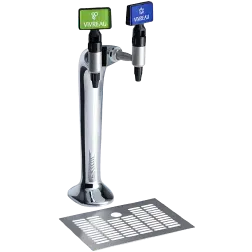
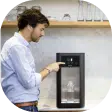
Notre Dame introduced a Vivreau system at North Dining Hall, offering filtered still and sparkling water.

When Student Demand Drives Expansion
The strongest indication of the program’s adoption came through everyday student use.
Students began bringing large reusable bottles into North Dining Hall, filling them before heading to class. Eventually, demand exceeded what the original system could comfortably accommodate. Notre Dame responded by upgrading to a higher capacity Vivreau dispenser.
For Cheryl, who noted that she typically hears feedback when something isn’t working, the capacity upgrade spoke volumes.
The program has since expanded to Shields Athletic Dining Hall, with another installation planned for South Dining Hall.
The progression illustrates Notre Dame’s practical approach to improvement: introduce an offering, observe how students use it and invest further when demand warrants.

Sustainability Beyond the Dining Hall
Notre Dame’s hydration program is one part of a much broader commitment to sustainability.
Across campus, the university has invested in significant changes to its energy infrastructure. Notre Dame ended its use of coal in 2019 and has expanded its use of solar energy and geothermal systems, including wells installed beneath parking lots and practice fields.
These initiatives reflect an institutional effort involving multiple departments, from facilities and transportation to foodservice.
For Notre Dame Dining, sustainability also informs everyday operational decisions, including sourcing, resource use and beverage service.
The university’s main dining halls already use washable cups for regular meals, while bottled beverages remain available through retail and grab-and-go operations. Vivreau complements these practices by providing another convenient way for students to refill reusable bottles.
By making filtered still and sparkling water readily accessible, Vivreau supports Notre Dame’s broader sustainability efforts while offering students a convenient way to stay hydrated throughout the day.

Explore a More Thoughtful Approach to Campus Hydration
Vivreau offers filtered still and sparkling water solutions for universities seeking to enhance beverage quality, support reusable bottle filling and respond to student demand.
Latest Posts


