











TL;DR
- Office coffee stations should be sized for the morning rush, not the average number of cups across a full day.
- Water and filtration need to be part of the plan from the start, since different machines put different demands on the same incoming water.
- Descaling and filter changes should be owned by someone specific, since both problems build quietly before they show up as a bad cup of coffee or a broken machine.
A well-planned office coffee station clears the morning rush without a line and runs for years without a major repair. A station planned around the equipment alone usually does neither. The difference almost always comes down to water and filtration, and whether they were part of the plan from day one or added on after.
This article covers how to plan a station that holds up. That means sizing the setup specifically for the morning peak and matching filtration to each machine’s actual demand.
It also requires clear ownership for filter changes and descaling, since both issues build up quietly long before causing a sudden failure or a bad cup. Get this right, and the station clears the rush and keeps running well past the first year.
The Ingredient Office Planning Leaves for Last
Water quality already gets plenty of attention in coffee. Specialty roasters and baristas talk about water sourcing and mineral content as a matter of course because they affect how a cup tastes. An office coffee setup runs on a different sequence.
The order usually goes machine first, then beans, then milk, then cups, with water and filtration attached at the end, treated as infrastructure to install rather than a variable to plan around. That sequencing, not a lack of awareness, is why water ends up mattering more than most plans account for.
That imbalance doesn’t hold up once you look at what’s actually in the cup. Coffee is mostly water by volume, since every brewing method is really just a way of passing hot water through ground coffee.
Good water does not rescue mediocre beans. Poor water holds back excellent ones, and it does so quietly by slowly wearing down the machine over time.
Planning around water and filtration from the start doesn’t mean treating water as the whole story. Beans, grind, and a well-maintained machine still do most of the work in brewing a perfect cup. Water is the input that decides whether that work holds up over months of daily use.
Size the Station for the Morning, Not the Average
Averages are the wrong planning tool here. A floor of eighty people does not generate eighty evenly spaced drinks across the day. It generates a surge in the half hour or so after most people arrive, and a smaller second surge after lunch. Everything in between runs quietly by comparison.
Cycle time per drink matters more than raw capacity once you’re planning for that surge. A machine that produces a milk drink in about a minute serves a very different queue than one built for a filter batch that brews several cups at once.
Two modest machines, placed apart, usually clear a morning queue faster than one impressive machine in a corner. The second machine adds a second queue instead of just making the first one move faster.
Hybrid schedules further complicate the picture, and the phenomenon of coffee badging (when an employee shows up briefly to swipe a badge and grabs a coffee before leaving) makes it worse.
That pattern can concentrate demand into an even narrower window than a fully in-office team would produce. Planning for the surge, not the daily average, is what keeps that narrower window from turning into a line out the door.
The Equipment and What It Needs Behind It
An office coffee setup usually falls into one of four categories, and each makes a different tradeoff. Pod and capsule systems are fast and consistent per cup, with less range in what they can produce. Bean-to-cup machines grind on demand and offer more variety, at the cost of more frequent cleaning.
Batch brewers serve a crowd efficiently but don’t do espresso-style drinks. Traditional espresso equipment with a barista on hand offers the widest range and the most consistent quality, but it demands the most of the person running it.

Every one of those machines needs something behind the counter that rarely makes it into the planning conversation. That includes a water connection or a fillable tank, drainage in some cases, power, and filtration matched to the machine’s actual use.
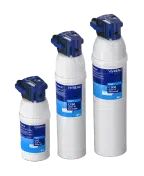
A steam-generating espresso machine and a batch filter brewer put different mineral and chlorine loads on the same incoming water. The filtration for each one has to match that specific machine, not get assigned once for the entire building. Vivreau’s PURITY C1100 XtraSafe filter, for example, is built for exactly this kind of scale protection on coffee equipment.
Water quality is also where the surprises show up later. It shapes how a drink tastes and how the equipment behind it holds up. Many coffee complaints are blamed on the beans, the grinder, or the brewing process, when the real cause is water chemistry or scale buildup inside the machine.
Hard water changes extraction, changes flavor, and leaves mineral deposits that reduce efficiency and raise maintenance needs over time. Proper filtration addresses both sides of that, protecting the equipment and building the water profile that gives every cup a fair shot from day one. Facilities-management research backs this up.
Vixxo’s reporting for facilities teams found that hardness, alkalinity, and chlorine each cause distinct types of equipment failure. That’s why one filter spec rarely covers an espresso machine, a bean-to-cup unit, and a batch brewer at the same time.
Layout, Supplies, and the Jobs Somebody Owns
Where a station sits decides how much it gets used. A station on the route between the entrance and the desks gets used constantly. A station tucked into a corner gets visited on purpose, which means it gets visited less. Keep the queue clear of seating and away from the fridge, since both turn a thirty-second coffee run into a two-minute detour.
Beyond where it sits, an office coffee setup runs on a small supply chain that needs the same planning attention as the equipment itself. That includes beans, milk, cups, and whichever consumable runs low first.
This is also part of food and beverage management, which shapes how a client-facing office comes across to visitors. A station that looks well cared for signals how the rest of the operation runs.
The last piece is ownership, and it’s the one that determines what the station looks like in month six rather than week one. Every recurring task at a coffee station belongs to somebody specific, or it stops happening.
Descaling and filter changes are the two most likely to go unnoticed until something breaks. A machine with scale building up inside it doesn’t announce the problem. It just runs a little worse each week until someone notices the coffee tastes off or the machine breaks down.
Knowing how limescale damages equipment is what makes the early warning signs visible before the machine forces the issue. The same logic applies to a workplace water dispenser or any other point on the same water line. Without an assigned owner, that service tends not to happen either.
A Station Plan by Office Size
Scaling a coffee station usually means adding a second dispense point, not a bigger machine, and making sure the water and service behind both are actually handled. One large machine under heavy demand fails the same way a small one does, just louder and more often.
| Headcount | Equipment That Fits | Water and Filtration Needs | What Tends to Break Down First |
|---|---|---|---|
| 10 to 25 | One compact machine, pod or bean-to-cup | A single filtered line sized to one unit | The filter, if changes aren’t scheduled |
| 25 to 75 | One higher-capacity machine or two compact units | Filtration matched to the busier machine’s demand | Queue length during the morning surge |
| 75 to 200 | Two dispense points, mixed machine types | Filtration specified per machine type, not shared blindly | Whichever point has no assigned owner |
| Multi-floor or client-facing | A dedicated point per floor or a staffed corporate coffee bar | A coordinated filtration plan across every point on the line | Consistency between floors or shifts |
A corporate coffee bar for a client-facing office adds one more requirement: consistency. A visitor who gets a great cup on one visit and a flat one on the next notices, even if they can’t say why. The difference usually traces back to water and maintenance rather than the beans.
Building It Around the Water
Specify the water and filtration at the same time as the machine, not after. Retrofitting a connection into finished millwork costs far more than planning for it up front.
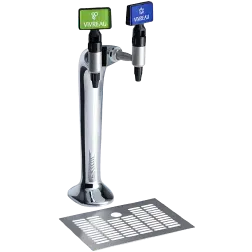
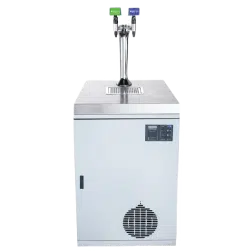
The same incoming supply usually feeds the coffee station, the nearest office’s filtered water dispenser, and any nearby steam equipment, all of which are part of the same food and beverage filtration plan. Specifying them together is what keeps a coffee program from turning into three separate projects with three separate service schedules.
Planning water and filtration this way also supports the broader push toward healthy office hydration habits that most workplace wellness plans already care about. The coffee station is often the busiest water touchpoint in the building.
If you’re planning a new station or reworking one that isn’t holding up, request a quote from Vivreau to work through the water and filtration side of the plan alongside the equipment.

FAQs
-
How Many People Can One Office Coffee Machine Realistically Serve During the Morning Peak?
It depends more on cycle time than on headcount. A machine that produces a drink in about a minute can clear roughly sixty cups in an hour under ideal conditions, but real queues never run at ideal spacing.
For a team of 25-75 people, one high-capacity machine or two compact units usually keep the morning surge from forming a line. Past 75 people, plan for a second dispensing point rather than a larger single machine, since a second point adds queue capacity that a single large machine cannot.
-
Does an Office Coffee Machine Need a Plumbed Water Connection, or Is a Fillable Tank Enough?
Both exist for a reason. A fillable tank works for lower-volume setups where someone doesn’t mind refilling it throughout the day, and it avoids a plumbing project. A plumbed connection makes more sense once volume climbs, since nobody has to remember to refill it during the morning surge.
Either way, filtration still needs to sit between the incoming water and the machine. A tank doesn’t remove the need for filtration. It just changes how the filtered water gets into the machine.
-
What Causes Scale in Office Coffee Equipment, and How Often Does It Need Attention?
Scale forms when hard water heats up inside the machine, leaving mineral deposits on heating elements, valves, and other internal parts. The USGS hardness classification places water above 121 milligrams per liter of calcium carbonate in the hard range and above 180 milligrams per liter in the very hard range.
The higher that number runs, the faster the scale tends to build. How often it needs attention depends on the hardness of the local water supply and how much the machine runs.
That’s why a fixed monthly schedule for every location misses the point. The safer approach is filtration matched to the machine and a descaling routine set against the actual water hardness in that building, rather than a generic calendar.
-
What Is the Difference Between an Office Coffee Station and a Corporate Coffee Bar?
An office coffee station is a self-serve setup built around one or two machines, designed to move people through quickly with minimal oversight. A corporate coffee bar is a staffed or higher-end setup, often found in client-facing offices, where consistency and presentation matter as much as speed. The equipment behind a corporate coffee bar tends to be more extensive, and the water and filtration plan behind it usually needs to cover more machine types at once.
-
Should the Coffee Station and the Drinking Water Point Share the Same Counter?
They can. Sharing a counter often simplifies the plumbing and the filtration plan, since both points can draw from the same specified supply. The tradeoff is queue overlap.
A coffee line and a drinking water line competing for the same few feet of counter space during a morning surge slow both down. If space allows, keep them close enough to share a water line but far enough apart that one queue doesn’t block the other.
Latest Posts


