










TL;DR
- The World Bank replaced an ad hoc mix of plastic jugs and single-use bottles at its Washington, DC, headquarters with a standardized Vivreau hydration program.
- Getting there took an internal business case built jointly by the food services and sustainability teams, not just new equipment.
- The program now saves approximately 200,000 bottles from landfills every year and delivered a 43% return on investment over four years.
The World Bank is one of the world’s largest development institutions, working with more than 189 member countries from its headquarters in Washington, D.C. Despite its scale, the building itself had no consistent way to provide people with a glass of water before 2021. Hydration shifted from space to space, running on whatever jugs or bottles a floor or event happened to have on hand.
Midgie Cajayon, Food Services Officer at the World Bank, saw the pattern first. The setup was creating plastic waste, logistical overhead, and disposal costs that scaled with every event.
Fixing it meant more than swapping in new equipment. It meant building a case that could align sustainability, food services, and leadership around one program. That internal work, as much as the dispensers themselves, is what made the rollout hold.
The Challenge: No Consistent Standard Across Catering Operations
Before working with Vivreau, the World Bank’s hydration setup was tied directly to catering. Plastic jugs and single-use bottles covered both daily needs and the needs of the meetings, conferences, and large public events that the World Bank hosts regularly. Order sizes are scaled with the guest list rather than following any fixed standard.
Midgie Cajayon, Food Services Officer at the World Bank, watched this pattern create two problems. The environmental cost was obvious. Plastic waste piled up on an institutional scale.
The operational cost was less visible but just as real. Storing, tracking, and disposing of that waste took staff time and budget away from actually serving water.
None of it reflected the sustainability goals the World Bank had already committed to elsewhere in its operations. What the bank needed was a program built once and applied consistently, not a patchwork that grew with every new event.
Building the Case: Getting Buy-In Across Departments
Replacing a catering habit at an institution the size of the World Bank could not happen on one department’s word alone. In April 2021, Cajayon set out to find a single vendor to cover the entire hydration program, and that search led to Vivreau. What set the decision apart from a typical equipment purchase was what happened next.
Food services brought sustainability in as a co-owner of the case, not as a department to be informed after the fact. Between them, the two teams built an internal case that put a specific cost on the plastic habit and set it against what a standardized enterprise rollout would actually deliver. That joint ownership is what moved the decision past food services and into a wider institutional commitment.
Cajayon has been direct about the approach, saying, “At the bank, data is at the core of all operations. So we made use of data, too.” The team built a cost-benefit analysis before asking for buy-in, not after. That instinct tracks with where large organizations are heading generally.
A 2024 Capgemini research report found that the share of executives who considered the business case for sustainability clear tripled between 2022 and 2023. More than half of organizations now plan to increase sustainability investment as a result. The World Bank built that case internally years before the research caught up to it.
The Solution: One Hydration Program, Built for Scale
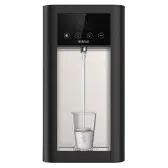
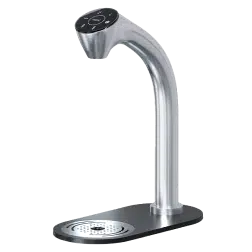
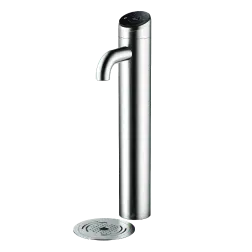
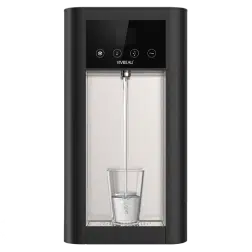
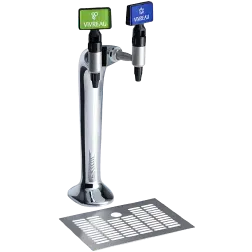
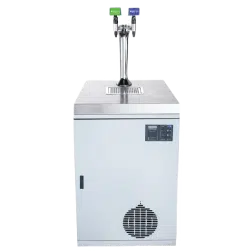
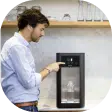
What went into the World Bank was designed around consistency rather than a single flashy installation. Two dispensers capable of pouring still, sparkling, and hot water on demand anchored the program, complete with seamless CO2 tank management for the sparkling water dispensers, backed by five more high-volume units spread across the cafeteria building.

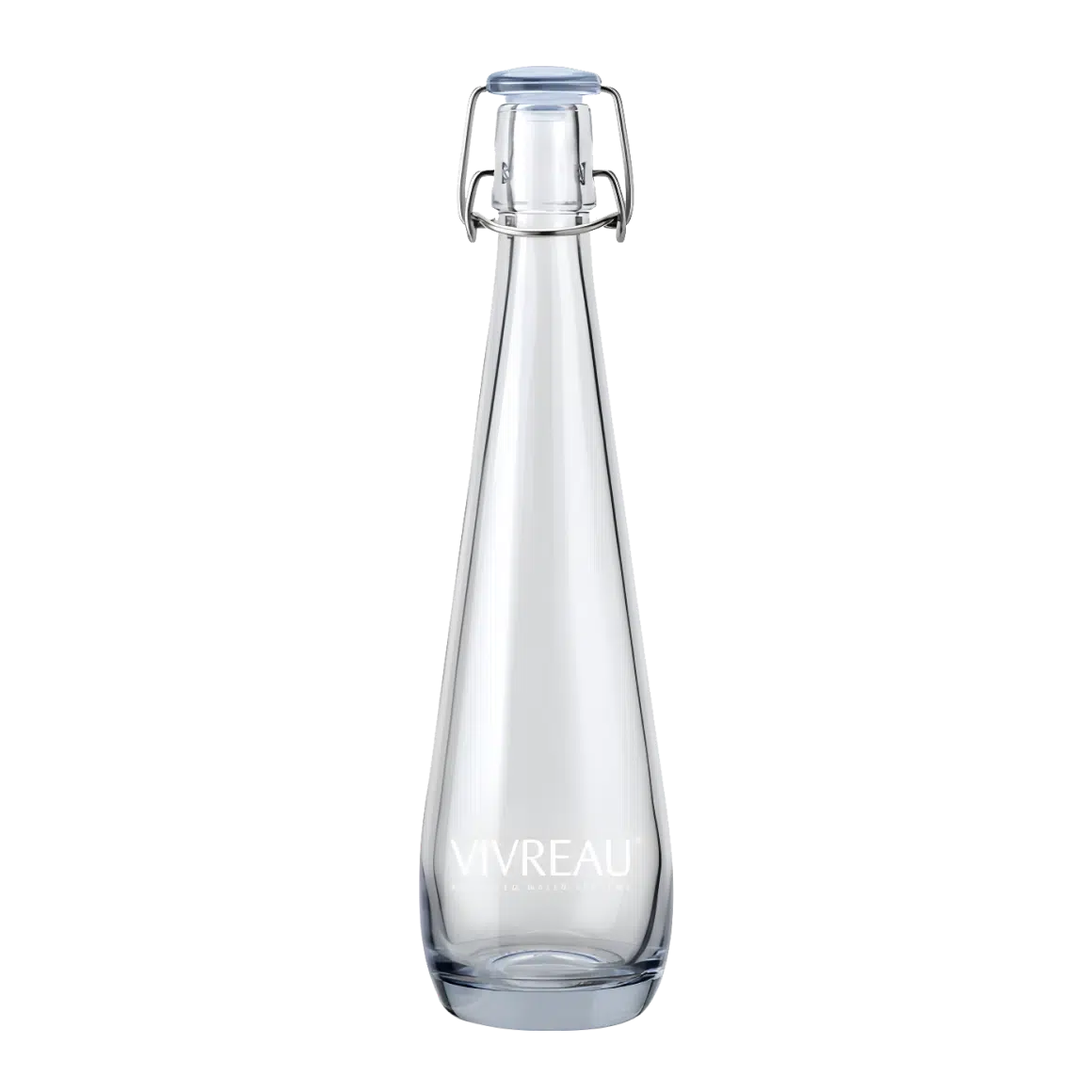
Branded glass bottles bearing the World Bank’s logo replaced the disposable bottles that previously appeared at meetings and events. What had been a waste stream became a visible corporate HQ amenity that staff and guests actually noticed, blending modern office design and tech into the workplace experience. All of it went in during June 2021, once the food services and sustainability teams had the case built.
What made the program work was its consistent application everywhere. Staff on different floors got the same experience rather than whatever their local pantry happened to have.
Guests at a conference got the same branded bottle that a staff member would use at their desk. That consistency is what turned a maintenance decision into something the World Bank could point to as a program rather than a purchase.
The Results: What Changed for the World Bank
The results in our World Bank case study are specific rather than directional. The switch saves approximately 200,000 bottles from ending up in landfills every year. Over four years, the program delivered a 43% return on investment compared to what the World Bank had been spending on bottled water and jugs.
Those two figures point at the same underlying shift. Plastic waste and cost were never separate problems. They were the same operational habit showing up in two different places.
The feedback on the results matters just as much to a facilities or procurement team weighing the same decision. According to Cajayon, the reaction has been positive across the board.
People comment on the water’s taste and notice that plastic bottles are no longer part of the picture. That reception is exactly the kind of outcome we cover in our corporate wellnesslowdown, where corporate wellness and drinking water show up as more than a back-office utility decision.
For an institution the size of the World Bank, getting facilities management and operational efficiency gains without sacrificing the guest and staff experience is the harder version of this problem. This program solved it.
Why It Matters for Other Large Organizations
The World Bank’s story is useful to any large organization precisely because none of it depended on being a bank. The pattern that created the problem was plastic habits accumulating department by department, with no single owner.
That same pattern shows up anywhere hydration gets treated as a facility’s afterthought rather than a program. The fix that worked is just as portable.
Build the internal case with actual numbers before asking for a decision. Get the sustainability and operations sides of the organization pulling in the same direction instead of running separate initiatives. Treat the rollout as a standard to apply consistently, not a fix for whichever floor complains loudest.
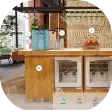
Not every organization needs a program built at the World Bank’s scale. In our JOOLA office spotlight, a smaller, design-led installation built around a single central hub shows the same underlying decision at a different scale.
What matters is matching the program to the organization, not defaulting to whatever was already in the building. That is also where sustainable office water solutions earn their keep long after installation is done.
Bringing the Same Approach to Your Headquarters
As demonstrated in this client spotlight, corporate HQ hydration requires a thoughtful approach: a large organization does not get consistency by accident. It gets there by building a case, choosing a standard, and applying it everywhere at once.
We work with organizations across the US and Canada on programs sized to match a single building or a global footprint. The right starting point always depends on what an organization’s spaces actually need.
If plastic bottles, delivery schedules, and disposal costs are still adding up somewhere in your building, request a quote to explore a standardized program built around our current lineup of office water dispensers.
FAQs
-
What Does It Mean to Standardize a Hydration Program Across a Headquarters?
Standardizing hydration means replacing whatever mix of jugs, bottles, and ad hoc setups has accumulated across a building with a single program applied consistently everywhere. Before working with Vivreau, the World Bank had different solutions across different floors and for different events, with no single standard guiding them.
Standardizing does not mean installing more equipment. It means deciding once what a consistent hydration experience should look like for staff and guests, then applying that decision across every space instead of leaving each department or floor to solve the problem on its own. The result is a single experience rather than a patchwork that grew over time.
-
How Do Large Organizations Build the Internal Case for a Change like This?
At the World Bank, the case did not come solely from facilities. Food services pulled sustainability in early, so the pitch was never just about equipment. Between them, the two teams weighed what single-use plastic was actually costing against what a standardized program would deliver instead.
That data-driven approach mirrors a broader pattern. Capgemini research found that the share of executives who see a clear business case for sustainability tripled between 2022 and 2023 across large organizations. Building that case before asking for a decision, rather than after, got buy-in across departments, preventing the change from getting stuck as one team’s initiative.
-
What Results Can a Headquarters Expect From Switching to Filtered Water Dispensers?
Results vary by building size and prior setup, but the World Bank’s program offers a concrete reference point. The switch saves approximately 200,000 bottles from landfills every year and delivers a 43% return on investment over four years compared to the bottled water and jug program it replaced.
On the reception side, people keep responding to the same two things: how the water tastes and how much plastic simply stopped showing up. The two sides of the result matter together. A program that only cuts costs or only reduces waste would tell half the story. What actually changed is that both improved at the same time.
-
What Should Facilities and Procurement Teams Evaluate before a Headquarters-Wide Rollout?
Start with where the inconsistency actually lives, whether that is bottled water on some floors, jugs on others, or event-driven ordering with no fixed standard. From there, build the cost case alongside the team that owns sustainability or ESG reporting, since a joint case is what moved the World Bank’s program beyond a single department’s request. Confirm what a building’s spaces actually require rather than assuming last year’s setup is still right. A large open cafeteria and a smaller design-led office, like the one we built for JOOLA, call for different equipment.
The underlying decision, choosing and applying one standard, stays the same. Water line access decides installation timing more than almost anything else on this list.
-
How Does Vivreau Support a Large Organization Once a Hydration Program Is Installed?
Getting the equipment installed is the easier half of the decision. What matters longer term is service and reliability. Vivreau supports installed programs with ongoing maintenance and troubleshooting, so a facilities team is not the one tracking filter changes or diagnosing issues across every floor.
For organizations the size of the World Bank, that support matters over the long run. It is what keeps a standardized program from needing to be re-solved every time equipment ages or a new building comes online. The goal is the same as the original decision: a consistent experience so that a facilities team does not have to manage buildings on a building-by-building basis.
Latest Posts


