








Key Takeaways
- An NSF certification, issued by an independent standards and testing organization, covers only the specific claims printed on a product’s listing.
- Filters, components, and dispensers are certified separately, so a dispenser’s sanitation certification says nothing about what its filter removes.
- NSF’s public online listings show each product’s model, replacement filter, rated capacity, flow rate, and certified claims, making a supplier’s claims quick to check.
- WELL v2, a building certification for occupant health, tests the drinking water at the tap, so certified filtration supports a WELL project without replacing that test.
NSF water filter certification provides commercial buyers with a quick way to verify what a filter actually does. NSF is an independent, internationally recognized organization that has developed public health standards since 1944, including NSF/ANSI 42 and 53 for drinking water filters. It also tests and certifies products to those standards. Each certification is tied to a specific product and a set of claims, such as chlorine or cyst reduction. Knowing which standards matter and how to read a listing makes it easier to compare filtration options and pay only for the protection your water needs.
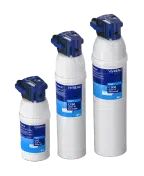
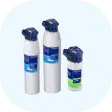
We help buyers match certified filtration to their water and their space, with PURITY filters that carry their own NSF listings and dispensers listed to NSF/ANSI 18 for sanitation.
What an NSF Water Filter Certification Verifies
Under NSF’s certification process, an independent body tests a product against a published standard and validates its reduction claims. Material safety, structural integrity, and the product literature are also checked.
Manufacturers choose which contaminants to claim, and the certifier tests only those reduction claims. That is why NSF advises buyers to look for both the standard name and a specific contaminant claim.
Certified products are also retested on a regular cycle, and the plants that make them are inspected every year, according to NSF and the Water Quality Association.
The numbers in a standard’s name aren’t a ranking. They reflect the order in which each standard was developed, so a higher number doesn’t mean better protection. Judge a filter by its claims instead.
The Standards That Matter for Commercial Water Filtration
Certification works on a claim-by-claim basis, so the standard name on a spec sheet is only the starting point. A filter certified to NSF/ANSI 42 and 53 might carry just one or two claims under each standard.
| Standard | What it covers | What to check |
| NSF/ANSI 42 | Non-health claims such as chlorine, taste and odor, chloramine, and particulate | Which of those claims the listing shows |
| NSF/ANSI 53 | Health-related claims, with more than 50 options such as lead, cysts, and volatile organic compounds (VOCs) | The exact contaminant you need reduced |
| NSF/ANSI 401 | A defined list of emerging contaminants | Which items on the list are claimed |
| NSF/ANSI/CAN 61 and 372 | Health effects of materials that touch drinking water, and lead content | Which components are covered |
| NSF/ANSI 18 | Sanitation and design of dispensing equipment | That it covers the unit, not the filtration |
| CSA B483.1 | A CSA Group (Canadian Standards Association) standard for drinking water treatment systems | A listing for Canadian projects |
To carry a reduction claim for per- and polyfluoroalkyl substances (PFAS) under NSF/ANSI 53, a filter must reduce PFAS to below 20 parts per trillion. Our PURITY C 1000 AC is certified to NSF/ANSI 53 for total PFAS reduction, and its listing names the seven PFAS compounds the claim covers.
A certified claim only helps if it matches what’s in your water. Certification shows that a filter was tested for specific contaminants, so it doesn’t give you information about those it wasn’t tested for.
We see this on our installs. When a client notices a chlorine taste, the filter isn’t always worn out. Sometimes it isn’t the right match for the local water supply, or the water itself has changed.
Start with what’s in your water, then choose a filter certified to reduce the contaminants you need to remove. That way, you pay for protection that solves your problem, not for claims that don’t apply to your site.
Filter Certification vs. Dispenser Certification
A filtered water dispenser can carry several certifications, each covering a different part. A cartridge is certified for what it reduces, a tap or valve as a component, and the unit for how it’s built and cleaned. None of those certifications extends automatically to the others. Even a cartridge listing can be limited to a named filter head or manifold.
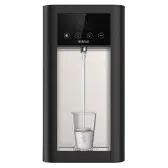
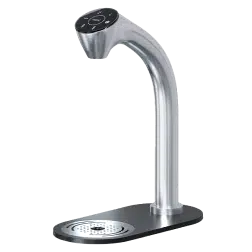
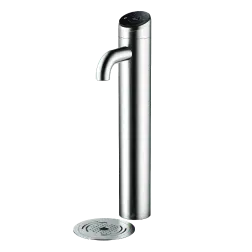
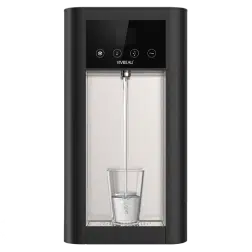
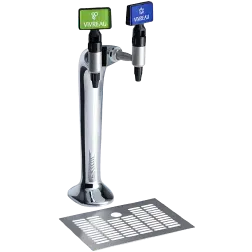
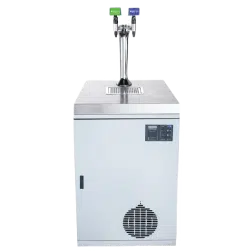
NSF/ANSI 18 covers equipment that manually dispenses food or beverages. Our Extra and Top Pro dispensers and our V3-201, V3-202, V3-204, and V3-205 systems are listed to NSF/ANSI 18. That listing covers sanitation and design and makes no claim about contaminant reduction, so the filter inside needs its own listing.
Our dispensers come with a standard filtration setup, so buyers don’t usually need to choose a filter site by site. For our Pro Filter range, we assess local water quality, usage volume, equipment type, and operating needs before recommending a filter.
Not every performance figure comes from a certification. Some come from a lab test that follows a published method. A test result shows how a product performed during testing. A certification means an accredited body has verified the claim and continues to monitor it over time.
Some hygiene features sit outside certification altogether. ThermalGate comes standard on applicable dispensers, including our Extra C-Tap, Extra I-Tap, and Top Pro. It automatically and regularly heats the tap to disinfect it. That protects the point where water leaves the dispenser, which a filter listing doesn’t cover.
How to Read an NSF Listing
The quickest way to check a claim is NSF’s own listings database. You can search by company, trade name, model, or claim. Check the claim on NSF’s site rather than on a downloaded copy, since NSF’s results pages ask readers to confirm the information through a live link.
A drinking water treatment listing shows one row for each certified product.
- The trade name and model identify the exact product that was tested.
- The replacement element names the cartridge that goes with the system.
- The service cycle gives the rated capacity in gallons.
- The flow rate gives the rated flow in gallons per minute.
- The claim column names each contaminant that the product is certified to reduce.
The service cycle and flow rate matter for budgeting and sizing. The service cycle sets how often you’ll replace the cartridge, which drives the running cost. The flow rate shows how much water per minute the filter was certified to deliver.
Footnotes can record lead content, tie a claim to an edition of the standard, or note that capacity doesn’t apply to mechanical filtration.
Our PURITY HCHF filters show how this reads in practice. Under NSF/ANSI 42, the listing claims chlorine reduction and taste and odor reduction, with a 40,000 gallon service cycle at 3.4 gpm. Under NSF/ANSI 53, the claim is cyst reduction. Here, “certified to 42 and 53” refers to three specific claims, not to every contaminant in both standards.
Other Certifiers and Canadian Listings
NSF, the Water Quality Association, and the International Association of Plumbing and Mechanical Officials (IAPMO) are each accredited by the ANSI National Accreditation Board (ANAB). In a 2024 joint letter, the three said certifications from any ANAB-accredited body are equally valid. That widens your options if your specification accepts any accredited certifier.
For Canadian projects, look for a CSA B483.1 listing. Our PURITY C filters are certified to it by NSF, alongside NSF/ANSI 42.
Certification and Workplace Wellness Programs
Under WELL v2, the drinking water quality precondition sets health-based limits, such as a lead limit of 0.01 mg/L or below. The results are verified by performance testing. The drinking water promotion feature adds access with a dispenser within a 100-ft walk of the regularly occupied floor area.
Neither feature names NSF. Certified filtration can help a building meet those limits, but WELL verifies the results by testing the water. Filtration certified for contaminants WELL tests for, such as lead, lowers the risk of a failed result. Projects pursuing WELL should evaluate dispenser location and maintenance against the applicable current WELL feature requirements.
Questions to Ask a Water Filtration Supplier
Before you compare certified water filtration options, ask each supplier for the details a listing should confirm. The answers show whether you’re paying for the claims your site needs.

Which standard is the product certified to, and which specific claims does it carry?
Which model and replacement filter does the listing cover?
Does the certification apply to the filter, a component, or the whole dispenser?
What are the rated service cycle and flow rate?
Is the product also listed in CSA B483.1 for Canadian sites?
Does each performance figure come from a certification listing or a named test method?
Choosing Certified Filtration With Confidence
An NSF certification is only as useful as the claims behind it. Confirm that each claim matches your water, that the listing names the model and replacement filter you’re buying, and that it covers the part you think it does. Those checks keep you from paying for filtration you don’t need or missing a contaminant you do. For large offices moving off bottled water, they also show what a point-of-use system will reduce before it goes in.
We’ll help you choose the dispenser and filter setup that fits your water, your usage, and your space. Request a quote to find certified water filtration built for your building.
FAQs
-
How Do I Verify an NSF Water Filter Certification?
Go to NSF’s site and look up the manufacturer or model yourself. Match the model number on the listing to the one on your quote. If they differ, ask the supplier which listing covers your unit. A screenshot or PDF from a supplier isn’t a substitute for the live record.
-
Does NSF/ANSI 53 Certification Cover PFAS?
Only when PFAS reduction appears as a claim on the listing. Many NSF/ANSI 53 listings cover other contaminants, such as cysts or lead, and say nothing about PFAS. If PFAS is a concern at your site, look for the claim by name and check which compounds it covers.
-
Is NSF Certification Required for Commercial Water Filters?
Requirements depend on location and use. California requires certification before a residential water treatment device can be registered. The state water board’s registration FAQ states that it is aware of no registration or certification program for devices sold for commercial use. Check local rules and the project’s specifications for what applies.
-
Is NSF Certification the Same as WELL Certification?
No. NSF certifies a product, and WELL certifies a building. A WELL project is judged on what comes out of the tap during performance testing, so NSF-certified filtration is a tool for passing that test rather than a credit in its own right.
Latest Posts


