









TL;DR
- Fountain spout rules don’t apply to water dispensers, but fixed units still need an accessible reach range, one-hand controls, and low operating force.
- Grip strength, tremor, and contrast matter as much as wheelchair reach, so light-press controls and pre-set portions help residents who stand at a station.
- Self-serve water saves staff time only when residents can use it unaided, which matters as senior living faces a growing workforce gap.
- Plan assisted living amenities by care setting, since independent living, assisted living, memory care, and dining each need different placement, controls, and water types.
The National Investment Center for Seniors Housing & Care (NIC) reports in its second-quarter 2026 analysis that assisted living occupancy reached 88.4%. Assisted living inventory grew just 0.3% from a year earlier, well below its historical average of more than 3% a year. With little new supply coming, operators often compete on the experience inside the buildings they already run, including the assisted living amenities residents use every day.
Water is one of those everyday amenities, and it ties directly to the independence that residents and families care about. In a 2024 U.S. News survey of recent movers and their families, 39% said they knew someone who had felt a loss of independence after moving into senior living. A water station that a resident can’t reach or operate on their own is a small, daily version of that loss, adding another request to a stretched staff.
Why Water Belongs Near the Top of Assisted Living Amenities
The National Institute on Aging defines assisted living by the level of support it offers. Residents need help with daily care, just less of it than a nursing home provides. Independence is the goal, with residents getting support where they need it and doing what they can on their own.
Getting a drink is a daily task that many residents can do on their own, and it comes up frequently throughout the day. Each one is either a chance to do something for themselves or a moment where they have to ask.
Much of the conversation about hydration for seniors centers on how much residents drink. Operators also address how easily residents can get water on their own. That makes senior living hydration an operations decision as much as an amenity one. The right assisted living hydration solutions put water where residents already go and make it simple to use unaided.
Ease of access already shapes how adults choose water. In our 2025 Hydration Habits Survey of US and Canadian adults, convenience ranked among the top factors, cited by 37% of Americans and 38% of Canadians. In assisted living, ease of access decides whether a resident pours their own water or waits for someone to bring it.
Where Water Access Breaks Down
Most communities have plenty of water, but access breaks down in the details of how it’s delivered.
These are the common failure points:
- No place to set down a walker or cane: The resident has to balance and pour at the same time.
- A control that needs a firm grip: A pinch or a twist of the wrist is hard with arthritis or a tremor.
- A spout that fits a glass but not a bottle: Some residents carry a tall reusable bottle.
- A station on the wrong route: A dispenser in a corridor that residents rarely use goes unused.
- A pitcher that sits empty between meals: Refills depend on someone noticing.
- No clear labeling: Residents may be unsure whether the station is theirs to use.
Each of these turns a self-serve moment into a request. The resident asks a caregiver, waits for the next meal, or skips the drink.
In every case, the water is available, but a design or placement choice blocks the path to it. Those choices are made during specification, so they can be fixed before a single unit is installed.
Designing for Independent Use: Controls, Height, and Reach
Accessibility for water in buildings is usually discussed in terms of drinking fountains. Dispensers follow different rules under both US and Canadian standards.
What Accessibility Standards Cover for Dispensers
The Access Board’s accessibility guidance treats water coolers and bottle fillers separately from drinking fountains. The fountain rules on spout height and knee clearance don’t apply to them. A fixed or built-in dispenser still needs an accessible route and clear floor space for a forward or side approach.
Its controls fall under the Americans with Disabilities Act (ADA) operable parts standard, which sets three requirements:
- Controls sit within an unobstructed reach range of 15 to 48 inches above the floor.
- Controls work with one hand, requiring no tight grip, pinching, or wrist twisting.
- Controls take no more than 5 pounds of force to operate.
Reaching over a counter lowers the 48-inch limit. It drops to 44 inches for a forward reach of more than 20 inches and to 46 inches for a side reach of more than 10 inches.
In Canada, the 2023 edition of the CSA B651 accessibility standard sets similar one-hand rules with a 22-newton force limit. It also requires controls to contrast with their background.
A dispenser also can’t stand in for a drinking fountain that a project already provides. Much of accessibility is decided at installation, since the same unit can meet these ranges in one spot and miss them in another.
Assisted living is licensed by each state, and the National Center for Assisted Living’s state regulations resource shows that requirements vary. Confirm local rules with your architect or code consultant.
Designing for Hands, Balance, and Eyesight
Wheelchair access is only part of the picture. Some residents are able to use a dispenser but have reduced grip strength, arthritis, a tremor, or unsteady balance. Others see less contrast than they once did.
Design for those needs directly:
- Controls that respond to a light press, with no grip or twist
- Pre-set portions, so no one has to hold a button while a cup fills
- A stable surface beside the spout for a cup, a bottle, or a free hand
- Controls that contrast clearly with the surface around them
- Plain, readable labels for each water type
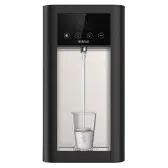
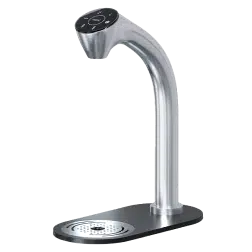
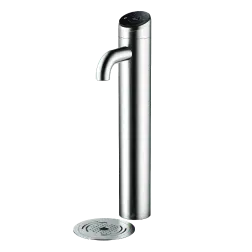
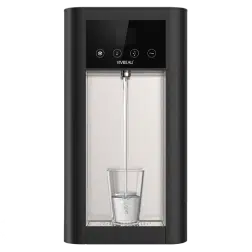
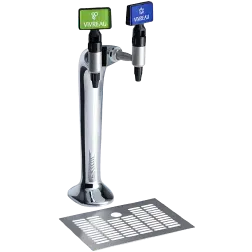
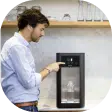
Our Extra C-Tap dispenser uses touchpad controls with preset portions. The optional Easy Access Panel, available on the Extra C-Tap and the Extra I-Tap dispenser, positions the control unit at a lower height for seated users. It installs angled or flat on a countertop or cabinet front, to match the approach each space allows.
Dining Rooms, Bistros, and Common Areas
Dining is where the staff’s water costs are most evident. Staff-served water at the table adds a personal touch, but it depends on someone refilling carafes and pitchers through every service.
Self-serve stations in a bistro or lounge can free up some of that time. Activity spaces often fall in between, with a pitcher set out and refilled when someone gets to it.
A 2025 NIC workforce analysis projects that 660,000 more workers will be needed in four core care roles by 2033. Senior Housing News reported that NIC data also places workforce costs at about 60% of total expenses in both senior living and skilled nursing.
Every carafe refill takes time that staff could spend with residents. A self-serve station only reduces that load if residents can use it on their own, which comes back to the controls, height, and placement choices above.
Senior living leaders are also rethinking dining itself. In a recent survey of 345 senior living executives by the International Council on Active Aging (ICAA), 48% plan to grow their culinary and nutrition programs.
ICAA CEO Colin Milner told McKnight’s Senior Living that this “moves residents from being consumers of food to participants in culinary wellness.” We see self-serve water as part of the same shift, since residents choose what they drink and when to drink it.
Choice at the station is one of the dining amenities in assisted living that residents notice at every meal. Chilled still and sparkling water give a dining room a restaurant feel.
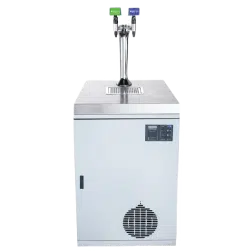
A countertop water dispenser suits a bistro or servery with limited space. Both integrated and countertop units require a water line, allowing you to choose the installation style that best fits your space and operational needs.
For tea and hot beverage service, a commercial instant hot water dispenser removes the wait for a kettle. The Extra C-Tap 1H adds instant hot water to chilled and unchilled still water, and every Extra C-Tap includes an anti-scalding feature. We still recommend placing hot water in staffed areas such as a servery or bistro.

What Each Part of Your Community Needs
Architectural planning for hydration points works best by care setting, because each setting asks something different of a station.
| Setting | Main resident need | What to specify |
|---|---|---|
| Independent living | Fast bottle refills between activities | A taller tap height for bottles, near lounges, fitness areas, and elevators |
| Assisted living | Unaided use across varied mobility and grip | Stations on daily routes, light-press controls, the Easy Access Panel, and a surface to set a cup down |
| Memory care | Consistent placement and simple choices | One familiar location, a small number of water types, strong control contrast, simple labels, and stations within staff view |
| Dining room and bistro | Choice and speed at meals | Chilled still and sparkling water, countertop units in serveries, and instant hot water in staffed areas |
| Therapy and wellness rooms | Quick refills between sessions | Wellness center hydration solutions with room under the spout for a refillable bottle and easy-to-clean surfaces |
| Staff areas | Water on shift without crowding resident stations | A separate unit, so staff refills don’t queue at resident stations |
Trust also depends on how a station looks between uses. Families touring a community may notice whether a tap looks clean and in working order.
Our ThermalGate technology, standard on the Extra C-Tap and Extra I-Tap, automatically and regularly heats the tap to disinfect it. Pair it with a commercial water dispenser service plan so that filter changes and maintenance occur on a set schedule.
Setting Up Assisted Living Amenities for Your Community
The right setup depends on your building layout and your resident mix across independent living, assisted living, and memory care. Start with the routes residents take each day. Note where they pause, where they sit, and how often staff refills carafes and pitchers.
Then set up each space with the options that fit it. A main corridor might call for light-press controls and a unit with the Easy Access Panel. The bistro might call for chilled still and sparkling water, with instant hot water behind a staffed servery.
Memory care might need one familiar station with a small number of choices. Every choice points to the same result: residents who can get water on their own and staff who spend less time bringing it to them.
We build hydration programs for healthcare and senior living communities across the US and Canada.
Request a quote to plan the right Vivreau setup for each space in your community.
FAQs
-
What Makes a Water Dispenser Usable for a Resident With Limited Grip Strength or a Tremor?
A usable dispenser needs no grip, pinch, or twist to operate. Light-press or touch pad controls are often easier to use than knobs that need a twist. Pre-set portions dispense a set amount, so a resident doesn’t have to hold a button while the cup fills. A flat, stable surface beside the spout gives a resident somewhere to rest a cup or steady a hand.
Controls should contrast clearly with the surrounding surface, and labels should be large and plain. In the US, fixed controls should also meet the ADA operable parts standard for one-hand use and no more than 5 pounds of force. Test the installed unit with residents and staff before rolling it out across the community.
-
Do ADA Drinking Fountain Rules Apply to Water Dispensers in Assisted Living?
Most of them don’t. The US Access Board treats water coolers and bottle fillers separately, so fountain rules like spout height and knee clearance don’t apply. A fixed or built-in dispenser still needs an accessible route and clear floor space for a forward or side approach.
Its controls must sit within an unobstructed reach range of 15 to 48 inches. They must also work with one hand, with no tight grip or wrist twist, and take no more than 5 pounds of force.
A dispenser can’t substitute for a drinking fountain that a project already provides. Assisted living is licensed at the state level, so confirm local requirements with your architect or code consultant.
-
Should Hydration in a Dining Room Be Staff-Served or Self-Serve?
We recommend a mix of both. Staff-served water at the table keeps a personal touch during meals, especially for residents who need more help.
Self-serve stations in a bistro, servery, or lounge let residents get water between meals and can cut the number of carafe refills staff handle each service. That only works if residents can use the station unaided, so controls, height, and placement need the same attention as the dining room layout.
Offering chilled still and sparkling water at the station gives residents a choice at every meal. Placing hot water in staffed areas keeps tea and coffee service convenient while staff stay close by.
-
Can Senior Living Communities Rent a Commercial Water Dispenser?
Yes. The Vivreau Extra C-Tap and Extra I-Tap are available through purchase or water dispenser rental.
Renting can suit a community that wants to start small, with a station in the bistro or main lounge, and add more as residents use them. Renting can also suit a community planning a renovation or expansion, where the final layout is still changing. Buy and rent are payment options on the same product pages, so the choice doesn’t limit which models you can use. Every Vivreau unit requires a water line, so placement still needs to be planned up front.
-
How Do Hydration Needs Differ Across Independent Living, Assisted Living, and Memory Care?
Independent living residents often want fast bottle refills near lounges, fitness spaces, and elevators. Assisted living needs stations that residents with varying mobility and grip levels can use unaided, placed along their daily routes. In memory care, we recommend consistent, familiar placement, a small number of choices, and strong visual contrast, with stations that staff can easily see.
On a mixed campus, the same product line can serve all three settings with different placement, controls, and water types. Plan each setting separately rather than copying a single layout throughout the building. Your care team should confirm the right water options for memory care residents.
Latest Posts


