










TL;DR
- A point-of-use water cooler connects to your existing water line and filters on demand, so there are no jugs to buy, store, or swap.
- Bottled coolers incur recurring costs that rarely appear on a single invoice, including delivery, rental, storage, and staff time.
- Compared on total cost of ownership rather than sticker price, a point-of-use system is usually the lower-cost, lower-hassle option for a busy workplace.
- The best comparison uses your own delivery, rental, and headcount numbers, not a vendor average.
Most teams comparing water options start by putting a bottled water cooler contract next to a point-of-use water cooler and reading the monthly prices. That comparison misses where the money actually goes.
As our team sees it, buyers routinely underestimate the hidden costs of a bottled program. Delivery fees, storage, waste handling, and staff time all add up, and most of it never lands on one invoice. A point-of-use system connects directly to the building’s water line and filters water on demand, eliminating most recurring costs at the source.
The honest way to compare the two is total cost of ownership (TCO), not the sticker price. This article breaks down what each option really costs, what a point-of-use system removes, and how to run the numbers with your own figures.
A point-of-use water cooler connects to a building’s water line and filters water on demand, while a bottled water cooler relies on delivered jugs. The real difference is not the sticker price. Bottled coolers incur recurring costs for delivery, bottle storage, handling and swapping, and rental, which a point-of-use system removes. Compared on total cost of ownership rather than upfront price, point of use is usually the lower-cost and lower-hassle choice for a busy workplace, with better-tasting filtered still, sparkling, and hot water on demand. Want to compare point-of-use against your current bottled program? Request a quote, and we can run the numbers for you.
What Is a Point-of-Use Water Cooler?
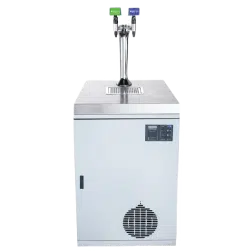
A point-of-use water cooler is a mains-fed system. It connects to your existing water line and filters water on demand, so there are no delivered bottles to receive or store. That is the core difference from a bottled water cooler, which depends on 5-gallon jugs that arrive on a delivery schedule and sit in storage until someone lifts one onto the unit.
The distinction matters because it changes the cost structure. A bottled cooler keeps generating charges every month for water, delivery, and rental. A point-of-use system shifts most of the spend to a fixed setup and a low ongoing filtration cost.
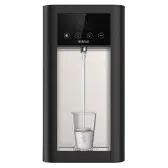
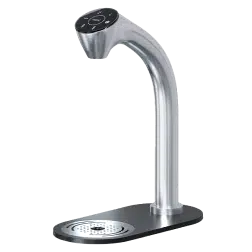
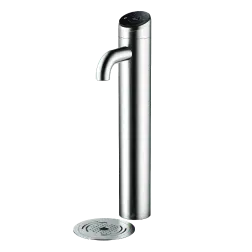
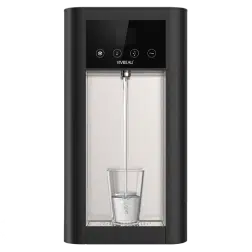
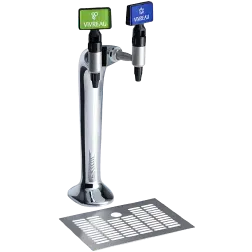
When we describe our own equipment, we call it a point-of-use dispenser, tap, or system rather than a cooler. Our dispensers deliver microfiltered still, sparkling, and hot water from a single tap, which is something a standard bottled cooler cannot do.

The Hidden Costs of Bottled Water Coolers
The sticker price on a bottled water cooler is the smallest part of what it costs to run. The rest is spread across separate line items that rarely get added up, which is why the total stays invisible. In a shared space like a coworking floor, those coworking hydration costs stack up fast across dozens of members and still land on different invoices.
Delivery and rental come first. Most bottled programs charge per bottle or per delivery, plus a monthly rental fee for the cooler itself. Those charges recur every month and scale with headcount, so a growing team quietly pays more over time.
Storage and space are easy to forget because they are not billed directly. Cases of water and spare 5-gallon jugs take up floor and back-of-house space that could serve another purpose, which carries a real cost in a dense or premium office.
Handling and swapping add labor. Someone has to order, receive, restock, and lift the jugs. A full 5-gallon jug weighs about 42 pounds.
That sits near the ceiling that federal lifting guidance treats as safe for one person, so repeated swaps are a real physical task, not a quick chore. This is the kind of work a commercial water dispenser service is meant to reduce, not create. A point-of-use system trades it for straightforward commercial water-dispenser maintenance, primarily scheduled filter changes.
Hygiene and waste round out the list. Open bottle tops and shared coolers raise cleaning considerations, and every empty bottle becomes waste to handle and remove.
In the US, only about a third of PET bottles were collected for recycling in 2023, according to recycling industry data, so most empties end up in landfills, which your facility pays to clear. Zoom out, and the scale is large. Bottled water is a roughly $ 270 billion global market, and a 2023 UN report links its rapid growth directly to plastic pollution.
One San Francisco coworking operator, Werqwise, moved to our point-of-use dispensers and reports no deliveries to receive, no cases to store, and no staff time lost to bottle swaps.
What a Point-of-Use System Costs, and What It Removes
A point-of-use system is not free to run, and an honest comparison says so. The main costs are installation, which depends on water line access and placement, and periodic filter changes to maintain consistent water quality. After that, the marginal cost per liter is low, because you are paying for filtration rather than for bottled water and its delivery.
What you remove is the recurring side of the bottled model. No delivery fees, no rental, no jug storage, no refrigeration of cases, and far less staff handling. For most offices, that trade favors point-of-use once the program runs for a full year.
This is also where office water filtration does more than cut costs. Filtered water systems for offices provide employees with better-tasting water on demand, and modern, sustainable office water solutions reduce both plastic and delivery footprints. The cost case and the sustainability case point in the same direction.
Running the Real Comparison
To compare the two options fairly, add up the recurring cost lines for each over 1 to 3 years, not 1 month. A simple water dispenser ROI calculator or a spreadsheet works, as long as it captures the full picture rather than just the invoice.
| Cost factor | Bottled water cooler | Point of use system |
|---|---|---|
| Water and refills | Recurring, per bottle | Included after filtration |
| Delivery | Recurring fee | None |
| Rental | Monthly | None, owned or leased unit |
| Storage space | Cases and spare jugs | Minimal |
| Refrigeration and handling | Staff time and floor space | Built into the unit |
| Bottle swaps and lifting | Ongoing labor | None |
| Waste and disposal | Every empty bottle | Filter changes only |
| Installation | Minimal | One-time, water line dependent |
| Ongoing upkeep | Reordering and stocking | Scheduled filter changes |
The inputs that most affect the result are your headcount, current bottled spend, delivery frequency, and the staff time your program absorbs. Local bottled water prices and consumption patterns vary widely, so the honest number comes from your own figures rather than a vendor average. Our cost savings calculator runs the same comparison using your actual delivery, rental, and headcount inputs.
Beyond Cost, the Everyday Experience
Cost is the anchor of this decision, but it is not the only thing that changes. A point-of-use system removes the moment when the last bottle runs dry, and someone has to hunt for a spare. That is a small daily friction that adds up across a busy floor.
It also upgrades what people can pour. Still, sparkling, and hot water on demand turn a basic setup into a real amenity, and that shift shows up in how often people use it. Clients tell us that offering all three increases usage, because it gives employees more choice and makes hydration feel like a premium part of the workday.
Vancouver Whitecaps FC is a clear example. The club installed our point-of-use systems to support a sustainability mandate that moved players away from single-use plastics at the training facility. Front office staff, in the club’s words, were “thrilled to have access to sparkling and still water while they work,” and the systems were quick to install and to train staff on.
JOOLA shows the design side of the same idea. When the table tennis and pickleball brand built its North American headquarters, its old setup was a patchwork of refill units, a fridge dispenser, slow kettles, and guest plastic bottles.
We replaced all of it with one point-of-use dispenser that pours chilled still, sparkling, and hot water on demand. The sleek look and the sparkling option sealed the decision, and the team liked the first unit enough to add a second soon after.

Modern workplace hydration solutions also run quietly and stay online with connected service. Our Extra C-Tap dispenser delivers microfiltered still and sparkling water from a compact tap, and connected iQ monitoring flags service needs before they turn into downtime.
Making the Switch with Vivreau
Switching from a bottled water cooler to a point-of-use system is mostly a planning exercise. The main questions are where the unit goes, how it reaches a water line, and how much still, sparkling, and hot water your space needs. Our point-of-use dispensers and taps are mains-fed, microfiltered, and serviced across the US and Canada, removing recurring bottled-cooler costs while upgrading the water itself.
Start by running your own numbers, then look at the point-of-use dispensers that fit the space.
Request a quote to compare a point-of-use setup with your current bottled program, using your actual delivery, rental, and headcount figures.
FAQs
-
What Is the Difference Between a Point-of-Use Water Cooler and a Bottled Water Cooler?
A point-of-use water cooler connects to a building’s existing water line and filters water on demand, so it needs no delivered bottles. A bottled water cooler relies on 5-gallon jugs that arrive on a schedule and are stored until they are swapped onto the unit.
The practical difference lies in the cost structure and effort required. Point of use replaces recurring delivery, storage, and handling with a fixed setup and periodic filter changes.
-
Is a Point-of-Use System Actually Cheaper Than Bottled Water Delivery?
Usually, you compare the total cost of ownership rather than the monthly sticker price. Bottled programs keep charging for water, delivery, and rental, and they add storage and staff time that never appear on the invoice.
A point-of-use system front-loads installation, then runs at a low cost per liter. For most offices, the point-of-use option costs less over a full year, though the gap depends on your headcount and local bottled water prices.
-
What Hidden Costs Come with Bottled Water Coolers?
The hidden costs sit in the line items that buyers rarely total up. These include delivery fees, cooler rental, storage space, and the staff time spent ordering, receiving, and swapping heavy bottles.
Refrigeration and waste handling add more. Together, these often outweigh the price of the water itself, which is why a full comparison looks so different from a quick per-bottle check.
-
Does a Point-of-Use Water Cooler Need Plumbing, and What Does Installation Involve?
Yes, a point-of-use system connects to a water line, so installation depends on line access, placement, and drainage. Countertop units and integrated taps have different requirements, and some spaces need minor plumbing work before setup.
Planning this early, alongside your facilities team or general contractor, keeps installation straightforward. It is a normal, manageable step rather than a major project for most offices.
-
Can a Point-of-Use System Provide Sparkling and Hot Water That Bottled Setups Cannot?
Yes. A point-of-use system can deliver microfiltered still, sparkling, and hot water from a single tap on demand, which a standard bottled cooler cannot match. That range turns a basic water station into an everyday amenity and tends to increase how often people use it. It also removes the need for separate deliveries of sparkling cans or bottles.
Latest Posts


