











Key Takeaways
- Municipal tap water in the US and Canada is already safe to drink. What filtration changes is taste, not safety.
- Filtration works in stages. Mechanical straining, adsorption, ion exchange, and membrane filtration each remove something different and leave something behind.
- The best commercial filtration is designed around a retention target, not just a removal target. Good filtration decides what stays in the water, not only what comes out.
- Two filters with the same price tag can perform very differently. Micron rating, certification, rated capacity, and application match are the four fields that actually separate them.
Most guides on water filtration answer one question: what does a filter take out? The U.S. Environmental Protection Agency draws a sharper line than that. It sets one set of rules for what makes water safe, and a separate, unenforced set of guidelines for what makes water taste good.
That distinction, safety on one side and taste on the other, is the entire reason filtration is a design decision and not a simple subtraction problem. A dispenser on a coffee bar and a tap in a hotel lobby need water filtered for different purposes, even when both draw from the same municipal supply.
This piece walks through how filtration actually works, stage by stage, and what that means for choosing a commercial system that fits your space rather than a generic one that fits no one.
What Is Actually in Tap Water Before It Reaches the Glass
Municipal water in the United States and Canada arrives at the tap already treated and safe to drink. That is not in question here. What is worth understanding is what else arrives with it.
Between the treatment plant and your building’s tap, water can pick up residual disinfectant, dissolved minerals, and fine particulates from the distribution system.
The EPA regulates these two categories differently, and that difference helps explain why filtered water tastes better even when unfiltered water is perfectly safe. Primary drinking water standards are legally enforceable and protect against health risks.
Secondary standards cover taste, odor, and color, and public water systems are not required to meet them. In other words, a public water supply can pass every safety test and still taste faintly of a swimming pool. That gap between safe and pleasant is where commercial filtration does its work.
Some of what shows up in tap water has its own name and its own behavior. Chlorides, covered in our chlorides water lab post, are dissolved salts that can impart a metallic or salty edge to food and beverages long before they raise any safety concerns. Municipal water quality also varies by region and by season, so the same building can see its water change character throughout the year, even though the safety profile never moves.
How Water Filtration Works, Stage by Stage
Most commercial filters combine more than one of these mechanisms in a single cartridge. Understanding each one on its own lets you read a filter spec rather than just trusting a label.

Mechanical Filtration, or Straining by Size
Mechanical filtration is a physical barrier with pores of a known size. Water passes through, and anything larger than the pore gets held back. Sediment, rust flecks, and other particulates too large to pass simply stop at the barrier.
This is also where a filter’s micron rating lives, and where the difference between a nominal and an absolute rating matters most. Under NSF and ANSI testing methodologies, a nominal rating means the filter captures most particles of that size, typically 85%.
An absolute rating means it reliably catches at least 99.9% of them under defined test conditions. Cryptosporidium and Giardia are the reasons that the gap gets tested so strictly.
The CDC treats a nominal one-micron filter and an absolute one-micron filter as two different products for parasite protection, and only the absolute version, certified to NSF/ANSI 53 or 58, actually earns that protection. A nominal rating at the same number on the label will still let some of those organisms through.

Adsorption, Where Chlorine Taste and Odor Go
Activated carbon does not remove chlorine from water. It attracts chlorine molecules and holds onto them across an enormous internal surface area.
A facilities manager can picture that as chlorine sticking to the inside of the filter rather than passing through it. This single mechanism is responsible for most of the taste improvement people notice after filtration.
Chlorine is not the enemy here. It disinfects water throughout the distribution system, right up until the moment it reaches your glass.
Some municipal systems use chloramine instead of straight chlorine for that same job, covered in our chloramine water lab post. Either way, adsorption is simply where that disinfection job ends and a different one, taste, begins.

Ion Exchange and Scale Control
Calcium and magnesium, the minerals that make water taste full rather than flat, are managed here rather than eliminated. In the strict sense, water softening via ion exchange swaps hardness ions for sodium ions. A gentler approach, scale inhibition, keeps calcium and magnesium in solution so they do not deposit as scale on heating elements.
This is the honest tension at the center of commercial filtration. The same minerals that make water taste good are exactly the minerals that build limescale inside a boiler or a steam line.
A well-specified filter does not choose one side of that tradeoff by accident. It is built to hold both at once, protecting equipment while keeping the water itself pleasant to drink.

Membrane Filtration and the Purity Tradeoff
Membrane filtration covers a spectrum, from microfiltration at the coarser end through reverse osmosis at the finer end. As pore size shrinks, the filter stops being selective and starts removing nearly everything dissolved in the water, minerals included.
That is a legitimate choice for some equipment. A machine that cannot tolerate any mineral content at all may require water stripped to near purity. It is a poor choice for water that people are meant to drink and enjoy.
What Good Filtration Deliberately Leaves In
A retention target is as much a design decision as a removal target, and this is the part most filtration guides skip entirely. The World Health Organization has reviewed the health case directly, most notably for populations whose primary water source is demineralized water, such as regions that rely heavily on desalination.
In that context, water with calcium and magnesium stripped out is linked to measurable health effects, including cardiovascular and bone health outcomes. The WHO singles out pregnant and breastfeeding women as a population where the concern is sharper still. A commercial dispenser filtering out chlorine and sediment while keeping minerals intact never puts a reader in that situation.
Taste tells the same story from a different angle. The Specialty Coffee Association’s published water quality standard sets a target calcium hardness range, because water that is too soft underextracts and tastes thin, while water that is too hard mutes acidity and flattens aroma.
That range is one reason a coffee shop water filtration system is specified differently than a still water tap in the same building, even when both draw from the identical municipal supply.
Water with everything removed from it does not taste better. It tastes like nothing.
Why "A Filter Is a Filter" Is an Expensive Assumption
Two filters can carry a similar price tag and still perform in completely different ways once installed. Four fields separate them, and any commercial buyer comparing specs should look at all four before deciding.
The first is an absolute micron rating, not a nominal one, for the reasons covered above.
The second is the certification itself and the specific claims listed under it. Certification is not one ladder with two rungs.
NSF/ANSI 42 speaks to aesthetics, chlorine taste and odor mainly, and NSF/ANSI 53 speaks to health, lead, certain parasites, and volatile organic compounds among the claims it covers. Clearing one says nothing about the other, so the right certification for your building depends on what your water actually needs protection against, not on which number sounds more official.
The third is rated capacity measured against real throughput, since a filter rated for a light office pantry will wear out fast in a high-volume hotel restaurant kitchen.
The fourth is application match, because an office water filter machine and a filter feeding an espresso group head are solving different problems, even when they share a cartridge design.
| Filtration Approach | What It Removes | What It Leaves In | Best Suited To |
| Mechanical or sediment | Particulates, rust, sediment above the pore size | Dissolved minerals, taste compounds | Pre-filtration ahead of finer stages |
| Activated carbon (adsorption) | Chlorine taste and odor | Calcium, magnesium, and most dissolved minerals | General drinking water, office, and hospitality taps |
| Ion exchange or scale control | Scale-forming behavior of calcium and magnesium | Taste, or the minerals themselves, if softened | Espresso machines, steam ovens, and boilers |
| Reverse osmosis | Nearly all dissolved solids, minerals included | Very little | Equipment that cannot tolerate any mineral content |
Price and installation questions will come up in almost every filtration conversation, and they deserve a straight answer rather than a dedicated detour here. The straightforward version is that both depend on the specific setup, the water conditions in your building, and which of the four fields above your equipment actually needs. That is a conversation worth having with a quote in hand, not guessed at from a spec sheet alone.
How to Match Filtration to Your Space
Filtration is really a decision about the experience you are designing, whether that is office water filtration for a pantry and boardroom, a hotel lobby, a spa, or a restaurant service line.
The same building often needs different filtration on the espresso machine than it does on the still and sparkling tap down the hall. Treating both the same way is how filtered water systems for offices end up underperforming in at least one location.
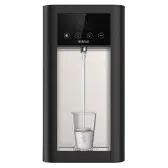
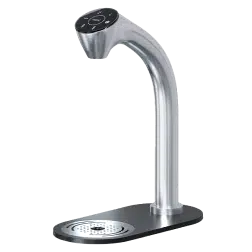
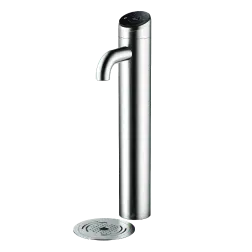
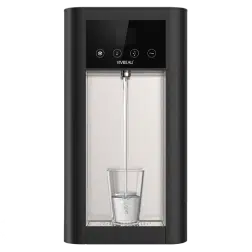
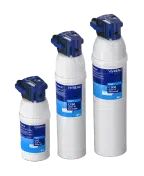
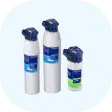
We think about filtration this way for every drinking water system for office projects, and every hotel filtered water system we help specify. Our PURITY and PURITY C filtration lines are built around exactly this principle, matching the filtration approach to the equipment and water conditions rather than defaulting to a single setting for an entire building. You can use our filter selector tool to see how that matching works for your own equipment list before you commit to a system.
Getting this right once, at the specification stage, is what keeps a filtration setup performing as designed for years, rather than becoming a recurring source of maintenance calls for commercial water dispensers.
Request a quote to design the right Vivreau filtration setup for your space.
FAQs
-
What Is the Difference Between an Absolute and a Nominal Micron Rating on a Water Filter?
A nominal rating means the filter catches most particles at that size, typically around 85%, under conditions that can vary by manufacturer. An absolute rating means the filter reliably catches at least 99.9% of particles at that size under defined test conditions.
The difference matters most for health protective claims. A nominal one-micron filter will let some organisms through that an absolute one-micron filter, tested to NSF/ANSI 53 or 58, reliably stops.
-
Does Filtered Water Still Contain Minerals Like Calcium and Magnesium?
It depends on the filtration method, and this is exactly the choice a commercial buyer should make on purpose. Mechanical filtration and activated carbon filtration leave calcium and magnesium largely intact while removing sediment, chlorine taste, and odor.
Reverse osmosis strips minerals along with almost everything else dissolved in the water. Well-specified commercial filtration keeps beneficial minerals in place while removing substances that affect taste and equipment performance.
-
Is NSF/ANSI 42 Certification Enough for a Commercial Hydration Program, or Is NSF/ANSI 53 Necessary?
Not necessarily. NSF/ANSI 42 confirms that a filter improves taste, odor, and appearance, but nothing about health protection.
NSF/ANSI 53 confirms specific health-related contaminant reduction, lead, certain parasites, and volatile organic compounds among the claims it covers, and neither certification implies the other. Whether 42 alone is enough for your hydration program depends on what is actually in your water, which a water test answers far better than a guess.
-
Why Does the Same Filter Perform Differently on an Espresso Machine Than on a Chilled Still Water Tap?
An espresso machine depends on a specific mineral balance to extract flavor properly and needs scale control to protect its boiler and group head from heat-driven mineral deposits.
A chilled still water tap has no heating element and no extraction chemistry to protect, so its filtration priority is usually taste and clarity rather than scale prevention. Matching the filter to the equipment, not just to the building, is what makes both taps perform well.
-
How Often Does a Commercial Water Filter Need Replacing, and What Changes in the Water When It Is Overdue?
The replacement interval depends on rated capacity, water quality, and actual usage volume, so capacity should be measured against actual throughput rather than a generic timeline.
When a filter runs past its rated capacity, its ability to adsorb chlorine and manage scale-forming minerals declines, so taste and equipment protection both weaken gradually rather than failing all at once. Monitoring usage against rated capacity is the reliable way to catch this before it becomes a maintenance issue.
Latest Posts


