








Key Takeaways
- Vivreau and Bevi are not competing for the same job. Bevi is a beverage-choice platform built around flavor variety and customization. Vivreau is a premium filtered-water program built around still, sparkling, and hot water.
- Bevi’s Standup 2.0 offers hot water and up to 8 flavor and enhancement slots. Vivreau’s Extra C-Tap line includes configurations that skip carbonation entirely for offices that don’t want to manage a CO2 tank.
- Vivreau’s edge shows up in on-site bottling and integrated undercounter design. Bevi’s edge shows up in flavor customization and connected data on drink preferences and office usage patterns.
Facilities managers and procurement leads searching for Vivreau vs Bevi are usually comparing the two names that come up most often in commercial water and beverage dispensing. What’s harder to find is a clear picture of where the two actually differ.
Both companies show up in a lot of the same searches. That doesn’t mean they’re built to solve the same problem.
The real differences surface in flavor variety, hot water availability, design integration, and how each one handles day-to-day service. Depending on what a space needs, either one can come out ahead. This article breaks down both systems so you can make the purchase decision that best fits your goals.
The Short Version, Two Different Categories
Bevi is a beverage-choice platform. It’s built around variety, letting users mix flavors, enhancements, and carbonation levels into a customized drink.
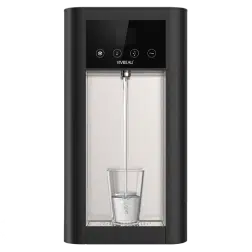
 Vivreau is a premium filtered water program with dispensers certified by NSF and Intertek. It’s built around consistent, high-quality still, sparkling, and hot water delivered through a designer tap. Flavor is available too, but as a separate add-on rather than the main event.
A buyer choosing between the two is really choosing between two different priorities: beverage variety or a premium water amenity. Either can be the right answer, depending on the space. This comparison is scoped to Bevi specifically, since procurement teams comparing water and beverage systems often weigh multiple options before making a decision.
What Each System Dispenses, and the CO2 Question
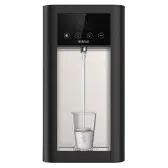
Bevi’s product line splits by form factor. The Signature Standup 2.0, its freestanding unit, dispenses still, sparkling, and flavored water at hot, cold, and ambient temperatures. Its hot water runs 185 to 195 degrees Fahrenheit.
The Signature Countertop, Bevi’s compact model, dispenses only still and sparkling cold water, with no hot water option. That distinction matters for any office weighing a sparkling water dispenser against a smaller countertop footprint. The Countertop trades hot water for that smaller space.
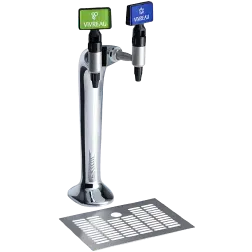
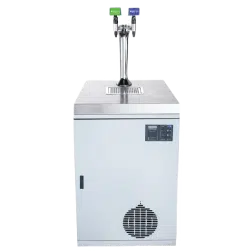
Vivreau’s Extra C-Tap line skips the form-factor split. It offers four fixed configurations instead: Still Only, Still and Sparkling, Still and Hot, and Still, Sparkling, and Hot.
The Still Only and Still and Hot configurations became available for installation in the US, Canada, and Mexico in March 2026. Both are built for buyers who want a premium tap without carbonation.
The CO2 question usually gets oversimplified. Bevi manages carbonation with an internal CO2 cylinder. A typical office refill visit takes 10 to 20 minutes, and Bevi’s own published benchmark runs about half a tank a month for roughly 50 users.
Vivreau’s own sparkling configurations work the same way. Vivreau does not supply the CO2 tank either.
Any customer running a sparkling or Still, Sparkling, and Hot configuration sources and manages a tank just like a Bevi customer would. Vivreau’s advantage is that it also offers configurations that remove carbonation entirely.
That option isn’t available anywhere in Bevi’s current lineup. An office running a sparkling water machine across several floors will find that cylinder swaps add up fast.
The still-only option is a genuine way to opt out, not just a smaller version of the same system.
Design, Integration, and How It Reads in the Space
Bevi’s hardware comes in two forms. The Standup 2.0 is a freestanding unit measuring roughly 66 inches tall.
The Countertop sits directly on the counter, tucking its plumbing and hardware out of sight in the cabinet below. Both are designed to be functional and easy to service. Neither integrates into millwork as a built-in tap.
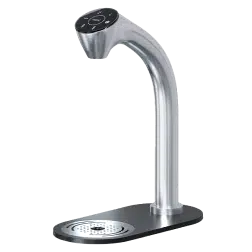
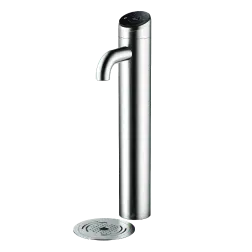
Vivreau’s Extra C-Tap configurations are designed for that kind of integration, as well as for freestanding options such as Top Pro. The Extra C-Tap uses a brushed stainless steel tap with a glass touch panel designed to sit flush in a pantry, lobby, or conference room counter rather than stand out as equipment.
Vivreau also offers an optional Easy Access Panel, a secondary control panel installed at a lower height to help meet ADA accessibility needs. It’s available as an add-on across the Extra I-Tap, Extra C-Tap, and Top Pro lines for offices that need to plan for accessible reach ranges.
Regarding Bevi vs Vivreau aesthetics, the two are simply built for different visual roles. Bevi’s units are designed to be noticed and interacted with, which fits a break room built around variety.
Vivreau’s tap systems are designed to disappear into the millwork instead. That fits a premium office water station meant to read as part of the space rather than an appliance in it.
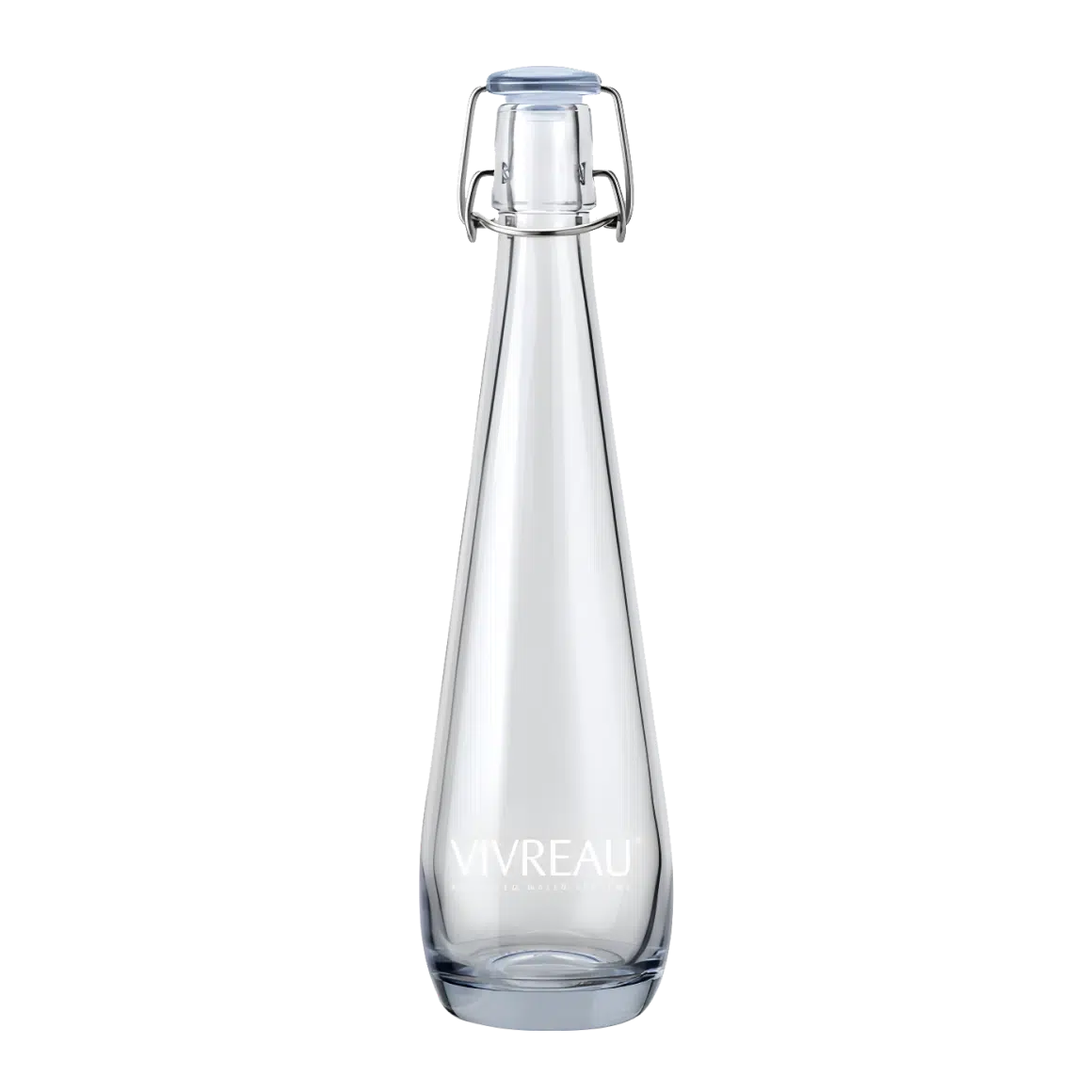
On-site bottling is a capability worth naming plainly, since it doesn’t appear anywhere in Bevi’s product materials. Vivreau’s bottling systems ship with reusable glass bottles: 60 with the standard bottlers and 100 with the high-volume systems.
That lets an office or hospitality program pour and present water in a glass rather than a plastic. That’s a genuine category difference, not a minor spec.
Service, Monitoring, and What Happens When Something Breaks
Both companies build connected equipment, so the fair comparison is what the monitoring actually does, not whether an app exists.
Vivreau’s iQ Solution provides continuous remote monitoring, real-time alerts, and predictive maintenance, which Vivreau calls the industry’s first 24/7 Smart Water Dispenser. The goal is catching an issue before anyone in the office notices a problem, rather than waiting for a dry tap to trigger a service call.
Bevi publishes a narrower but real claim here. Every Bevi machine stays connected to the internet. That connection is what lets Bevi’s team spot a need before a customer does, a worn part, a carbonation tank running low, or a flavor pouch that’s empty. Standard service visits run 10 to 20 minutes.
What this comparison won’t do is rate one company’s reliability, response time, or service quality against the other’s. Neither company publishes the kind of data that would make that comparison fair.
A claim like that would be an exposure without evidence to back it up. What’s verifiable is the mechanism each company describes for its own equipment. Both are legitimate approaches to a genuinely important problem for any office running shared hydration infrastructure.
Where Each One Fits Best
The honest answer depends less on the equipment and more on what the room needs to accomplish.
The table below lays out the verifiable differences side by side:
| Consideration | Vivreau | Bevi |
| Primary category | Premium filtered-water program | Beverage-choice platform |
| Still and sparkling | Yes, across most configurations | Yes, on both models |
| Hot water | Yes, on Still and Hot and Still, Sparkling, and Hot configurations | Yes, on Standup 2.0 only, not on Countertop |
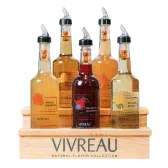
| Flavors | An optional add-on program, separate from the tap | Built in, up to 8 on Standup 2.0, up to 4 on Countertop |
| Form factors | Freestanding and integrated undercounter | Freestanding and countertop, no integrated option |
| Glass bottling | Yes, on-site bottling with reusable glass bottles | Not offered |
| CO2 management | Required on sparkling configurations, avoidable on still-only configurations | Required, internal CO2 cylinder |
| Connected service | iQ Solution, continuous monitoring, and predictive maintenance | Remote monitoring for service and refill needs |
| Typical environments | Offices, hotels and restaurants, healthcare and senior living, schools, foodservice, legal and financial offices | Offices, hotels, retail, gyms, airports, healthcare, colleges, warehouses, events |
Buyers researching a top-rated water dispenser for a specific environment will notice that both companies serve a wide range of spaces. The distinction is in depth for particular categories, not overall breadth.
Vivreau’s presence in hospitality, healthcare, senior living, and foodservice comes with dedicated capabilities such as on-site bottling and integrated design, specifically built for those settings. Bevi’s published environments lean toward high-traffic public and retail-adjacent spaces instead, where its variety-first model fits naturally.
How to Decide
This comparison doesn’t end with a declared winner, because the two systems are built for different priorities. If your answers point toward a premium water program built into the space rather than a beverage station built to be noticed, working through a best commercial water dispenser evaluation with Vivreau’s team is the natural next step.
Request a quote to design a premium hydration experience for your workplace or guests, or explore the full range of office water dispensers to find the configuration that best fits your space.
FAQs
-
Does Bevi Offer Hot Water, and Does Vivreau Offer Flavors?
Yes to both, with a caveat on each. Bevi’s Standup 2.0 dispenses hot water between 185 and 195 degrees Fahrenheit, though its Countertop model does not. Vivreau offers flavors as a separate add-on program rather than building them into the tap itself. That keeps the core water experience focused on still, sparkling, and hot rather than flavor variety.
-
Which System Suits a Hotel Lobby, Restaurant, or Care Setting Rather Than an Office Break Room?
Vivreau’s integrated tap options and on-site bottling with reusable glass bottles are built for guest-facing hospitality and care environments. Presentation and consistency matter as much as function in those spaces.
Bevi’s published environments include hotels and healthcare, but its equipment is designed around beverage variety. That’s different from the glass bottle service or millwork integration that hospitality settings often want.
-
What Is Actually Involved in Managing CO2 Cylinders for Carbonated Water Across Multiple Floors?
Both Bevi and Vivreau’s sparkling configurations require a customer-sourced CO2 cylinder that is refilled roughly monthly, depending on use. Service visits typically run 10 to 20 minutes.
Across several floors, that means multiplying the task by the number of sparkling units installed. Vivreau’s Still Only and Still and Hot configurations are the only ways to remove that task entirely from a floor’s hydration plan.
-
Can Either System Be Integrated Into a Countertop Instead of Standing Freely in the Room?
Bevi’s Countertop model sits on a counter with its hardware housed below, but it is not a built-in or millwork-integrated tap. Vivreau’s Extra C-Tap and Extra I-Tap lines are designed to integrate directly into cabinetry and countertops as a flush-installed tap. That’s a different level of integration than either the Bevi model currently offers.
-
How Do the Two Compare on Connected Monitoring and What Happens When a Unit Needs Service?
Vivreau’s iQ Solution provides continuous remote monitoring, real-time alerts, and predictive maintenance to catch issues before they disrupt the day. Bevi’s machines stay connected around the clock.
That’s what lets Bevi’s team catch a part wearing out, a carbonation tank running low, or a flavor pouch running empty, usually with a visit that takes 10 to 20 minutes. Both are real, published capabilities. Neither company’s reliability nor response time is independently verifiable from public materials.
Latest Posts


