












TL;DR
- The inputs that shift the calculation most: employee headcount, current bottled water spend, storage requirements, and the staff time absorbed by delivery logistics
- Traditional cost comparisons miss what doesn’t appear on an invoice: delivery coordination, wasted storage space, and the ongoing operational friction of a bottled water program
- Leading organizations treat hydration as a workplace amenity investment, not a utility line item, and build their ROI case accordingly
- A strong business case accounts for financial savings, operational simplification, and the long-term value of a better experience for employees and guests
Many organizations evaluate hydration by comparing line-item costs for bottled water with those for dispenser contracts. This intuitive approach undercounts the operational reality. By focusing solely on per-unit costs, leaders overlook the hidden expenses of delivery logistics, storage management, and administrative friction.
Effective business cases reframe hydration as a workplace amenity rather than a utility. As expectations for quality office environments rise, hydration infrastructure has become central to attracting and retaining talent and fostering culture. Viewing it as an investment in employee experience allows organizations to justify filtered systems by linking operational savings to broader goals.
A comprehensive framework helps build a case supported by Finance, HR, and facilities. We will explore the factors that affect payback periods, reveal the hidden costs of bottled delivery, and quantify the value of sustainable solutions. Mapping these costs enables a shift from reactive procurement to strategic investment in efficiency and office culture.
Water Dispenser ROI Calculator
A Better Way to Evaluate Workplace Hydration
 A water dispenser ROI calculator is a useful starting point, but only when it’s asking the right questions. For most organizations, the first instinct is to compare monthly bottled water costs against a dispenser contract, and stopping there misses most of where the real value lives.
Treated as a decision-making tool rather than a simple cost comparison, an ROI analysis should clarify which inputs have the greatest impact on the payback period, what financial and operational value a program creates, and how to build a case that Finance, HR, and facilities stakeholders can all get behind.
Most organizations that treat hydration purely as a utility expense undercount both the costs they’re already incurring and the benefits they haven’t yet captured. The strongest ROI cases address all three dimensions: what the program costs to run, what it saves on operational complexity, and what it contributes to the environments where employees and guests spend their time.
What Inputs Have the Greatest Impact on Water Dispenser ROI?
Developing a precise ROI model requires looking beyond simple line-item comparisons to the specific variables driving program cost and value. Isolating these key inputs creates a more accurate baseline that accounts for direct expenses and the hidden operational burden of a current hydration setup.
These factors represent the most critical variables for calculating a realistic payback period and determining the true economic impact of an office water strategy:
- Employee count, workplace size, and consumption habits: Team size and its distribution across a space determine volume requirements and the number of dispensing points needed. Consumption patterns also matter: workplaces where employees regularly request sparkling or hot water need a different setup than those that rely primarily on cold still water. Organizations evaluating a commercial water dispenser for the first time often find that mapping usage by zone, rather than headcount alone, produces a more accurate baseline.
- Current bottled water and delivery program costs: For most organizations, this means the full-loaded cost: per-unit pricing, delivery fees, refrigeration, storage space, disposal, and the staff time required to manage reordering. These costs often spread across multiple invoices, which makes them easy to undercount. A complete view of office hydration costs typically reveals that the true cost of a bottled water program is meaningfully higher than what appears on the delivery invoice alone.
- Operational inefficiencies: This is the category ROI calculators most often skip. Administrative burden, the physical footprint of bottle storage, delivery coordination, and the staff time spent managing water logistics all have real costs that show up in productivity rather than in a line item. These factors accumulate quietly, but they come into focus when an organization maps the full operational picture against the alternative.
Why Traditional ROI Calculations Miss the Value of Workplace Hydration
A standard ROI framework works well for equipment with clear throughput metrics. It works less well for amenities where a meaningful share of the value is experiential.
A bottled water delivery program carries costs beyond the per-bottle price. It takes up storage space that could serve another purpose, absorbs staff time on inventory management and delivery coordination, and creates a visible gap between a space that feels considered and one that doesn’t. The right water dispenser for the office often addresses cost and experience together rather than treating them as separate conversations.
Reliability is another hidden cost driver. When a hydration solution runs out or requires unplanned staff attention, employees and guests notice. Those friction points accumulate in ways that never appear on a spreadsheet but do affect how a space is experienced over time. The WELL Building Standard identifies ready access to quality drinking water as a foundational element of healthy commercial environments, connecting hydration infrastructure directly to workplace wellness outcomes.
Sustainability outcomes are another dimension that standard ROI models miss. The ability to report measurable reductions in plastic waste, CO2 emissions, and delivery logistics contributes to ESG reporting and reinforces the investment internally over time.
Why Leading Organizations Evaluate Hydration as an Amenity, Not a Utility
The shift from utility to amenity thinking reflects a broader change in how workplace investments are justified. Employees increasingly factor the quality of their work environment into their decisions about where to work. SHRM’s 2024 workplace research identifies employee experience as a top organizational priority, and facilities leaders are responding by treating visible amenities as part of the talent and culture conversation.
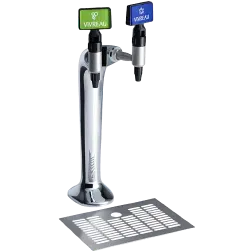
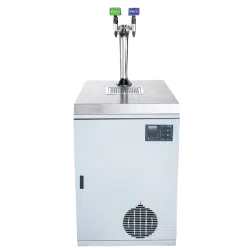
A hydration program that delivers still, sparkling, and hot water on demand communicates something about the care that went into the space. That signal registers with employees, guests, and visitors without anyone needing to point it out. The difference between a pantry that feels like an afterthought and one that feels deliberate often comes down to a few infrastructure decisions.
Sustainability adds measurable reinforcement. According to Vivreau’s cost-savings data, one dispenser can reduce CO2 emissions by 86% compared to pre-bottled water and eliminate 1,115 pounds of waste per year, on average.
Those outcomes support ESG reporting and give organizations a concrete story to share with employees and stakeholders, one that stands alongside the broader picture of plastic packaging waste the EPA documents annually. For multi-site organizations, standardizing hydration across a portfolio also reduces service complexity and creates consistency in the employee experience without adding coordination overhead.
Building a Stronger Business Case for Workplace Hydration
A well-constructed business case doesn’t rely on a single number. It maps the full scope of what the current approach actually costs against the total value a better program delivers, and builds a picture that Finance, HR, and operations leaders can each see their priorities in.
The strongest cases pair the cost reduction story with the experience story. That framing tends to carry further in internal approval processes than a pure cost argument, because it aligns the investment with the organization’s existing goals. Evaluating hydration as a program investment rather than an equipment purchase changes both what gets measured and what gets approved.
Request a quote to explore a workplace hydration solution aligned with your organization’s goals.
FAQs
-
Which Operational Costs Are Most Commonly Overlooked When Calculating the ROI of a Water Dispenser?
The most frequently missed costs don’t appear as a single line item: staff time managing deliveries and reorder logistics, the opportunity cost of storage space dedicated to bottled water inventory, and administrative overhead when shipments run short, or service issues arise.
These costs are real and recurring, but they tend to be absorbed into operational routines rather than explicitly tracked. Pulling them together often shifts the business case in a meaningful way.
-
How Does Office Size Affect the Payback Period for a Commercial Water Dispenser?
Office size affects both volume requirements and the number of dispensing points needed, which shapes equipment costs and monthly service fees. Larger offices typically spend more on bottled water logistics, which increases the baseline cost being replaced.
Organizations with higher headcounts and higher current program spend generally see shorter payback periods because the savings side of the calculation is larger from the start. Mapping usage by floor or zone produces a more accurate estimate than headcount alone.
-
Should Organizations Factor Employee Experience Into a Water Dispenser ROI Evaluation?
Yes. The value of a visible, well-maintained hydration amenity shows up in how a space feels to employees, guests, and visitors. That’s difficult to attach a precise dollar value to, but the retention-related and operational benefits are real: reduced daily friction, stronger perception of the work environment, and alignment with the kind of amenity investment that supports keeping people.
Facilities and HR leaders who have built the case for hydration programs often say the experience argument carries as much weight as the cost argument.
-
How Do Bottled Water Delivery, Storage, and Labor Costs Influence Total ROI?
These three categories are often where the strongest case is built. Delivery costs are added to per-case pricing, fees, and minimum order requirements.
Storage costs are invisible because space isn’t billed directly, but a dedicated closet or pantry for water inventory incurs a real opportunity cost. Labor costs cover ordering, receiving, inventory management, and coordinating logistics when supply runs short. Taken together, these factors typically add up to more than what the bottled water invoice reflects.
-
What Is the Difference Between Calculating Equipment ROI and Hydration Program ROI?
Equipment ROI focuses on hardware cost relative to output: what does the dispenser cost, what does the contract term look like, and what does maintenance run? Hydration program ROI takes a broader view, including the full cost of replacing the program, the operational value created by switching, and the longer-term value of a better employee and guest experience.
Organizations that run only equipment numbers tend to underestimate returns. A full program calculation that accounts for operations, staff time, and space typically produces a stronger case.


