











TL;DR
- Espresso is about 90 percent water, so water quality drives both the taste in the cup and how long the machine lasts.
- Hard water builds limescale, a top cause of boiler and valve failure, and the downtime and lost sales that follow.
- There is no single best filter. Test your incoming water first, then match the filter to what you find.
- Inside, we cover how to read your water, how the main filter types compare, and how to size and maintain the right one for a cafe or office.
Espresso is roughly 90 percent water, so the quality of your incoming water shows up in both the cup and the repair log. Clean, balanced water makes a sweeter, more consistent shot.
Hard, untreated water does the opposite. It leaves limescale that coats boilers and valves, slows the machine down, and eventually forces it out of service during your busiest hours.
The cost of a filter cartridge is small next to a scaled-out boiler or a lost day of Sales. That is why choosing the right water filter for an espresso machine matters more than most equipment decisions. There is no single best filter, though.
The right one depends on what your water actually contains. We start every setup by testing the water, then matching the filter to the result. This guide covers what to test, how the main filter types compare, and how we size and service the right filter for a cafe or an office.
A water filter for an espresso machine treats the incoming water, protecting the equipment and improving the coffee. The right filter controls carbonate hardness to prevent limescale, removes chlorine and chloramine that dull the flavor and corrode parts, and keeps beneficial minerals like calcium and magnesium that the coffee needs. There is no single best filter. You test your incoming water first, then match the filter to it. Vivreau Professional filters are built for cafes and offices running real machines across the US and Canada. Ready to spec the right filter for your machines? Request a quote, and the Vivreau team will match a Professional filter to your water.
What Hard Water Does to a Commercial Espresso Machine
Hard water carries dissolved calcium and magnesium. When water is heated inside a boiler, the carbonate portion of that hardness comes out of solution and settles as limescale.
That scale coats heating elements, narrows lines, and works its way into pumps and valves. Left alone, it forces the machine to work harder, slows recovery between shots, and eventually causes the failures that pull a machine out of service.
The earliest signs show up before a full breakdown. You see scale on fittings, slower recovery, and drinks that taste inconsistent from one hour to the next. Ignored, those small signals turn into higher energy use, unplanned downtime, and repair bills that dwarf the cost of a cartridge.
The math on filtration is straightforward, since a filter spec is a small line item next to a scaled-out boiler or a lost day of sales. Regular water testing and proactive filtration are what keep those problems away from your equipment and your customers.
Read Your Water Before You Choose a Filter
Choose the filter that matches your incoming water, so start by testing what comes into the building. A total dissolved solids (TDS) meter, a hardness and alkalinity test kit, or a current local water report will tell you what you are working with. The Specialty Coffee Association standard gives you a benchmark to aim for, with a target TDS near 150 milligrams per liter inside an acceptable 75 to 250 band, total alkalinity around 40, a pH near 7, and no chlorine.
Hardness deserves its own read. A year-long espresso study from Seven Miles Coffee Roasters and the University of New South Wales found the sweet spot for espresso sits around 50 to 80 milligrams per liter of hardness, and that pushing much above 90 milligrams per liter accelerated scale without improving the cup. That gives you a practical target rather than a vague call to use filtered water.
Then look past hardness. Chlorine and chloramine can create off-flavors and are removed by carbon filtration, with chloramine requiring catalytic carbon media to fully break down. Chloride is a separate concern: a salt ion that is not the same as chlorine.
At elevated levels, it can pit stainless steel and corrode copper components. This is why espresso machine water specifications from La Marzocco treat chloride as a corrosion risk to watch. Test hardness, carbonate hardness, alkalinity, and chlorine, then let those results point you to a filter type.
Types of Water Filters for Espresso Machines and What Each Solves
Once you know your water, the filter categories sort themselves out. Each one solves a different problem, and the right water filter for an espresso machine is the one that matches your test results.
Carbon and decarbonation filtration is the workhorse for coffee. Activated carbon removes chlorine, chloramine, and the off tastes that dull a shot, while decarbonation media reduces carbonate hardness to prevent scale and still keeps the calcium and magnesium the coffee needs.
A bypass or blend valve sets the final hardness, so you can dial it to your target. This is the core of Vivreau’s approach, and it’s why it suits most cafe and office machines.
Softening through ion exchange trades hardness minerals for sodium. It controls scale but adds sodium, does not buffer alkalinity as well, and can leave the water tasting flat, so it fits back-of-house equipment better than the espresso line. Reverse osmosis (RO) belongs to genuinely problematic water.
It strips nearly all minerals, so it needs a remineralization step to make coffee taste right, and it uses more energy and creates wastewater. Treat it as a targeted fix, not a default. Scale-inhibiting cartridges use polyphosphate to hold scale in suspension for lighter-duty setups, and they reach their limit fast under high volume or very hard water.
Match the Filter to Your Setup, Cafe, or Office
Capacity and flow are where a cafe and an office part ways. A high-volume cafe pulls shots all day. It needs higher capacity, strong flow, and shorter service intervals to keep pace. A well-built coffee shop water filtration system is sized to that demand and tied to the incoming hardness.
The cartridge then lasts a predictable stretch, so you are not caught mid-service with a spent filter. A restaurant filtered water dispenser that feeds an espresso line and a service station has the same demands, so it usually calls for food and beverage filtration sized to the whole operation.

An office runs fewer drinks but often runs a real machine, so office water filtration should still be commercial grade, just sized to the lower volume. The mistake is treating an office water filter machine like a consumer gadget when the equipment behind it is professional.
The same logic applies to filtered water systems for offices that serve still and sparkling taps alongside the espresso setup. In every case, tie filter capacity to the hardness you measured, not to a generic recommendation, and you avoid both premature scale and oversized spend.
Maintenance, Cartridge Life, and Uptime
A filter is a consumable, and its life depends on two things: how much water passes through it and how hard that water is. The harder the water and the busier the machine, the sooner the cartridge will run out.
Tracking capacity against those numbers is what keeps both the flavor and the equipment protected, because a filter past its rated volume quietly stops doing its job. Vivreau’s high-capacity food and beverage cartridges are rated for up to 40,000 gallons, which, for many operators, means a single change a year.
Good commercial water dispenser maintenance builds the change into a schedule rather than waiting for a taste complaint or a scale warning. Connected serviceability helps here, with usage data and change reminders that flag a cartridge before it fails.
Pairing that with a reliable commercial water dispenser service plan means the filter, the machine, and the water all stay on top of demand, and downtime stops being a surprise. Keeping the water right is what keeps both the equipment and the cup consistent.

The Vivreau Professional Filter Approach
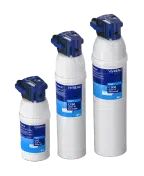
Vivreau built its commercial water filters for exactly this problem. The Professional Filter line, including the chloramine-reducing cartridge and the high-flow PURITY HCHF hot filter, reduces carbonate hardness and removes chlorine and chloramine while preserving the beneficial minerals coffee depends on. IntelliBypass maintains a constant blend to keep quality consistent at low flow, and its filters are NSF certified and serviced across the US and Canada.
Getting the water right does not have to be complicated, and it is not something you have to figure out alone. Share your local water report, or let our team test the water on-site, and we will match the exact Vivreau Professional filter to what we find.
From a single espresso bar to a multi-site coffee program, the goal stays the same. Protect the flavor your customers come back for and the equipment you count on every day.
Request a quote, and our team will help you spec the right setup for your machines and your water.
FAQs
-
How Do I Know Which Water Filter My Espresso Machine Needs?
Start with a water test, not a product. Use a TDS meter and a hardness and alkalinity kit, or pull your current local water report, to determine your incoming carbonate hardness, alkalinity, and chlorine levels. Those numbers decide the filter.
High carbonate hardness points to decarbonation carbon filtration, chlorine and chloramine call for activated or catalytic carbon, and only genuinely difficult water needs reverse osmosis with remineralization. Matching the filter to measured results, rather than guessing, is what protects the machine and keeps the coffee consistent. Vivreau can review your water data and match a Professional filter to it.
-
Does a Water Filter for an Espresso Machine Improve the Taste, or Just Protect the Equipment?
It does both, and the two goals are linked. Removing chlorine and chloramine strips out flavors that dull a shot, while holding the right level of calcium and magnesium lets the coffee express sweetness and body.
At the same time, controlling carbonate hardness prevents limescale from damaging boilers and valves. A filter that softens water only can flatten the flavor, and one that improves taste only can leave scale unchecked. The right decarbonation carbon setup balances both, which is why testing first and dialing the blend to your water matters so much for the cup and the machine.
-
Is Reverse Osmosis Too Aggressive for Espresso, or Does It Need Remineralization?
Reverse osmosis needs remineralization for espresso. On its own, it removes nearly all dissolved minerals, and water that is low in calcium and magnesium tastes thin and can under-extract, so a remineralization stage is required to bring the water back into a good brewing range. It also uses more energy and produces wastewater.
For most cafes and offices, decarbonation carbon filtration reaches the same protection with a better tasting result and less waste. Reverse osmosis earns its place only where incoming water is highly variable or unusually challenging, and even then, it should be paired with a controlled remineralization step.
-
How Often Should the Filter Cartridge on a Commercial Espresso Machine Be Changed?
It depends on volume and water hardness, so track capacity rather than the calendar alone. A cartridge is rated for a set number of gallons, and the harder your water and the busier your machine, the faster you reach that limit.
High-capacity commercial cartridges, such as Vivreau’s food and beverage line rated up to 40,000 gallons, can last many operators for a year, while a busy cafe on hard water may need changes more often. Connected monitoring and change reminders take the guesswork out by flagging a cartridge before it is spent, ensuring consistent flavor and equipment protection.
-
Can One Filtration Setup Serve Both an Espresso Machine and the Rest of a Cafe or Office Water System?
Often yes, with the right sizing. A single commercial filtration program can feed an espresso machine and still and sparkling taps, provided the system is sized for the combined flow, and the blend is set to protect the espresso line, which is the most scale-sensitive equipment on site.
The espresso machine usually sets the specification, since it demands the tightest control of carbonate hardness. From there, the same treated water supports the wider cafe or office setup. Vivreau designs its Professional filtration to cover both the machine and the broader program with a single commercial-grade system.
Latest Posts


