










TL;DR
- The best office water dispenser is no longer defined solely by cost. Experience, operational simplicity, and sustainability are now core evaluation criteria for modern offices.
- Bottleless plumbed systems deliver still, sparkling, and hot water on demand and eliminate the recurring delivery burden, storage requirements, and hidden costs of traditional bottled programs.
- Vivreau leads the category for commercial offices, with design-forward systems, on-demand microfiltered water, and IoT-connected services that reduce maintenance overhead across single- and multi-zone environments.
This article was originally written in August 2025 and has since been updated with new discoveries and research in May 2026.
University of East London research found that drinking a single glass of water can boost cognitive reaction times by up to 14%. The mechanism is direct: easy access to quality water changes whether employees actually drink enough of it throughout the day. If the office water dispenser is inconvenient to reach, unpleasant to drink, or simply out when needed, employees drink less, and focus and energy follow.
The right water dispenser for office environments does more than check an amenities box. It shapes daily behavior, removes operational overhead from facilities teams, and signals to employees and visitors that the organization pays attention to the details. Here’s how the leading office water systems compare, and what to look for when making the decision.
Comparing the Top 5 Office Water Dispenser Systems
Now that we’ve explained how far the right water dispenser can go, let’s compare the top five options side by side. Each system offers distinct strengths in areas such as filtration, capacity, design, maintenance, and overall value, so this comparison will help you identify which solution best fits your workplace needs.
1. Vivreau: Best Overall for Commercial Offices
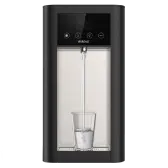
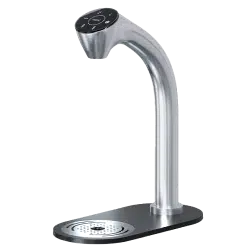
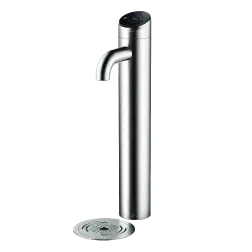
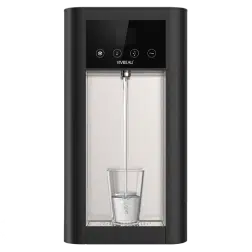
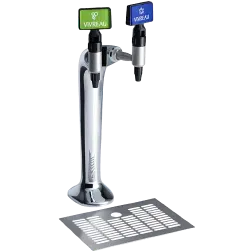
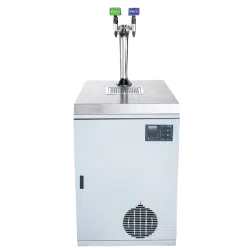
Vivreau’s plumbed, bottleless systems deliver microfiltered still, sparkling, and hot water on demand from a single, design-forward unit built for commercial environments. The systems are designed to fit naturally into high-traffic kitchens, executive floors, and client-facing spaces; they look like they belong there rather than like equipment.
The Vivreau iQ Solution adds IoT-connected monitoring with proactive service alerts, remote diagnostics, and usage-based maintenance scheduling. That level of service intelligence is a meaningful advantage for facilities teams managing hydration across multiple zones or floors, where downtime at any point creates visible friction. The broader office dispensers range offers additional configurations for different workplace layouts, capacities, and service needs.
Best for: Growing offices and multi-floor environments where design, consistency, and long-term cost control all matter.
2. Bevi: Best for Beverage Variety
Bevi’s smart dispensers specialize in flavored, carbonated, and enhanced still water, functioning effectively as a customizable beverage station. They generate strong uptake in break rooms and tech-forward offices where variety and personalization are a priority.
The trade-off is category focus: Bevi is a beverage-choice platform, not a premium filtered-water program. Design options lean functional rather than design-forward, and the offering does not extend to a full sparkling water dispenser for office-wide hydration or on-demand hot water from the same unit.
Best for: Companies where employee beverage variety is a higher priority than professional-grade filtered water infrastructure.
3. Quench: Best for Large Enterprise Standardization
Quench offers a broad range of bottleless water coolers, backed by a national service network, suited to enterprise-scale rollouts. For large organizations standardizing across many locations, the breadth of their catalog and service reach is a legitimate operational advantage.
Where Quench tends to fall short for premium commercial environments: design is primarily utilitarian, and their systems typically deliver still water without integrated sparkling or hot water from a single unit.
Best for: Large enterprises prioritizing vendor standardization and broad service coverage across many locations.
4. Brio: Best Budget Countertop Option
Brio’s countertop water dispensers offer point-of-use filtration at a lower entry price than commercial-grade plumbed systems. For small satellite offices or spaces where a permanent installation is not feasible, they provide basic filtered water access with minimal commitment.
The limitations are predictable at scale: lower capacity, limited water types, and no managed service infrastructure comparable to commercial programs.
Best for: Small satellite offices or teams with 10 or fewer employees with minimal water-consumption needs.
5. Traditional 5-Gallon Delivery: Low Barrier, High Hidden Cost
The traditional bottled water delivery model (5-gallon jugs, a standalone cooler, recurring orders) remains common because it requires no installation and is easy to get started with. For most growing offices, it is also the most expensive option once the full cost of the office water program is accounted for.
That full picture includes delivery scheduling, storage space, staff time handling jugs and empties, and the administrative overhead of managing a recurring vendor relationship. What appears on the invoice is rarely the whole number.
Best for: Very small teams where minimal upfront commitment is the primary constraint, with the expectation of revisiting the decision as headcount grows.
Rethinking the Best Water Dispenser for Modern Offices
Today’s offices expect more than a water source. They expect a hydration experience that fits the space, requires minimal management, and reflects how the organization thinks about its people and environment.
Traditional bottled systems introduce friction at every point: delivery coordination, jug storage, and handling logistics when an order arrives short or late. These aren’t catastrophic problems, but they accumulate across weeks and quarters, and they rarely align with how a modern facilities or operations team wants to spend its time and attention.
Defining “best” by outcomes changes the evaluati on. The right office water dispenser delivers consistent quality, the lowest total cost of ownership, the least operational overhead, and a daily experience employees actually notice. A well-designed office dispenser program answers all four without requiring ongoing triage.
How Office Water Dispensers Have Evolved (And What Matters Now)
Point-of-use filtration systems that connect directly to a building’s water supply have moved from a specialty product to the mainstream commercial standard. According to market research from Grand View Research, the bottleless water dispenser segment is growing at 9.5% annually through 2030, the fastest growth rate in the category, signaling that commercial offices are decisively moving away from delivery-based programs.
Countertop water dispensers still serve smaller offices or spaces without accessible plumbing. For mid-size and growing offices, plumbed systems have become the practical baseline because they eliminate the delivery model entirely.
Modern expectations have expanded with the category. Still water is table stakes. A sparkling water dispenser for office-wide use, integrated into the same unit as still and hot, is now a standard offering in premium commercial systems. Understanding the types of office dispensers available helps clarify which configuration fits the space before comparing products.
Bottleless vs. Bottled: A Strategic Business Decision
Choosing between a bottleless water dispenser for office use and a traditional bottled delivery program is an operations decision as much as a product one. The variables that tend to determine the outcome are team size, growth trajectory, and a clear-eyed accounting of total cost.
For very small offices with minimal usage, a countertop option or bottled delivery can offer a lower barrier to entry. For growing offices, the math shifts quickly.
Vivreau’s cost-savings data show an average 86% reduction in CO2 emissions compared to pre-bottled water and an average of 1,115 pounds less waste per year per dispenser, sustainability outcomes that now factor meaningfully into how organizations evaluate and report on their operations.
The ROI case extends beyond the invoice. Upgrading to a premium, reliable water program does something that cost comparisons don’t fully capture: it becomes a visible signal of organizational care. Employees notice, and so do visitors.
Over time, that visibility reinforces engagement and eases the daily burden on facilities teams, showing up in the workplace experience before they appear in a budget report.
A bottleless office water dispenser eliminates deliveries, removes storage requirements, and replaces recurring vendor management with a managed system that takes care of itself. For a more detailed breakdown, the water coolers for office guide covers the full cost and operational comparison.
Choosing the Right Office Water Dispenser
The right commercial water dispenser for your office comes down to four practical questions: How many people do you need to serve? Which water types (still, sparkling, hot) matter for your space and your team? What level of service infrastructure do you need? And what does the system need to look like in your environment?
Talk to our team to get a custom quote tailored to your workplace needs.
Request a quote to explore the right Vivreau setup for your space, your team, and your growth plans.
FAQs
-
How Do Installation Requirements Differ Between Bottleless and Countertop Office Water Dispensers?
Bottleless plumbed dispensers connect directly to the building’s water supply and require a plumbing connection near the intended placement zone. Most modern commercial offices have adequate existing infrastructure; a Vivreau site assessment will identify the most practical placement before installation begins.
Countertop water dispensers don’t require a plumbing connection and rely on filtration cartridges, but they have lower output capacity. They’re better suited to small offices or spaces where a permanent installation isn’t feasible.
-
What Factors Most Influence the Total Cost of Ownership for Office Water Systems?
The full cost of a bottled delivery program includes the invoice price plus delivery coordination, storage space, staff time handling jugs and empties, and the administrative overhead of managing a recurring vendor relationship.
When those costs are included, the per-employee cost of a bottled program is typically higher than the invoice alone suggests. Bottleless systems convert those variable costs into a predictable managed service. Vivreau’s data show an average 86% reduction in program cost compared to pre-bottled water.
-
How Does Water Quality and Taste Impact Employee Usage and Satisfaction?
Significantly. When water is accessible, great-tasting, and consistently available, employees drink more of it. Peer-reviewed research consistently links easy access to quality water in the workplace with improved energy, concentration, and overall health outcomes.
For offices upgrading from a bottled program, the shift in perceived water quality is often among the first things employees notice and one of the most frequently cited reasons teams advocate for keeping the system.
-
What Are the Biggest Hidden Inefficiencies in Bottled Water Programs?
Delivery scheduling, storage space management, jug handling (including the physical burden of lifting 40-pound bottles), and the administrative overhead of a recurring vendor relationship are the most consistently underestimated costs.
For multi-floor offices, coordinating water availability across zones compounds the problem. Facilities teams that have switched to bottleless programs consistently report that the reduction in daily management burden is as meaningful as the cost reduction.
-
How Do Modern Office Water Dispensers Support Sustainability and ESG Goals?
Bottleless systems address sustainability across multiple dimensions: eliminating single-use plastic bottles, removing the logistics and emissions associated with regular deliveries, and generating measurable impact data for annual reporting.
Vivreau’s systems reduce CO2 emissions by an average of 86% compared to pre-bottled water and eliminate an average of 1,115 pounds of waste per year per dispenser, figures that support both internal ESG reporting and external communications about environmental commitments.


