











TL;DR
- Water access in hospitals is a daily care touchpoint that shapes patient comfort, staff efficiency, and facility perception in ways that go well beyond basic utility.
- Effective hospital hydration requires systems designed specifically for the environment: built-in hygiene protection that runs continuously, ADA-accessible design that supports patient independence, and connected monitoring that maintains reliability across every floor and unit.
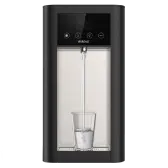
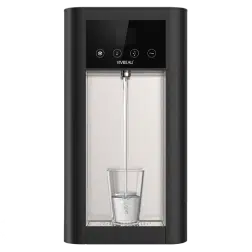
- Every Vivreau hospital water dispenser includes ThermalGate™ as standard, an industry-leading automated thermal disinfection technology that protects against contamination independently of user behavior or manual cleaning schedules.
Patients arrive at hospitals already carrying a weight of anxiety, discomfort, or uncertainty. A facility’s role is not only to deliver clinical care, but to shape the entire experience, from communication and cleanliness to small details that help patients feel looked after. Water is one of those details, and one of the most common amenities patients encounter.
Yet hydration infrastructure is often treated as a background utility, even though reliable access to clean, filtered water supports comfort, recovery, and dignity during long hours or days in care.
In healthcare settings, water also carries higher stakes. It must align with infection control protocols, accessibility needs, and the operational realities of busy clinical teams. A hydration program that works in an office or hotel often needs to be rethought for hospital floors, waiting areas, and senior living environments.
This article explores that rethink across four areas: patient experience, hygiene and infection control, accessibility, and operational reliability at scale.
Reframing Hydration as Part of the Patient Experience
A water dispenser in a waiting area or patient corridor isn’t just equipment. It’s a signal. When it works well, filtered, accessible, and reliably available, it communicates that the facility has thought through the experience at every touchpoint. When it doesn’t, or when the answer is a rack of single-use plastic bottles, the impression is different.
Patients who have easy access to clean water throughout their stay are better positioned to stay hydrated. Research on hospitalized older adults consistently links adequate hydration to faster recovery, reduced risk of complications, and improved tolerance of medications and treatments.
Research also finds that dehydration upon admission is far more common than most facilities expect. For patients managing chronic conditions or recovering from procedures, access to hydration isn’t incidental to care: it’s part of it.
Staff experience the gap just as clearly. Bottled water delivery, inventory tracking, and manual refills add tasks to teams already stretched across competing priorities.
Modern, point-of-use filtration systems remove those recurring logistics from the picture, freeing staff to focus on higher-value work. That operational simplicity is part of how thoughtful hydration programs elevate the overall experience for patients, residents, and staff alike. Understanding the different types of commercial water dispensers available, and how each is suited to different spaces and volumes, is a useful starting point when mapping a program across a facility.

Hygiene and Infection Control in Everyday Interactions
Healthcare-associated infections (HAIs) are among the most persistent patient safety challenges in hospital environments. According to the CDC, about 1 in 31 hospital patients has at least one HAI on any given day. Water systems are recognized as a vector in that risk.
The CDC also reports that more than 18% of all Legionella-related outbreaks are traceable to hospitals and other healthcare facilities, making building water management one of the clearest infection control priorities in the sector. In 2017, CMS issued a directive requiring all Medicare-certified healthcare facilities to have documented water management policies and procedures in place, specifically to reduce Legionella and other pathogen risks.
Hydration dispensers sit directly in that risk landscape. They’re shared touchpoints used dozens of times daily across patient areas, break rooms, and staff corridors.
In a multi-floor, multi-team environment, any hygiene approach that depends on consistent manual intervention is difficult to sustain reliably. Cleaning schedules get compressed during busy periods. Responsibilities shift across teams and locations. The gap between policy and practice widens over time.
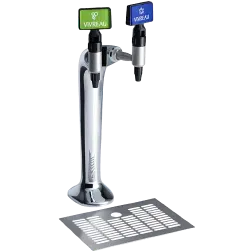
The more reliable standard is automated, system-level protection. ThermalGate™ is Vivreau’s industry-leading hygiene technology, built into every dispenser as standard. It automatically heats the tap at regular intervals, disinfecting internal components on a continuous cycle that operates during off-hours, overnight, and at peak times alike.
Protection runs regardless of how busy the floor is or how recently the dispenser was last serviced. In healthcare settings, continuous, system-level hygiene protection helps create a more dependable baseline for infection-control teams managing shared hydration points across multiple floors and units.
For facilities managing water hygiene across multiple units and locations, that kind of built-in, always-on protection removes the need for manual oversight and provides a consistent baseline that infection control programs can rely on.
Accessibility That Supports Patients and Staff Alike
Healthcare environments serve patients and residents across a wide range of mobility and physical ability. A dispenser that works well for a clinical staff member may not be accessible to a patient using a wheelchair or a resident with limited reach or grip strength.
ADA Standards for Accessible Design establish specific requirements for drinking water systems, including reach range, floor clearance, and operability of controls. Vivreau’s optional Easy Access Panel is designed with exactly these requirements in mind: it allows wheelchair users to fill bottles or cups independently, at an appropriate height and with the clearance they need, without staff assistance. 
Accessible design in hydration is not a compliance checkbox. It’s part of delivering dignified, patient-centered care. When patients can hydrate independently rather than waiting for staff assistance or relying on bedside bottles that may go unfilled, their sense of agency in their own recovery improves. For staff, fewer incidental requests mean more time focused on clinical work.
Placement matters as much as the equipment itself. Patient waiting areas, corridors near patient rooms, break rooms, and cafeterias each have different requirements for throughput, space, and accessibility. Working with a partner experienced in healthcare settings helps ensure dispensers are sized, placed, and configured for the people using them.
Reliability and Operational Simplicity at Scale
For facility and operations teams managing hydration across multiple floors, units, or campuses, the challenge isn’t finding a dispenser that works in one room: it’s maintaining consistent, reliable access everywhere.
Hospitals often face challenges around maintaining consistency across shared hydration systems, particularly when processes rely heavily on manual oversight. Ensuring systems remain clean, accessible, and dependable over time becomes more complex at scale, especially when responsibilities are distributed across teams or locations.
Connected systems reduce that complexity. Vivreau’s iQ Solution provides proactive monitoring, usage-based service planning, and remote diagnostics, meaning maintenance teams and service technicians can often identify and resolve issues before they affect patients or staff.
For hospitals where uptime is a care quality issue, not just an operational convenience, that level of visibility matters. It’s worth understanding what predictive maintenance in water systems actually delivers versus the features that sound useful but add little to day-to-day reliability.
Replacing bottled water programs also removes logistics that compound over time: deliveries to coordinate, storage space to manage, waste to dispose of. Switching to on-site filtration and dispensing reduces CO2 emissions by an average of 86% and removes an average of 1,115 pounds of waste per dispenser per year, thereby strengthening sustainability reporting and demonstrating environmental commitment to patients, families, and accreditation bodies.
Building Trust Through Better Hydration: What to Do Next
Hydration access in hospitals carries more weight than in most commercial environments. Patients are managing health challenges that make safe, accessible, reliably filtered water genuinely important to their comfort and recovery. Staff need systems that reduce friction in an already demanding setting.
Getting this right means selecting systems built for healthcare hygiene standards, accessibility requirements, and the operational realities of multi-floor, multi-team environments, and working with a partner who understands how those needs fit together.
Request a quote to explore a reliable, streamlined hydration solution tailored to your facility.
Frequently Asked Questions
-
What Infection Control Certifications or Standards Should Hospital Water Dispensers Meet?
Hospital water dispensers should meet NSF/ANSI 42 and 53 certifications, which cover the reduction of aesthetic impurities and health-related contaminants, respectively. In higher-acuity clinical settings, NSF/ANSI 55 (UV systems) or NSF/ANSI 58 (reverse osmosis) may also apply depending on the facility’s water quality requirements.
Beyond product certifications, infection prevention programs typically require dispensers to support consistent sanitation, including automatic disinfection features like ThermalGate™ that operate independently of manual cleaning schedules and user behavior.
-
How Do Point-of-Use Water Dispensers Compare to Centralized Filtration Systems in Hospitals?
Point-of-use dispensers filter water at the point of use, protecting against contaminants that may enter the water supply after it leaves central treatment, including biofilm and bacteria that can develop in large facility piping systems.
Centralized systems treat water before distribution but offer limited protection at the tap itself. For hospitals with aging infrastructure or large floor plate layouts, point-of-use systems can complement or replace centralized approaches, particularly in patient-facing areas where hygiene at the point of contact matters most.
-
What Are the Plumbing and Installation Requirements for Hospital-Grade Water Dispensers?
Most point-of-use dispensers require a connection to a cold water supply line, a drain connection, and a standard electrical outlet. Many hospital floors already have plumbing infrastructure in place, from ice machines to sink installations that can be adapted.
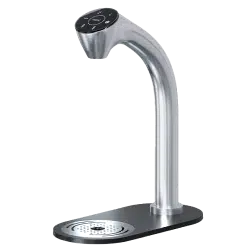
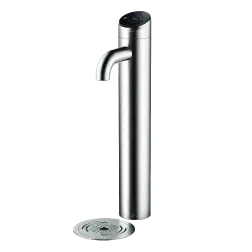
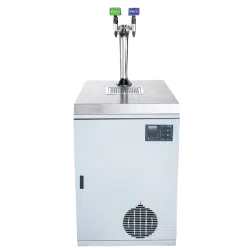
Countertop models offer more flexibility where back-of-wall plumbing access is limited. A Vivreau specialist can assess your facility’s layout and infrastructure to recommend the right configuration for each zone, from patient corridors to break rooms to cafeterias.
-
How Can Hospitals Monitor Water Quality and Dispenser Performance in Real Time?
IoT-connected systems like Vivreau’s iQ Solution provide real-time usage data, filter status monitoring, and automated service alerts across multiple units and locations from a single dashboard. This allows facilities teams to schedule maintenance proactively based on actual usage rather than fixed intervals and to receive immediate notification of any system issues.
For hospitals managing hydration across multiple floors or campuses, connected monitoring replaces reactive maintenance with a more consistent and auditable approach.
-
What Factors Impact Total Cost of Ownership for Hospital Water Dispenser Systems?
Total cost of ownership includes equipment costs or rental fees, installation costs, filter replacement schedules and costs, service and maintenance agreements, and the ongoing savings from eliminating bottled water purchasing, storage, and disposal.
Service agreements that include proactive maintenance, remote monitoring, and filter replacement are worth factoring into the evaluation early, particularly in hospital environments where system downtime directly affects care continuity and patient experience.


