









TL;DR
The best commercial water dispenser is the one that fits your space, usage, and water needs.
- Match the dispenser to your daily volume and use case.
- Prioritize water filtration and taste for a better drinking experience.
- Choose a design that fits your space and supports long-term value.
Choosing a hydration setup sounds simple until it lands on your desk, along with questions about plumbing, maintenance, service contracts, aesthetics, and cost. In offices and hospitality settings, the right decision is less about buying a machine and more about designing a better daily experience for employees, guests, and staff.
That is why the best water dispenser is usually the one that solves several problems at once. It should reduce operational friction, support reliable access to drinking water, improve how the space looks and feels, and hold up under real-world demand.
Buyer’s Checklist: Design, Filtration & Service
Before you compare models, it helps to step back and define what success looks like in your space. The right checklist keeps you focused on what affects daily operations, rather than features that sound impressive in a sales demo but do little once the unit is installed.
A common mistake is choosing based on price alone. That often leads to a unit that cannot keep up with traffic, does not deliver the taste people expect, or creates new headaches around maintenance and early replacement. Another frequent miss is ignoring service altogether, which can turn a lower upfront cost into a higher operating cost over time.
For most buyers, the better framework is to start with capacity, filtration quality, service coverage, and the role the dispenser plays in the space. A commercial water dispenser in a quiet executive suite has different demands than one in a busy café, self-serve pantry, or hotel lounge, but the evaluation logic is the same. You are looking for a solution that feels premium to the end user and simpler for the team behind the scenes.
That operational lens matters because water programs touch more than hydration. They affect storage, staff time, cleanup, restocking, and the visual impression a guest or employee gets the moment they walk into a space.
Sustainability belongs on the checklist, too, but as a supporting proof point rather than the only reason to buy. Many organizations want to reduce reliance on packaged water and the deliveries, storage, and waste that come with it. In some cases, switching from pre-bottled water to an on-site dispensing system can reduce CO2 emissions by an average of 86%, which gives decision-makers a measurable story to pair with experience and efficiency.
Design & User Experience
In a modern office or hospitality environment, the hydration point is part of the overall experience, and people notice whether it feels thoughtful, seamless, and easy to use.
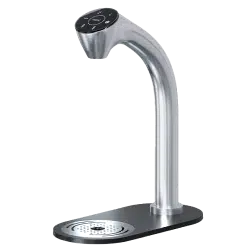
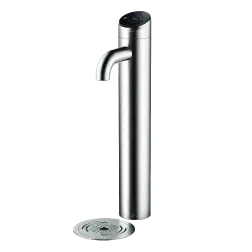
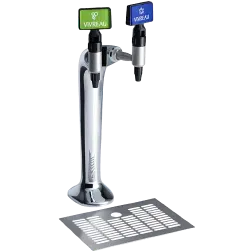
A strong design-forward dispenser does two jobs at once. It supports the look of the space, and it reduces friction for the person using it. That can mean a tap that complements a premium pantry, a station that works cleanly in a lobby or lounge, or controls that make still, sparkling, and hot water feel instantly available instead of hidden behind extra steps.
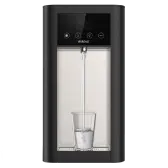
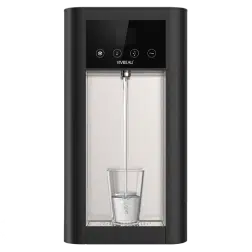
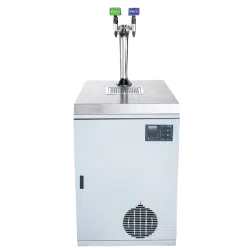
This is also where format matters. A countertop water dispenser can be a smart fit when space is tight or when you need a more flexible installation path. Integrated tap systems often make sense when the hydration point needs to disappear into the architecture and support a more built-in aesthetic.
The key is not to overpromise the ease of installation. Plumbing readiness, cabinetry, power, and drainage all need to be considered honestly, even when a setup is countertop-friendly.
The best experience often comes from matching the unit to the workflow. A sparkling water dispenser in a client-facing pantry may reinforce a premium brand feel, while a quieter filtered still-and-sparkling option may be enough for an employee break area.
Whether you are planning a workplace upgrade in Los Angeles, evaluating a commercial hydration program in New York City, or exploring options for a hospitality environment in San Francisco, the right solution should support both operational efficiency and a premium user experience.

Filtration, Taste & Capacity
If design gets people to notice the dispenser, taste is what gets them to keep using it. That is why filtration quality and right-sizing deserve as much attention as aesthetics.
The EPA’s WaterSense guide says treatment units can address taste, odor, color, or potentially unhealthy concentrations of contaminants, but long-term performance depends on proper maintenance.
The NSF overview of water treatment and filtration systems also highlights certification as a way to validate structural and safety requirements and contaminant-reduction claims.
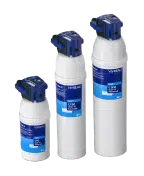
That means a filtered water dispenser for office use should be judged by more than a general promise of cleaner water. You want consistent taste, professional-grade filtration, clear service intervals, and a realistic plan for filter changes.
If a dispenser is supposed to serve a larger team or frequent guest turnover, output capacity matters just as much as water quality. Under-sizing is one of the fastest ways to make a good-looking system feel unreliable.
Taste is also where optional extras should stay in perspective. Flavors can add interest, and sparkling options can increase adoption, but they should support the experience rather than compensate for weak fundamentals.
The best office water dispenser needs to deliver dependable still or sparkling water quickly, cleanly, and at a volume that matches the pace of the space. That is what turns hydration from a nice amenity into an everyday habit.

Hygiene is important here, too. A strong approach includes regular maintenance, thoughtful fixture design, and systems that help keep dispensing points clean over time.
Some commercial solutions incorporate automated sanitation features. For example, Vivreau’s ThermalGate™ technology periodically heats the tap to disinfect it, while connected service platforms can support proactive monitoring and remote troubleshooting.
In environments with stricter hygiene standards, such as healthcare-adjacent settings, these water management practices help maintain consistent water quality and reliability.
Cost, ROI & Service
This is where many buying decisions either get smarter or get more expensive later. A hydration program can look affordable on paper and still cost more than expected once labor, storage, filter changes, downtime, and service calls start piling up.
The strongest ROI case usually comes from replacing bottled-water logistics, not just swapping one dispenser for another. That includes fewer deliveries, less storage, less manual restocking, less cleanup, and less staff time spent managing carafes, jugs, or cases of water.
Organizations that move away from bottled-water programs and toward an on-site dispensing solution can reduce the overall cost of their water program by as much as 86%, turning hydration from an ongoing logistical burden into a more efficient, streamlined system.
Service should be evaluated just as closely as price. Service coverage should include yearly preventative maintenance and sanitization, filter-change service, responsive troubleshooting, and parts and labor coverage during service contracts. Vivreau also includes a connected iQ platform to proactively monitor dispensers and handle some issues through remote repairs, which minimizes downtime.
A water dispenser for your business should be chosen with a clear view of water-line access, cabinetry, electrical requirements, and how service will be handled after day one. When those details are planned early, downtime concerns shrink, and the premium experience feels sustainable, not fragile.
Elevate Hydration With Confidence
The most effective hydration programs do not feel like an afterthought. They make the space work better, reduce friction for staff, and give employees or guests a better experience every time they fill a glass or bottle.
If you are weighing options for a filtered water dispenser for office use, a sparkling setup for a guest-facing lounge, or a broader water dispenser for business operations, start with the fundamentals: capacity, filtration, service, installation readiness, and how the system fits the space you are trying to create.
When those pieces align, the result is not just a better dispenser. It is a more polished, reliable hydration experience. Request a quote to design a premium hydration experience for your workplace and guests.
FAQs
These are some common questions that come up when you are comparing options for workplaces, hospitality settings, and other commercial environments.
-
What Is the Best Water Dispenser for Offices or Commercial Spaces?
The best water dispenser is the one that fits your volume, water preferences, service expectations, and space design, not the one with the lowest upfront price. For many teams, that means choosing an office water dispenser or commercial water dispenser that balances professional-grade filtration, strong taste, dependable service, and a layout that feels intuitive for daily use.
-
How Does a Countertop or Commercial Water Dispenser Improve Workplace Hydration?
A well-matched dispenser makes water easier to access and more appealing to use. The CDC notes that getting enough water helps prevent dehydration and supports normal body function, and easy access matters in whether people actually drink more of it. A countertop water dispenser can improve access in smaller spaces, while larger commercial options can support higher-volume teams without constant refilling or restocking.
-
How Do Water Dispensers Support Sustainability in Offices and Hospitality Spaces?
They support sustainability by reducing reliance on packaged water, cutting storage and delivery demands, and making reusable bottles or on-site bottling programs more practical. Vivreau’s Extra C-Tap, for example, produces 86% less CO2 emissions than single-use bottled water.


