










Key Takeaways
- The sustainability ideas that actually hold up are the ones with a baseline, a unit, and an owner attached, not the longest list of suggestions.
- Waste, water, energy, and procurement all generate numbers that most offices already have on file, long before anyone runs a formal audit.
- Bottled water belongs on the list as one measurable line item, not as the centerpiece of an office sustainability plan.
- A short list of reportable initiatives beats a long list of aspirational ones, especially now that an unsubstantiated claim carries real regulatory exposure.
Attendees comparing notes after this year’s GreenBiz 26 recap kept landing on the same idea. As one put it, the conversation has shifted from purpose to performance. Sustainability programs are now expected to be held to the same standard as a capital budget. That shift changes what a useful list of sustainability ideas for office teams actually looks like.
Most published lists compete on how many ideas they contain. Almost none of them attach a number, a unit, or an owner to a single suggestion. That means almost none of them can survive a request to report on progress next quarter.
We build water systems for a living. That gives us a clear view of how easy it is to publish a long list of well-meaning suggestions that nobody can act on.
This piece is built the other way. Every idea below is here because an office can attach a real number to it, not because it sounds good in a plan.
Start With the Ideas You Can Actually Measure
Most published advice on office sustainability follows the same pattern. It is a long list of generic tips with no baseline, no unit of measurement, and no named owner attached to any of them. That gap is why almost none of those suggestions can be reported, defended, or repeated next year.
That gap used to be a minor inconvenience. It is becoming a liability. Sustainability now speaks the language of enterprise risk. Companies that lean on broad claims without evidence to back them up are exposed in ways they were not five years ago.
The FTC’s green marketing guidance is direct on this point. A claim about environmental benefit has to be backed by competent evidence, not good intentions. That standard applies before it is presented to employees, investors, or a client.
That is the argument for sustainable office practices built on measurement rather than ambition. An unmeasurable initiative invites a question nobody in the building can answer.
That is the actual risk, regardless of how small or low-risk the initiative looks on a slide. The ideas that follow were chosen because they clear that bar. Each one comes with a baseline in the office’s records, a unit that matters on a report, and a role to own it.
The Waste Stream You Are Already Paying For
Start where the numbers already exist. Most offices do not need a new audit to find their waste baseline, because procurement already has it.
Single-use packaging, catering disposables, delivered beverages, and office paper all appear on a purchase order before they ever end up in a trash can. That means the starting measurement is already sitting in an invoice somewhere.
Bottled water falls into the same waste category as catering disposables, packaging, and paper, rather than being a separate program. An office that tracks its bottled water spend already has a case count, a delivery frequency, and a cost per case.
That kind of record provides the defensible starting point needed to report on a workplace initiative to reduce plastic bottle use two quarters down the line. The same test applies to catering disposables and delivered paper stock. If a category already has a purchase order, it already has a baseline.
The harder part is connecting a purchasing change to an actual outcome instead of just a lower invoice. That is where the environmental impact of the switch matters as much as the cost line. A category that stops recurring, rather than one that simply gets a cheaper vendor, is the one worth reporting on.
It means fewer deliveries and less packaging waste. It also means a program that does not need to be re-measured every quarter to know it is still working. Green office tips that stop at “buy the recycled version” miss this. The bigger win is removing the recurring purchase altogether, not making it slightly better.
Water and Energy, the Two Utilities Nobody Audits
Waste gets attention because it is visible. Water and energy get less of it, not because they are ignored, but because they run continuously in the background. They rarely get a line item of their own until a utility bill forces the question.
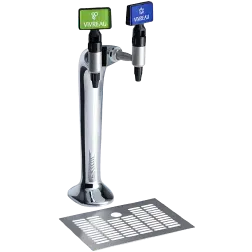
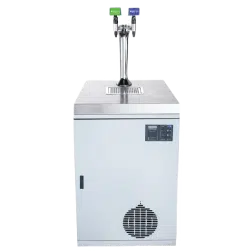
On water, the choice that matters most is between point-of-use treatment and delivered water, because the two carry very different waste profiles. A reverse osmosis system pushes water through a membrane to separate out contaminants. That process is well documented in the water treatment industry, which discards several liters of water for every liter it produces.
That is a measurable efficiency question, not a matter of taste. Low-flow fixtures tell a similar story from the other direction. DOE faucet guidance treats flow rate as a straightforward retrofit lever, not a comfort tradeoff. The fixture itself does the measuring for you once it is installed.
On energy, the same logic applies to systems that facilities lead can actually act on, including lighting, controls, and appliance efficiency. Estimates from a building controls study put the potential savings from properly tuned systems at close to 29% across the building types studied.
Setpoint adjustments and occupancy-based scheduling changes rank among the two or three highest-value levers. That is the kind of number a facilities team can put next to a specific retrofit, not a general aspiration to “use less energy.”
Procurement Is Where Most Office Sustainability Actually Happens
Behavior campaigns fade, but a written specification does not. That is the entire case for treating procurement, not posters near the recycling bin, as the lever for sustainable office practices. Practices built this way last past the first few months.
Writing environmental criteria into vendor selection is the most durable version of this.
ISO 20400 guidance frames this exactly the way a facilities team should think about it. Sustainability sits alongside price and quality as a selection criterion, not as a separate program bolted on afterward. In practice, that means asking a vendor for a documented take-back or reuse pathway before signing. It also means preferring service models that reduce how often a delivery truck needs to show up.
This is also where sustainable procurement of office amenities intersects with certification frameworks like LEED, WELL, and BREEAM. Each one credits something different. We tie our own plastic waste and CO2 reduction figures to LEED’s supporting documentation.
Our products also carry certifications including NSF 18, NSF 42, NSF 53, and NSF/ANSI/CAN 61 and 372. Those specifics matter more than the certification’s name alone. A procurement team evaluating LEED certification and water efficiency claims needs the underlying documentation, not just the logo.
Make It Reportable
A reportable initiative needs a baseline, a unit, and an owner. Most published office sustainability advice supplies none of them. That is exactly why so much of it gets abandoned somewhere between the kickoff meeting and the annual report.
That pattern shows up consistently in how offices actually handle their own programs. Operational metrics like bottles eliminated, packaged water avoided, delivery frequency reduced, and waste volume diverted tend to survive reporting. Procurement and service records already establish a baseline for them.
Broader goals, like improving sustainability culture or raising general awareness, tend to be quietly dropped. That is not because anyone stopped caring. Nobody could agree on how to measure them or who was responsible for the number, once the initial enthusiasm wore off.
Atlantis Casino Resort Spa is a useful illustration of what the difference looks like in practice. It is a hospitality property rather than an office, but the same principle applies. Its Corporate Director of Food and Beverage, Chira Pagidi, has stated on the record that the property is “saving in excess of 1 million single-use water bottles per year.” That happened after switching its beverage service to on-site filtration.
That is not a typical or average figure. It is one property’s own reported number. It works as an example precisely because it has a baseline, a unit, and someone willing to put their name on it. That is the standard to which every item on an office’s own list should be held. It does not matter whether the number is in the millions or in the dozens.
Here’s how you can adopt that success:
| Idea | Effort | What You Can Measure | Who Owns It |
| Cut bottled and delivered water | Low | Cases eliminated, delivery frequency, cost per case | Facilities or office manager |
| Reduce catering disposables | Low | Units purchased per event, spend per event | Office manager or admin lead |
| Add environmental criteria to vendor RFPs | Medium | Percentage of contracts with sustainability criteria | Procurement lead |
| Install low-flow fixtures | Low | Gallons per minute before and after retrofit | Facilities lead |
| Tune building controls and lighting schedules | Medium | Percentage reduction in energy use | Facilities or building engineer |
| Track single-use plastic reduction, ESG goals, and office water programs | Low | Bottles or units diverted per quarter | Sustainability or facilities lead |
| Formalize a take-back or reuse pathway with vendors | Medium | Percentage of vendors with a documented pathway | Procurement lead |
| Reduce recurring paper stock orders | Low | Reams ordered per quarter | Office manager |
Water occupies two of the eight rows above on purpose. It is a genuine, measurable lever, not the whole plan.
Where to Start This Quarter
Pick two or three items from the table above, not all eight. The right starting point is whichever category already has a baseline sitting in a purchase order or a utility bill. That is where the result appears fastest, without waiting for a new audit.
Recurring-purchase categories tend to move first, because the data already exists and the change is a decision, not a construction project. Name an owner for each item before it starts, even if that owner is just the person who already manages the vendor relationship. An eco-friendly office program with three named owners and three real numbers will outlast a five-point plan with none.
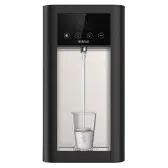
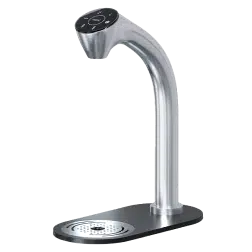
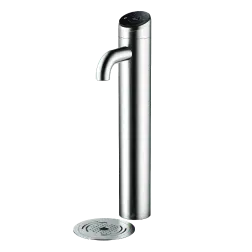
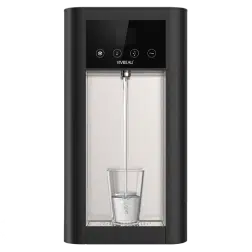
When water is one of the categories you pick, our sustainable water solutions page is worth a look. It walks through how a program actually gets measured once it is running. We also partner with 4ocean to remove ocean plastic.
Request a quote to find the setup that fits your space and gives you a number worth reporting from day one.
FAQs
-
Which Office Sustainability Changes Produce a Measurable Result Within a Single Quarter?
Categories with an existing purchase record move fastest, including bottled or delivered water, catering disposables, and paper stock. Because procurement already tracks cases, frequency, and costs for these, any change will show up in the next invoice cycle.
It does not require a new measurement system. Behavior-based initiatives without a purchasing record behind them take longer to show a defensible result.
-
How Do You Quantify the Impact of Removing Delivered Bottled Water From an Office?
Start with what procurement already has, including cases ordered per month, delivery frequency, and cost per case. Once a point-of-use system is installed, the same three figures become the after picture.
The difference between the two, tracked over a full quarter, is a defensible number rather than an estimate. It holds up in an ESG report the way a one-time percentage claim does not.
-
What Sustainability Data Do Facilities Teams Actually Need for Annual or ESG Reporting?
Reportable data needs a baseline, a consistent unit, and an owner who can explain the number if asked. Bottles eliminated, delivery frequency reduced, and waste volume diverted tend to hold up because procurement or service records already anchor them. Broad goals like “raise awareness” rarely survive reporting because no comparable baseline exists against which to measure them.
-
Does LEED Credit Water Efficiency in an Existing Office Fit-Out, or Only in New Construction?
LEED water efficiency criteria apply to existing buildings undergoing a fit-out as well as new construction. The specific credits available depend on the certification pathway a project pursues.
A facilities team evaluating a fit-out should confirm which LEED pathway applies to the space before assuming a specific credit is available. Documentation requirements differ by pathway.
-
How Do You Write Environmental Criteria Into Procurement Without Slowing Purchasing Down?
Build the criteria into the vendor selection template up front rather than adding a separate review step afterward. Asking for a documented take-back or reuse pathway, and weighing delivery frequency alongside price both fit inside a standard RFP.
Neither one requires a new approval stage. The slowdown usually comes from treating sustainability as an extra step, not from the criteria themselves.
Latest Posts


