











TL;DR
- Lobbies are now experience hubs where every visible element communicates property standards to arriving guests
- Guest satisfaction is measurably linked to how thoughtfully amenities are placed and designed across all hotel segments
- On-site hydration systems reduce costs by up to 86% and eliminate an average of 1,115 lbs of waste per year versus traditional bottled water programs
- Placement, format, and system reliability all determine whether lobby hydration supports or undermines the guest experience
The hotel lobby is the first thing a guest encounters and often the last thing they remember when they check out. In the past, that space was designed around transaction efficiency: a check-in desk, some seating, a path to the elevators. Hydration was treated as a back-of-house problem, or at best, a vending solution near the gym.
Neither fits what the modern lobby is trying to do.
Today’s lobbies are designed to convey a property’s full character in the first few minutes of a guest’s arrival. Everything about the space registers as a signal: the materials, the light, the furniture, the visible amenities. A hotel lobby water dispenser, well-placed and well-designed, contributes to that signal. Placed poorly, or not placed at all, it leaves a gap for guests to fill with their own judgment.
This guide covers what’s driving the shift in how hotel operators are thinking about lobby hydration, how guest expectations have raised the design bar for every element in that space, and the practical considerations when it’s time to install a water dispenser in the room.
Why Hotel Lobbies Are Being Reimagined as Experience Hubs
The lobby used to be a transition space. Guests moved through it, checked in, and headed to their rooms. Operators kept it functional, clean, and neutral.
Hotel designers now treat the lobby as the first room in the guest experience, the one that establishes tone before any other part of the property has a chance to. What the lobby conveys in the first 30 seconds, through materials, lighting, layout, and visible amenities, shapes how guests interpret everything that follows.
This shift is showing up across new builds and renovations alike. According to Hospitality Design’s 2024 report, Jun Aizaki, founder of CRÈME, described a move toward “flexible layouts and multifunctional areas” where lobbies serve as social hubs rather than just check-in points.
Hilton’s then-Senior Vice President of Global Design, Larry Traxler, described a parallel push toward “experience-driven concepts” across hotel spaces: design intended to make a guest feel something, not just process a transaction.
The practical implication for hotel operators is that every element placed in the lobby now carries design weight. A mismatched water station, a cluster of plastic bottles near the front desk, or a utilitarian refill point that doesn’t suit the space’s aesthetic does more than look out of place. It actively works against the experience that the rest of the lobby is trying to create.
Hotels that are thoughtful about the guest journey treat lobby hydration as a visible design decision, not a logistics afterthought.
How Guest Expectations Are Shaping Hotel Lobby Amenities
Guests have always evaluated hotels on amenities. What’s changed is how precisely they connect amenities to perceived quality, and how quickly those impressions form.
J.D. Power’s 2025 hotel satisfaction study found that higher satisfaction with hotel room conditions and amenities drove measurable improvements in guests’ perceptions of value across all segments, including luxury and upscale properties.
The study surveyed around 39,000 guests at 102 brands for stays between May 2024 and May 2025 and found that guests “want hotels to provide the comforts of home,” a standard that extends to every space guests spend time in, not just their rooms.
For a hotel lobby, that means the bar isn’t set by what’s technically present. It’s set by whether what’s present feels effortless and well-considered. A lobby amenity that requires guests to ask staff, find a secondary location, or work around operational infrastructure sends a different signal than one that’s clearly placed, cleanly designed, and immediately functional.
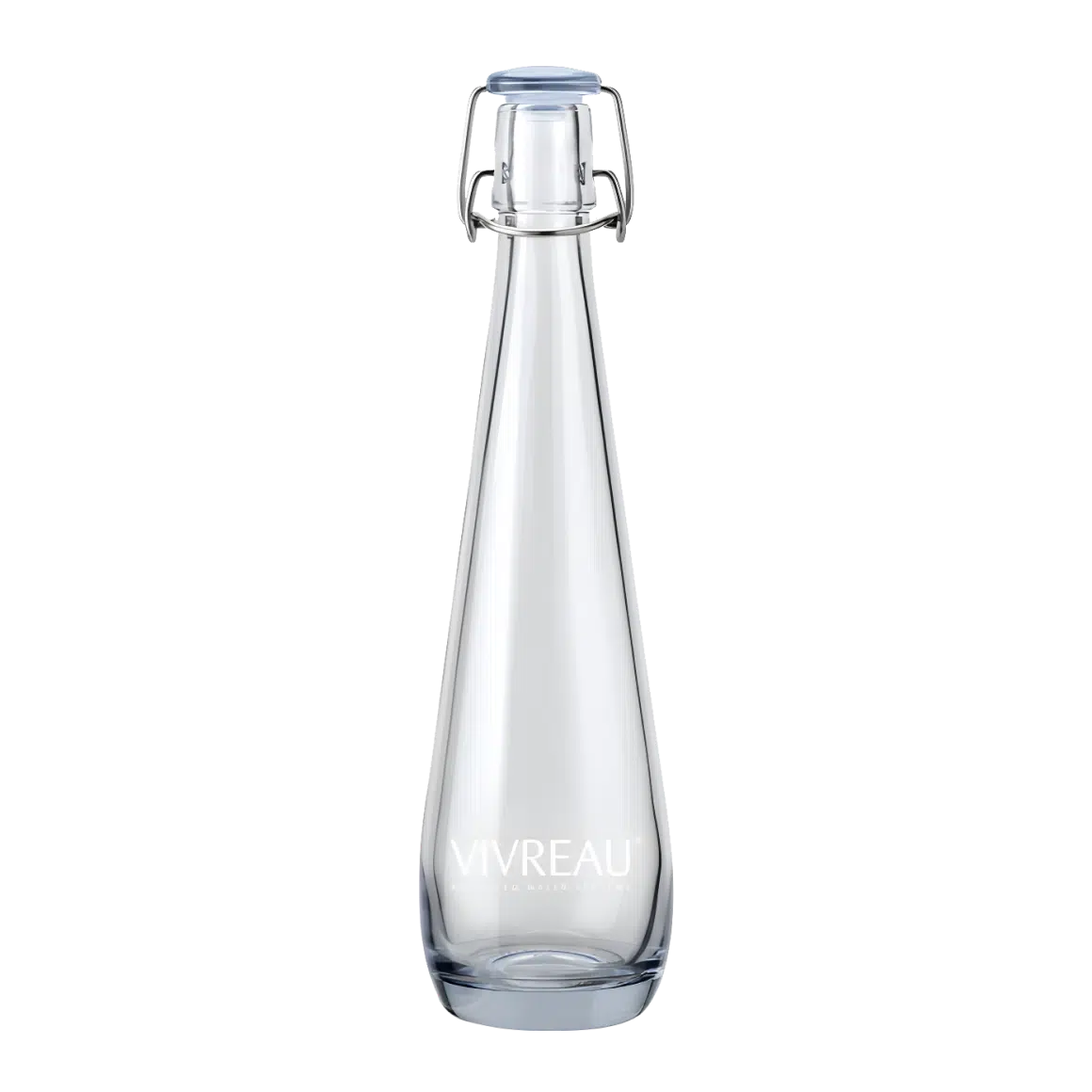
Hydration is a basic need that guests bring to the lobby from the moment they arrive. They’ve just traveled. They need water. Whether it’s a self-serve dispenser near check-in, a filtered tap built into the lounge, or a branded glass bottle already waiting, how quickly and gracefully a property solves that moment reflects its general approach to guest care.
These choices advance guest experience and sustainability at the same time, two priorities that today’s travelers no longer evaluate separately.
What Role Does a Hotel Lobby Water Dispenser Play in the Modern Guest Experience?
A well-chosen hotel water dispenser in the lobby serves four things at once: it hydrates, it signals design intent, it reduces operational friction, and it makes a sustainability statement guests can actually see.
Sustainability in hospitality has moved from marketing language to a visible operational standard that guests evaluate with their own eyes. When the hydration program in the lobby makes a guest feel like the property has thought through both their comfort and the environment, it contributes to the kind of impression that shows up in reviews and return visits.
On the operational side, a dispenser in the lobby provides on-demand still, sparkling, and hot water without requiring staff to restock cases, manage inventory, or maintain a display that degrades throughout the day. Visible, guest-facing, and self-sufficient, it integrates into the lobby’s workflow rather than adding to what staff need to manage.
Examples of Hotel Lobby Water Dispenser Placement
Where a hotel water station for guests is positioned shapes both how it functions and how guests perceive it.
A few placements work consistently across property types:
- Near the check-in desk: Arriving guests can hydrate immediately, reducing the perceived friction of the check-in process and creating a hospitality touchpoint that doesn’t require additional staff attention. Providing water the moment guests arrive communicates something the front desk never has to say.
- In lounge or seating areas: Guests who linger in the lobby for meetings, co-working, or casual use benefit from access without needing to go elsewhere. A countertop tap or integrated unit that fits the lounge’s aesthetic adds to dwell time and the sense that the space was designed for people who actually use it.
- Near elevator landings or transition zones: Guests heading out for the day or returning after a long one can refill a bottle without detouring from their natural path through the property. Paired with a branded glass bottle or a reusable program, this placement becomes part of the property’s sustainability story without requiring a stop at the front desk.
- Adjacent to spa or fitness areas: Lobbies with wellness or gym access benefit from hydration stations at transition points, where guests arrive or depart from active use with an immediate need for water.
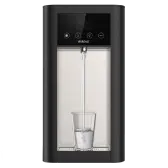
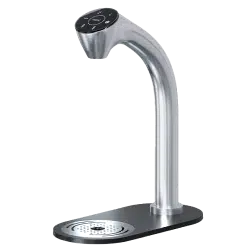
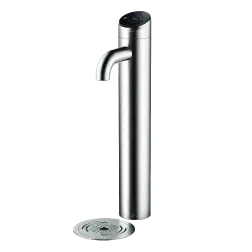
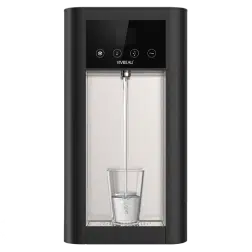
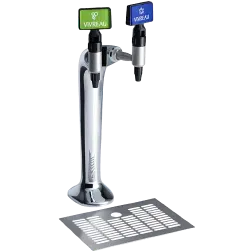
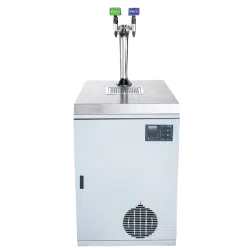
The right water dispenser for hotel lobbies comes in a few forms: an integrated tap, a countertop model, or a freestanding unit. The choice depends on the space’s aesthetics and traffic patterns. The goal in every case is the same: accessible enough to be useful, designed well enough to disappear into the environment.


Why Hotels Are Rethinking Traditional Bottled Water Programs
The case against bottled water in hotel lobbies used to be primarily environmental. That argument still holds, but for most operators, the operational and financial case is now just as compelling.
A bottled water program in the lobby means ongoing deliveries, dedicated storage, daily restocking, and staff time spent managing cases that were a functional solution twenty years ago and a conspicuous inefficiency today. The logistics show up on the loading dock, in housekeeping closets, and in the quiet moments when a lobby looks exactly as polished as the last time someone refilled the ice bucket.
Moving to an on-site hotel filtered water system cuts program costs by up to 86% and cuts CO2 emissions by 86% compared to pre-bottled water on average. A single on-site dispenser eliminates an average of 1,115 pounds of waste per year, the equivalent of 144 plastic bottles.
The operational relief at the property level is immediate. Auberge Saint-Antoine, a Vivreau partner, eliminated more than 60,000 single-use plastic bottles per year after switching to on-site hydration, along with more than 60 truck deliveries annually. The logistics simplified. The sustainability story became something the property could communicate with confidence.
That visibility matters in the current hospitality market. Booking.com’s 2025 sustainability research found that 93% of travelers want to make more sustainable travel choices, and 58% are actively changing their habits to do so. A lobby that still relies on cased bottled water tells a story about the property’s priorities before a guest says a word.
Creating Hotel Lobby Experiences Guests Remember
In practice, a lobby water dispenser functions as a proxy for the stay as a whole.
A dispenser that’s thoughtfully positioned, matches the space’s aesthetic, and is reliably functional becomes part of how the lobby works rather than something guests have to work around. When it isn’t, it’s one more thing signaling the property hasn’t thought through the details.
Hotels like Hotel Bardo in Savannah treat hydration as a guest-first design question, not a back-of-house logistics question. They ask where guests need water, how the equipment fits the space, and what the system needs to deliver day in and day out without drawing attention to itself.
For hotels ready to build a lobby hydration program that reflects the property’s standard, request a quote to design a self-serve hydration program that elevates the guest experience from the moment they walk in.
FAQs
-
How Does the Location of a Hydration Station Influence the Hotel Guest Experience?
Placement shapes both the functional and perceived quality of the amenity. A hydration station near the check-in desk makes water available the moment guests arrive, reducing friction at the most high-stakes moment of the stay.
A station in a lounge or co-working area supports guests who linger in the lobby for extended periods. Placement near elevator banks or transition zones allows guests to refill without any detour from their natural path through the property. Each position communicates something specific: that the property designed the space around how guests actually move through it.
-
What Role Do Self-Service Amenities Play in Modern Hotel Lobby Design?
Self-service amenities signal that the property designed the lobby for how guests actually use it, not just for how it looks at check-in. When guests can access water, take a seat, or connect to a service without needing to locate staff, the lobby functions as the independent, effortless space modern hospitality expects.
J.D. Power’s 2025 North America Hotel Guest Satisfaction Index Study found that amenities meeting a “comforts of home” standard were a measurable driver of perceived value. Self-service hydration sits squarely in that category: a basic need, resolved without friction.
-
How Can Hotels Provide Convenient Guest Hydration Without Creating Visual Clutter in the Lobby
Format and integration matter as much as placement. Countertop dispensers and under-counter taps can be built into existing millwork or reception desk configurations, so the system becomes part of the lobby’s architecture rather than something placed in front of it.
Freestanding units in higher-traffic areas work when chosen to complement the space’s material and color palette. The practical rule is that the dispenser should serve its function without drawing attention to itself. When guests notice it at all, it should read as a considered design choice rather than an operational compromise.
-
What Operational Challenges Should Hotels Consider When Replacing Bottled Water Programs
Installation requires plumbing access and drainage at the placement point, which constrains where dispensers can go without significant renovation. Staff training is minimal compared to a bottled program, but the system still requires periodic filter maintenance to remain consistent.
Reliability is the highest-stakes operational variable: a lobby dispenser that’s out of service is immediately visible to arriving guests, unlike a stockroom shortage. The long-term operational math strongly favors on-site systems: switching from bottled programs typically reduces costs by up to 86% and eliminates an average of 1,115 pounds of plastic waste per year, per dispenser.
-
Which Guest-Facing Areas Beyond the Lobby Benefit Most From Integrated Hydration Solutions
Guest room floors are the highest-impact extension of a lobby hydration program. Placing a dispenser at each floor’s elevator landing or corridor lets guests refill on their own schedule without returning to the lobby.
Restaurant and dining areas are a strong secondary candidate, where a back-of-house system can serve both table water and bar service from the same source. Fitness centers and spa reception areas benefit from dispensers positioned where guests arrive already dehydrated. Meeting and conference spaces are often underserved: filtered water at the room level removes the need for disposable bottles and reduces setup logistics for event staff.


